Laboratory of Molecular Biology, Department of Biofunctional Analysis, Gifu Pharmaceutical University, 1-25-4 Daigakunishi, Gifu, 501-1196, Japan.
Department of Oral and Maxillofacial Science, Gifu University Graduate School of Medicine, 1-1 Yanagido, Gifu, 501-1194, Japan.
Sci Rep. 2017 Oct 18;7(1):13500. doi: 10.1038/s41598-017-13373-5.
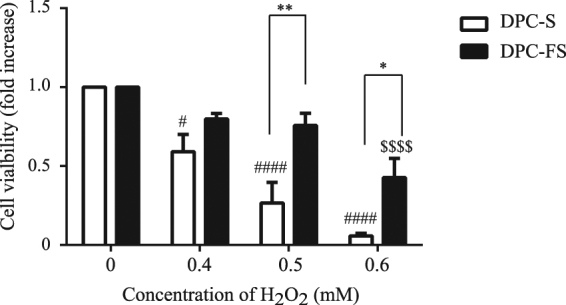
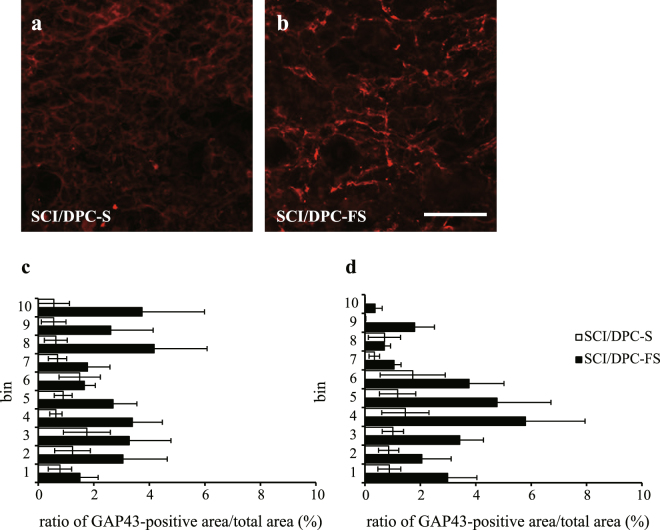
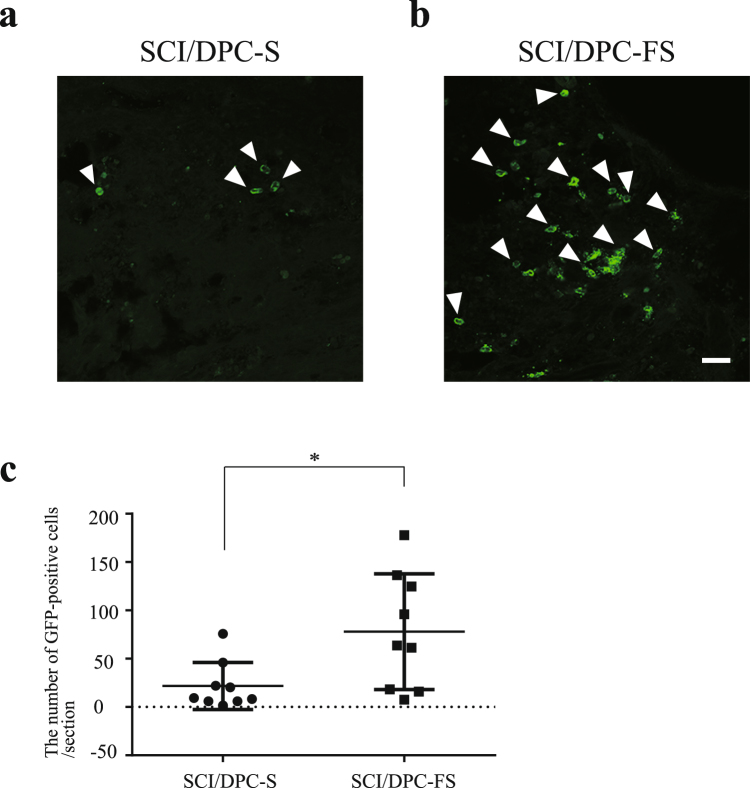
Human dental pulp cells (DPCs), adherent cells derived from dental pulp tissues, are potential tools for cell transplantation therapy. However, little work has been done to optimize such transplantation. In this study, DPCs were treated with fibroblast growth factor-2 (FGF2) for 5-6 consecutive serial passages and were transplanted into the injury site immediately after complete transection of the rat spinal cord. FGF2 priming facilitated the DPCs to promote axonal regeneration and to improve locomotor function in the rat with spinal cord injury (SCI). Additional analyses revealed that FGF2 priming protected cultured DPCs from hydrogen-peroxide-induced cell death and increased the number of DPCs in the SCI rat spinal cord even 7 weeks after transplantation. The production of major neurotrophic factors was equivalent in FGF2-treated and untreated DPCs. These observations suggest that FGF2 priming might protect DPCs from the post-trauma microenvironment in which DPCs infiltrate and resident immune cells generate cytotoxic reactive oxygen species. Surviving DPCs could increase the availability of neurotrophic factors in the lesion site, thereby promoting axonal regeneration and locomotor function recovery.
人牙髓细胞(DPCs)是从牙髓组织中分离出来的贴壁细胞,是细胞移植治疗的潜在工具。然而,很少有工作致力于优化这种移植。在这项研究中,DPCs 用成纤维细胞生长因子-2(FGF2)处理 5-6 个连续的传代,在大鼠脊髓完全横断后立即移植到损伤部位。FGF2 引发可促进 DPCs 促进轴突再生,并改善脊髓损伤(SCI)大鼠的运动功能。进一步的分析表明,FGF2 引发可保护培养的 DPCs 免受过氧化氢诱导的细胞死亡,并增加 SCI 大鼠脊髓中 DPCs 的数量,甚至在移植后 7 周也是如此。FGF2 处理和未处理的 DPCs 产生的主要神经营养因子数量相当。这些观察结果表明,FGF2 引发可能保护 DPCs 免受损伤后微环境的影响,DPCs 浸润和固有免疫细胞产生细胞毒性活性氧。存活的 DPCs 可以增加损伤部位神经营养因子的可用性,从而促进轴突再生和运动功能恢复。