Colman Michael A, Perez Alday Erick A, Holden Arun V, Benson Alan P
School of Biomedical Sciences and Multidisciplinary Cardiovascular Research Centre, University of Leeds, Leeds, United Kingdom.
Division of Cardiovascular Medicine, Oregon Health and Science University, Portland, OR, United States.
Front Physiol. 2017 Oct 4;8:757. doi: 10.3389/fphys.2017.00757. eCollection 2017.
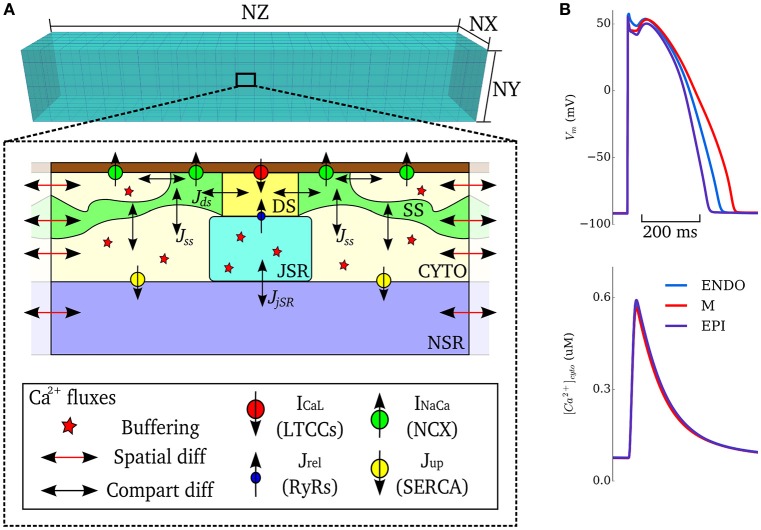
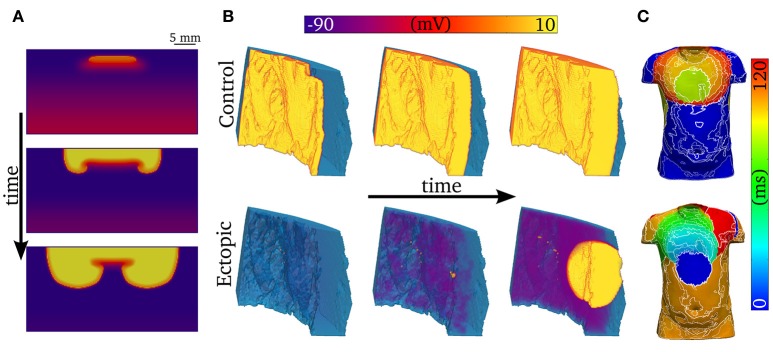
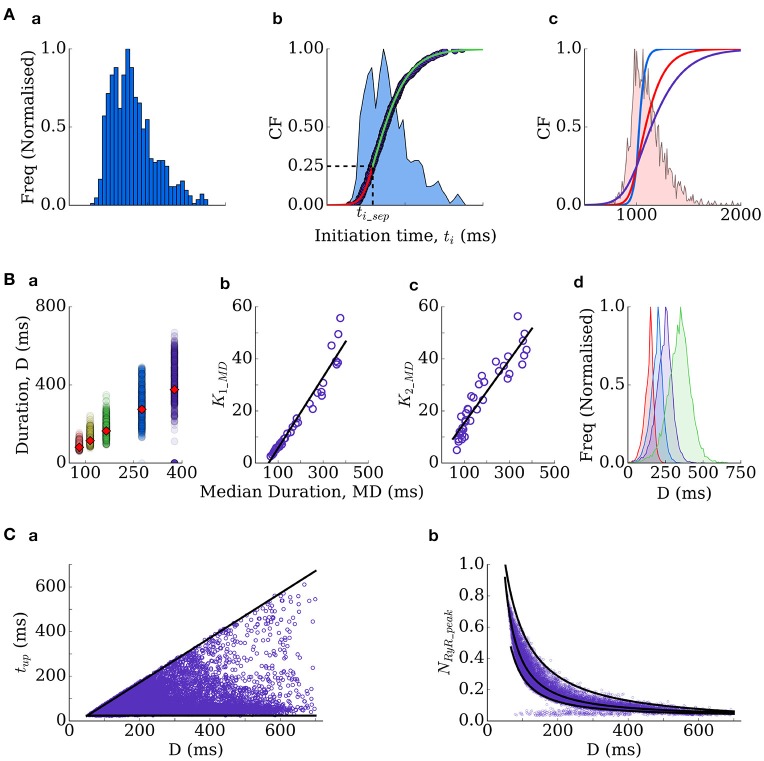
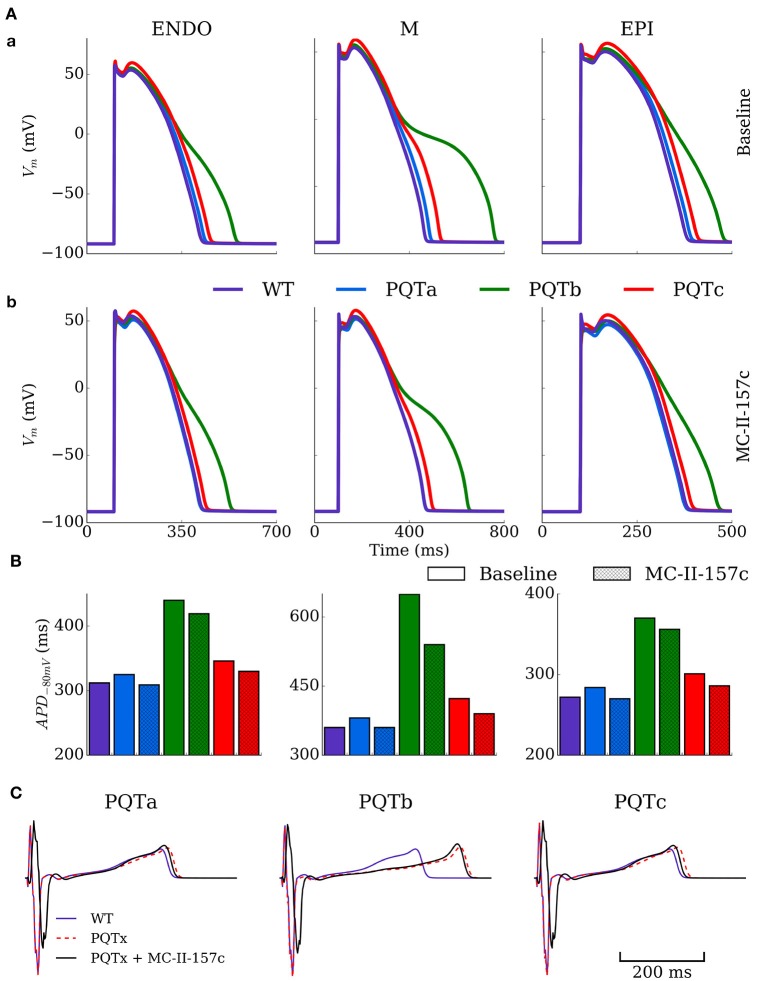
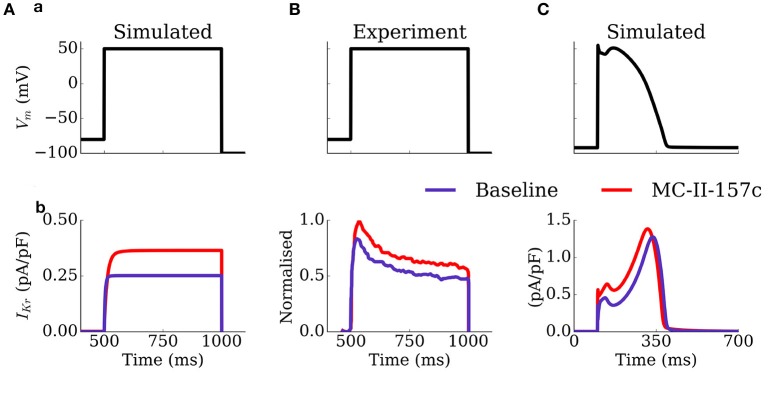
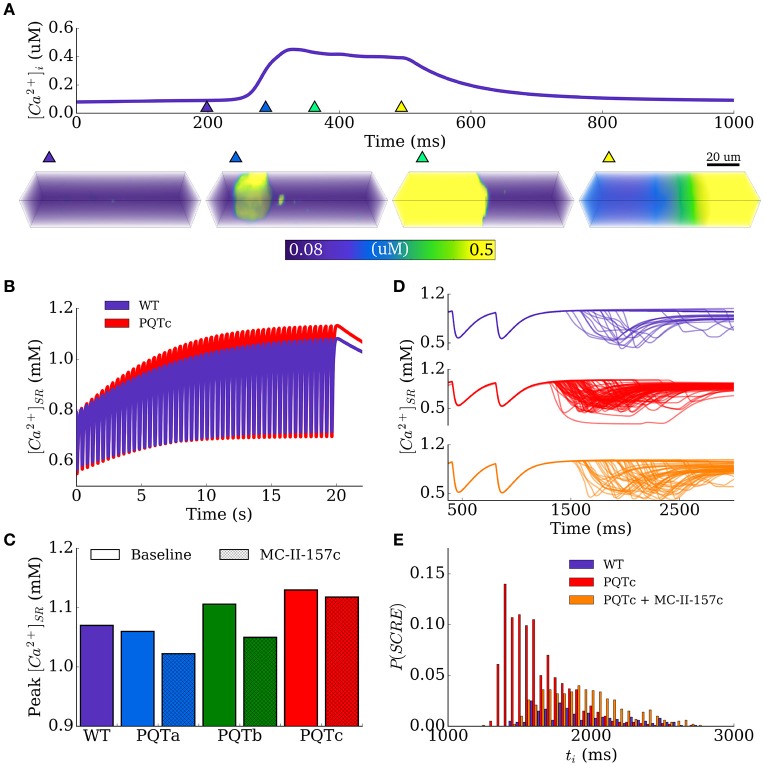
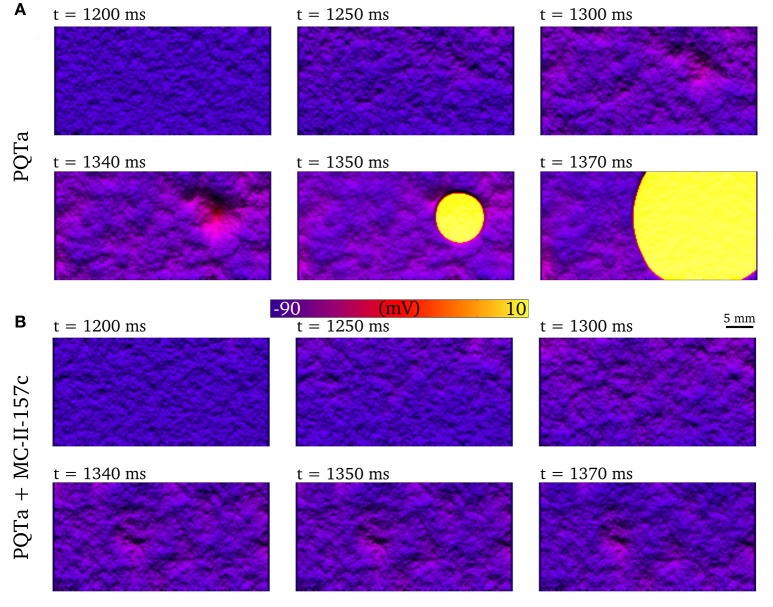
Prolongation of the QT interval of the electrocardiogram (ECG), underlain by prolongation of the action potential duration (APD) at the cellular level, is linked to increased vulnerability to cardiac arrhythmia. Pharmacological management of arrhythmia associated with QT prolongation is typically achieved through attempting to restore APD to control ranges, reversing the enhanced vulnerability to Ca-dependent afterdepolarisations (arrhythmia triggers) and increased transmural dispersion of repolarisation (arrhythmia substrate) associated with APD prolongation. However, such pharmacological modulation has been demonstrated to have limited effectiveness. Understanding the integrative functional impact of pharmacological modulation requires simultaneous investigation of both the trigger and substrate. We implemented a multi-scale (cell and tissue) approach using a model of the human ventricular action potential, integrated with a model of stochastic 3D spatiotemporal Ca dynamics, and parameter modification to mimic prolonged QT conditions. We used these models to examine the efficacy of the hERG activator MC-II-157c in restoring APD to control ranges, examined its effects on arrhythmia triggers and substrates, and the interaction of these arrhythmia triggers and substrates. QT prolongation conditions promoted the development of spontaneous release events underlying afterdepolarisations during rapid pacing. MC-II-157c applied to prolonged QT conditions shortened the APD, inhibited the development of afterdepolarisations and reduced the probability of afterdepolarisations manifesting as triggered activity in single cells. In tissue, QT prolongation resulted in an increased transmural dispersion of repolarisation, which manifested as an increased vulnerable window for uni-directional conduction block. In some cases, MC-II-157c further increased the vulnerable window through its effects on . The combination of stochastic release event modulation and transmural dispersion of repolarisation modulation by MC-II-157c resulted in an integrative behavior wherein the arrhythmia trigger is reduced but the arrhythmia substrate is increased, leading to variable and non-linear overall vulnerability to arrhythmia. The relative balance of reduced trigger and increased substrate underlies a multi-dimensional role of MC-II-157c in modulation of cardiac arrhythmia vulnerability associated with prolonged QT interval.
心电图(ECG)QT间期延长,其细胞水平的动作电位时程(APD)延长为基础,与心律失常易感性增加有关。与QT延长相关的心律失常的药物治疗通常通过试图将APD恢复到控制范围、逆转对钙依赖性后去极化(心律失常触发因素)的易感性增强以及与APD延长相关的复极跨壁离散度增加(心律失常基质)来实现。然而,这种药物调节已被证明效果有限。理解药物调节的综合功能影响需要同时研究触发因素和基质。我们采用多尺度(细胞和组织)方法,使用人类心室动作电位模型,结合随机三维时空钙动力学模型,并通过参数修改来模拟QT延长情况。我们使用这些模型来研究hERG激活剂MC-II-157c将APD恢复到控制范围的疗效,检查其对心律失常触发因素和基质的影响,以及这些心律失常触发因素和基质的相互作用。QT延长情况促进了快速起搏期间后去极化基础上的自发释放事件的发展。应用于QT延长情况的MC-II-157c缩短了APD,抑制了后去极化的发展,并降低了后去极化在单细胞中表现为触发活动的概率。在组织中,QT延长导致复极跨壁离散度增加,表现为单向传导阻滞的易损窗口增加。在某些情况下,MC-II-157c通过其对……的影响进一步增加了易损窗口。MC-II-157c对随机释放事件的调节和复极跨壁离散度的调节相结合,导致了一种综合行为,即心律失常触发因素减少但心律失常基质增加,导致心律失常的整体易感性可变且呈非线性。触发因素减少和基质增加的相对平衡是MC-II-157c在调节与QT间期延长相关的心律失常易感性中的多维作用的基础。