School of Biomedical Sciences, University of Leeds, Leeds, United Kingdom.
PLoS Comput Biol. 2019 Aug 8;15(8):e1007260. doi: 10.1371/journal.pcbi.1007260. eCollection 2019 Aug.
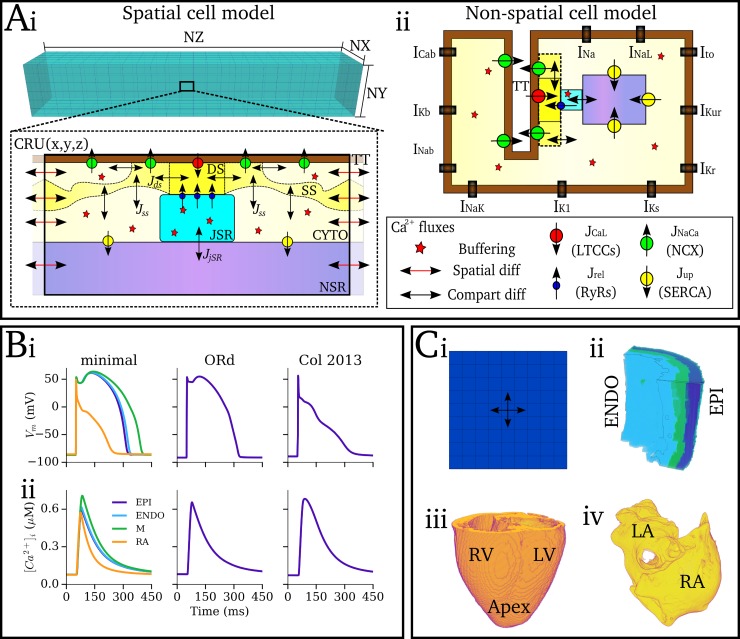
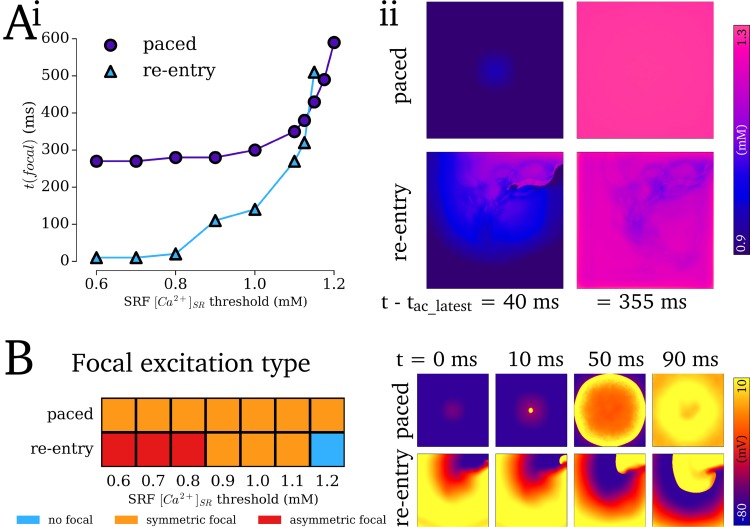
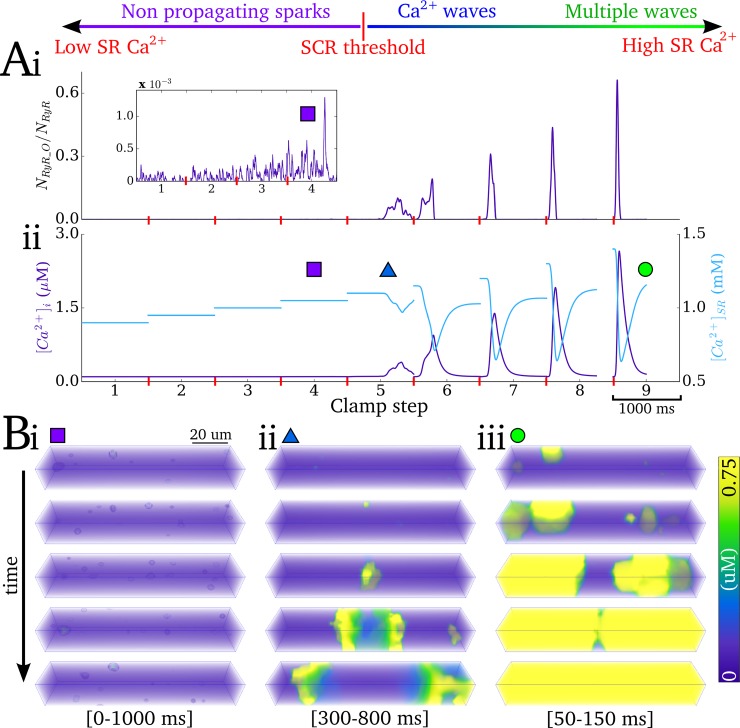
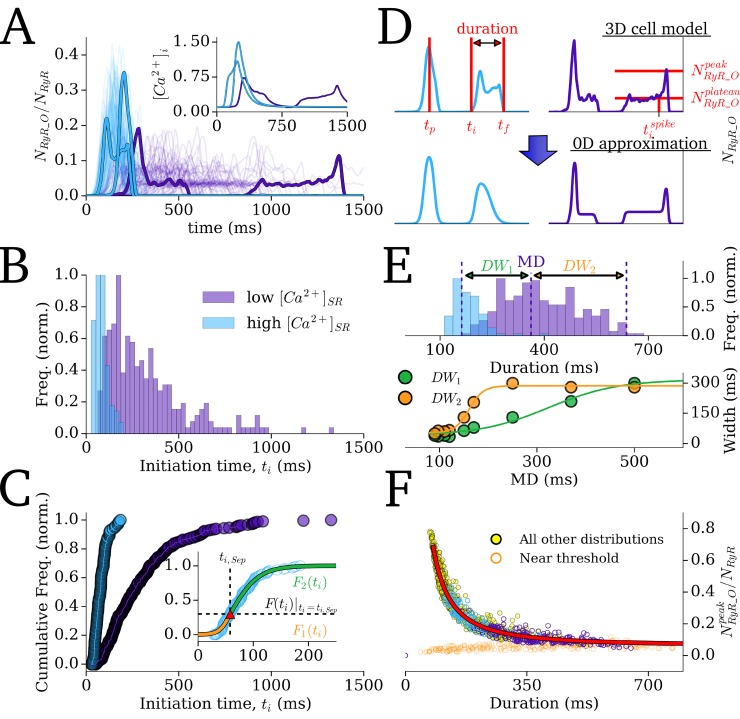
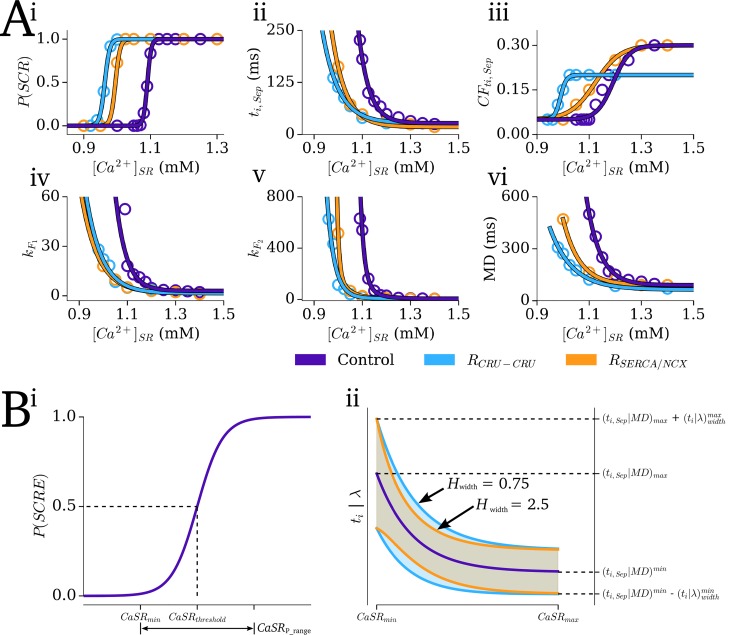
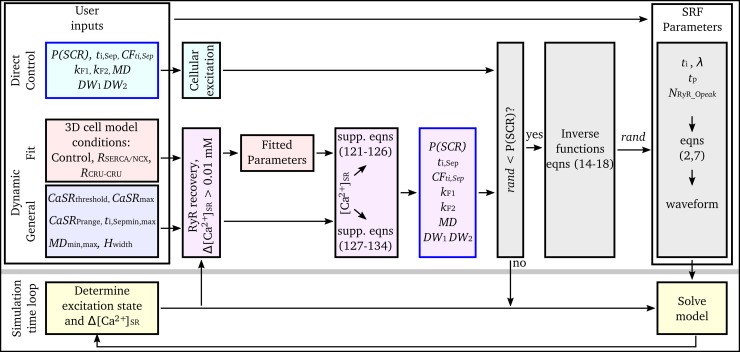
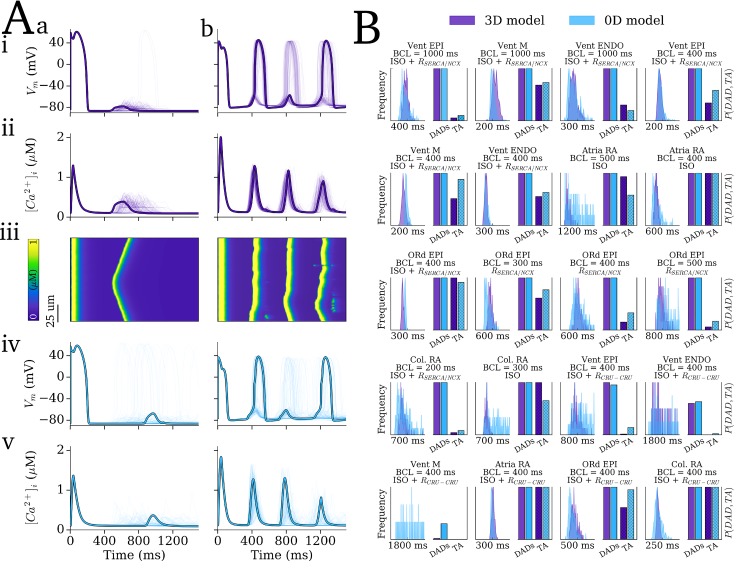
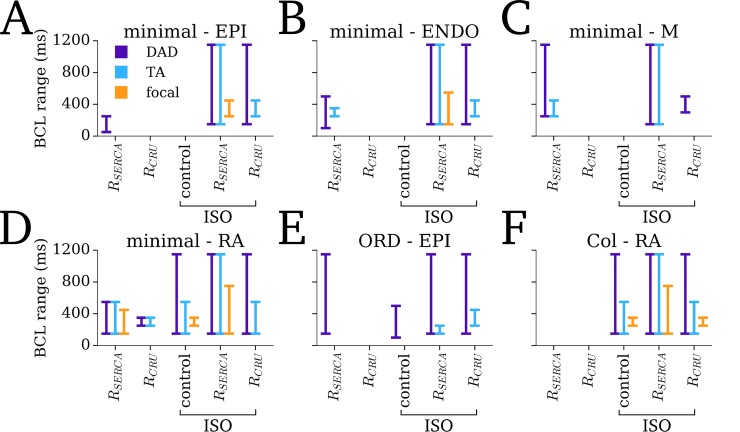
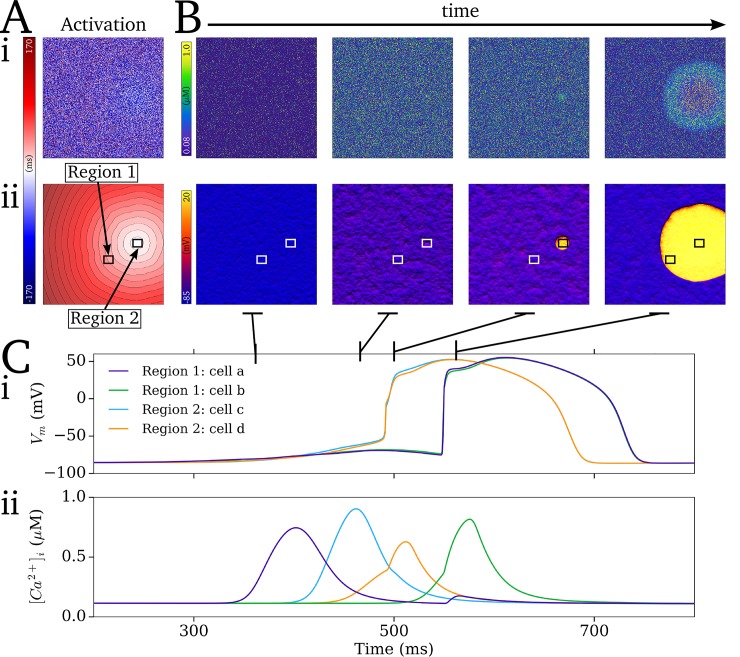
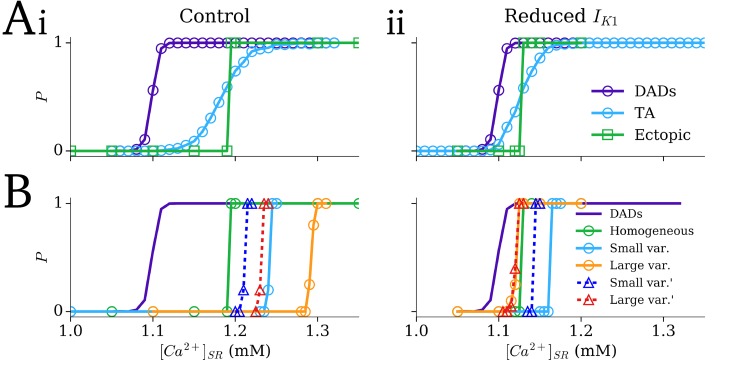
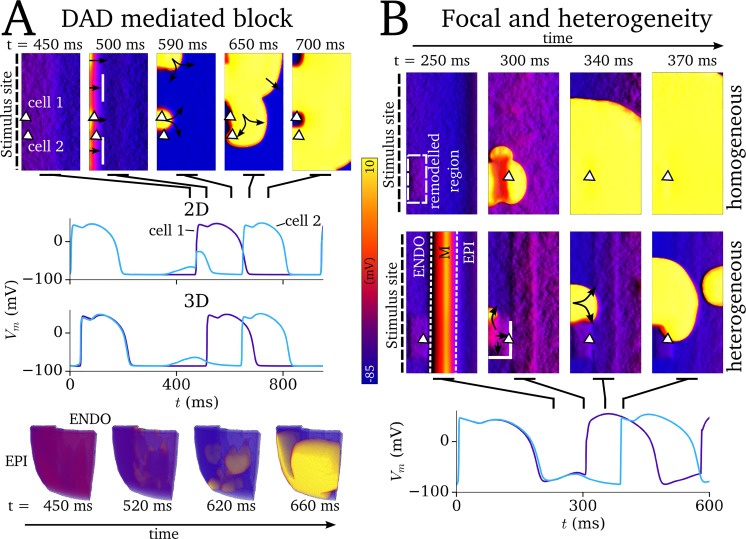
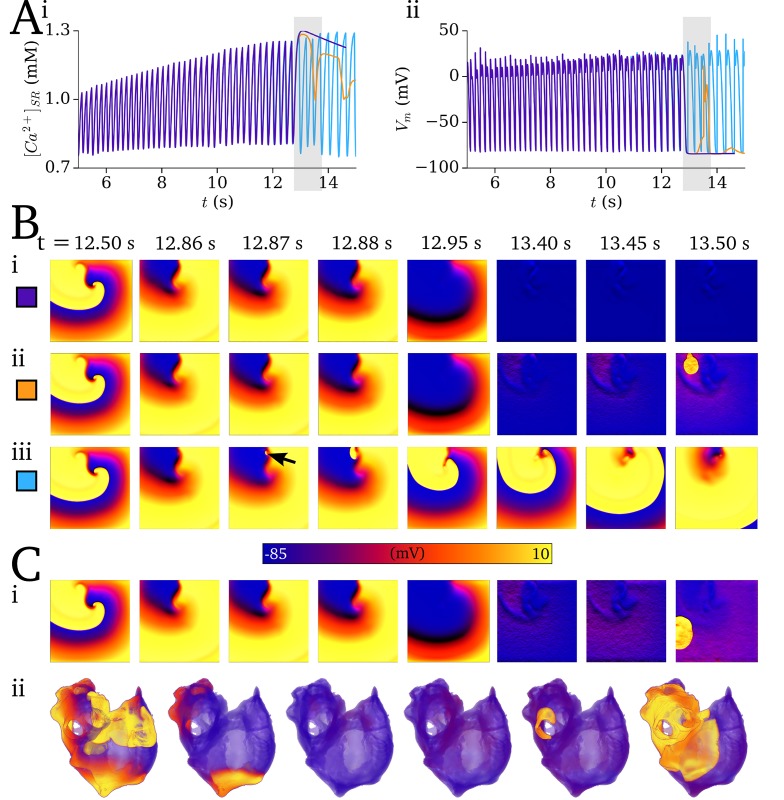
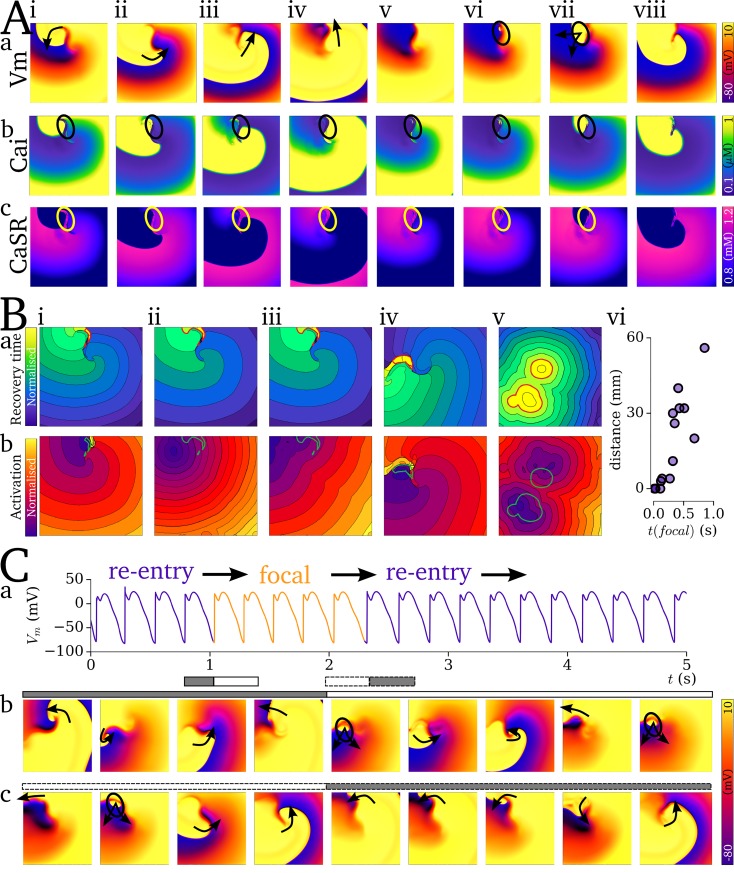
Spontaneous sub-cellular calcium release events (SCRE) are conjectured to promote rapid arrhythmias associated with conditions such as heart failure and atrial fibrillation: they can underlie the emergence of spontaneous action potentials in single cells which can lead to arrhythmogenic triggers in tissue. The multi-scale mechanisms of the development of SCRE into arrhythmia triggers, and their dynamic interaction with the tissue substrate, remain elusive; rigorous and simultaneous study of dynamics from the nanometre to the centimetre scale is a major challenge. The aim of this study was to develop a computational approach to overcome this challenge and study potential bi-directional coupling between sub-cellular and tissue-scale arrhythmia phenomena. A framework comprising a hierarchy of computational models was developed, which includes detailed single-cell models describing spatio-temporal calcium dynamics in 3D, efficient non-spatial cell models, and both idealised and realistic tissue models. A phenomenological approach was implemented to reproduce SCRE morphology and variability in the efficient cell models, comprising the definition of analytical Spontaneous Release Functions (SRF) whose parameters may be randomly sampled from appropriate distributions in order to match either the 3D cell models or experimental data. Pro-arrhythmogenic pacing protocols were applied to initiate re-entry and promote calcium overload, leading to the emergence of SCRE. The SRF accurately reproduced the dynamics of SCRE and its dependence on environment variables under multiple different conditions. Sustained re-entrant excitation promoted calcium overload, and led to the emergence of focal excitations after termination. A purely functional mechanism of re-entry and focal activity localisation was demonstrated, related to the unexcited spiral wave core. In conclusion, a novel approach has been developed to dynamically model SCRE at the tissue scale, which facilitates novel, detailed multi-scale mechanistic analysis. It was revealed that complex re-entrant excitation patterns and SCRE may be bi-directionally coupled, promoting novel mechanisms of arrhythmia perpetuation.
自发性亚细胞钙释放事件 (SCRE) 被推测可促进与心力衰竭和心房颤动等病症相关的快速心律失常:它们可能是单个细胞中自发性动作电位出现的基础,从而导致组织中的心律失常触发。SCRE 发展为心律失常触发的多尺度机制及其与组织基质的动态相互作用仍然难以捉摸;对纳米到厘米尺度的动力学进行严格且同步的研究是一个主要挑战。本研究旨在开发一种计算方法来克服这一挑战,并研究亚细胞和组织尺度心律失常现象之间潜在的双向耦合。开发了一个包含计算模型层次结构的框架,其中包括描述三维时空钙动力学的详细单细胞模型、高效非空间细胞模型以及理想和现实组织模型。实施了一种现象学方法来再现高效细胞模型中的 SCRE 形态和变异性,包括定义分析性自发释放函数 (SRF),其参数可以从适当的分布中随机抽样,以匹配 3D 细胞模型或实验数据。采用促心律失常起搏方案引发折返并促进钙超载,从而产生 SCRE。SRF 准确地再现了 SCRE 的动力学及其在多种不同条件下对环境变量的依赖性。持续的折返兴奋促进钙超载,并在终止后导致局灶兴奋的出现。证明了折返和局灶活动定位的纯功能机制与未兴奋的螺旋波核心有关。总之,开发了一种新的方法来在组织尺度上动态模拟 SCRE,这促进了新的、详细的多尺度机制分析。结果表明,复杂的折返兴奋模式和 SCRE 可能是双向耦合的,促进了心律失常持续的新机制。