Singapore Centre for 3D Printing (SC3DP), School of Mechanical and Aerospace Engineering, Nanyang Technological University, 50 Nanyang Ave, Singapore, 639798, Singapore.
J Biomed Sci. 2017 Oct 18;24(1):80. doi: 10.1186/s12929-017-0384-2.
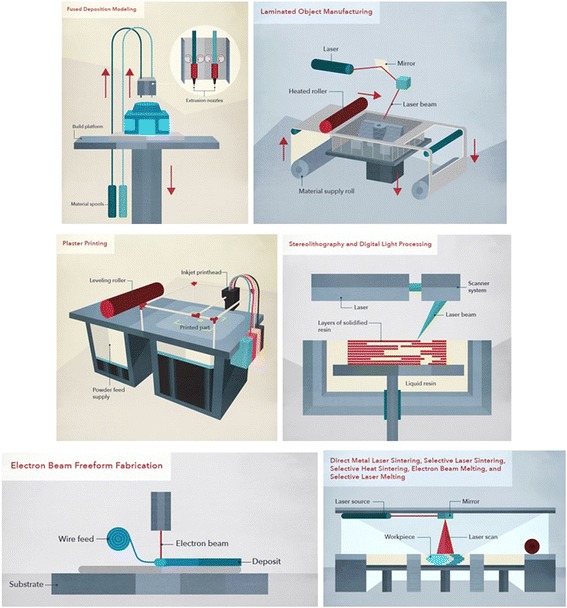
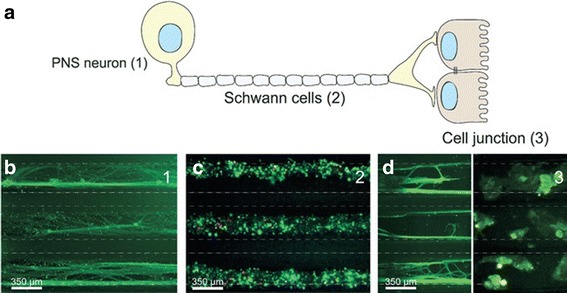
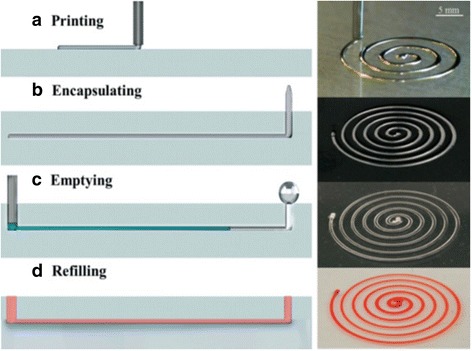
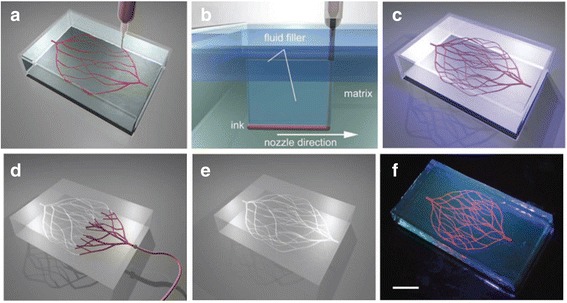
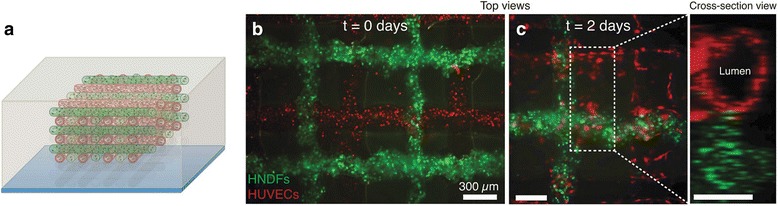
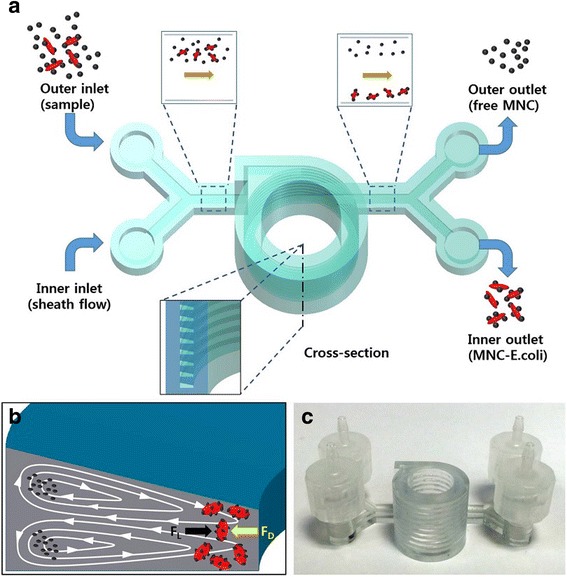
The technology of "Lab-on-a-Chip" allows the synthesis and analysis of chemicals and biological substance within a portable or handheld device. The 3D printed structures enable precise control of various geometries. The combination of these two technologies in recent years makes a significant progress. The current approaches of 3D printing, such as stereolithography, polyjet, and fused deposition modeling, are introduced. Their manufacture specifications, such as surface roughness, resolution, replication fidelity, cost, and fabrication time, are compared with each other. Finally, novel application of 3D printed channel in biology are reviewed, including pathogenic bacteria detection using magnetic nanoparticle clusters in a helical microchannel, cell stimulation by 3D chemical gradients, perfused functional vascular channels, 3D tissue construct, organ-on-a-chip, and miniaturized fluidic "reactionware" devices for chemical syntheses. Overall, the 3D printed fluidic chip is becoming a powerful tool in the both medical and chemical industries.
“芯片实验室”技术允许在便携式或手持式设备内合成和分析化学物质和生物物质。3D 打印结构能够精确控制各种几何形状。近年来,这两种技术的结合取得了重大进展。本文介绍了当前的 3D 打印方法,如立体光刻、多喷射和熔融沉积建模。比较了它们的制造规格,如表面粗糙度、分辨率、复制保真度、成本和制造时间。最后,综述了 3D 打印通道在生物学中的新应用,包括在螺旋微通道中使用磁性纳米颗粒簇检测致病菌、通过 3D 化学梯度刺激细胞、灌注功能血管通道、3D 组织构建、器官芯片和用于化学合成的微型化流体“反应器件”。总的来说,3D 打印流体芯片正在成为医疗和化学工业中强有力的工具。