Sjöberg Fei, Barkman Cecilia, Nookaew Intawat, Östman Sofia, Adlerberth Ingegerd, Saalman Robert, Wold Agnes E
Department of Infectious Diseases, Institute of Biomedicine, University of Gothenburg, Gothenburg, Sweden.
Department of Biology and Biological Engineering, Chalmers University of Technology, Gothenburg, Sweden.
PLoS One. 2017 Oct 19;12(10):e0186178. doi: 10.1371/journal.pone.0186178. eCollection 2017.
Inflammatory bowel disease (IBD) is characterized by gut dysbiosis. To date, the large bowel microbiota has been in focus. However, the microbiota of the small intestine may also be of importance, as the small bowel is a site for the induction and control of mucosal immune responses, which can be modulated by constituents of the local microbiota.
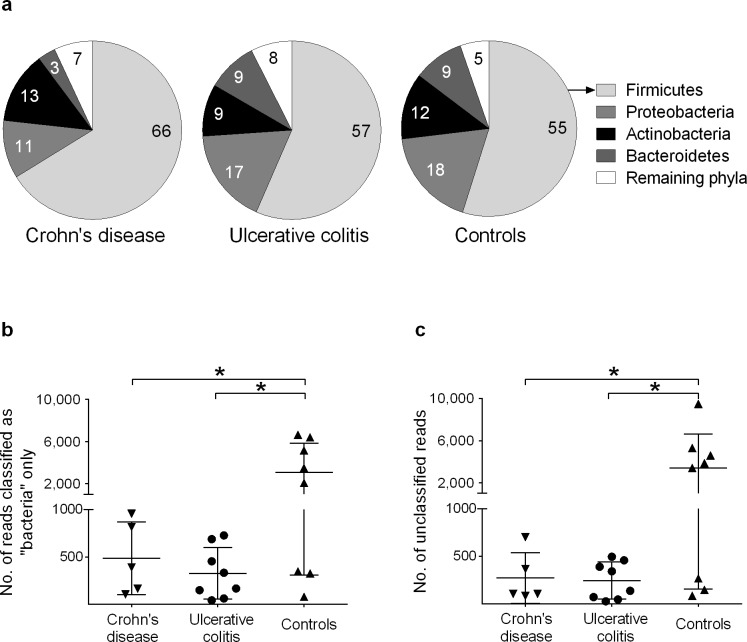
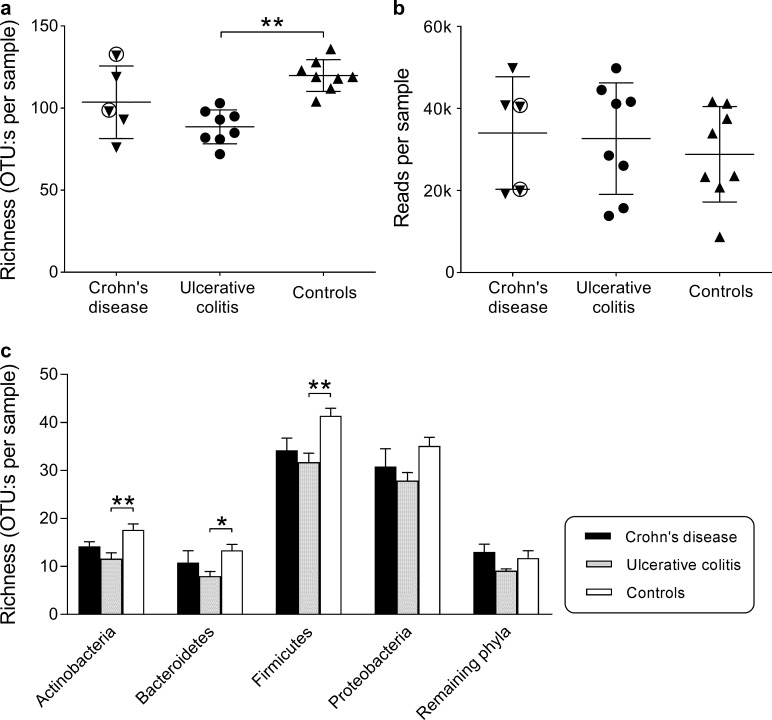
Duodenal fluids were collected during diagnostic work-up of treatment-naïve children who were suspected of having IBD. The duodenal fluids were analyzed by pyrosequencing (average of 32,000 reads/sample, read length of 500 nucleotides). After diagnosis, the duodenal microbiota of subjects with ulcerative colitis (N = 8) or Crohn's disease (N = 5), and non-IBD controls (N = 8) were compared.
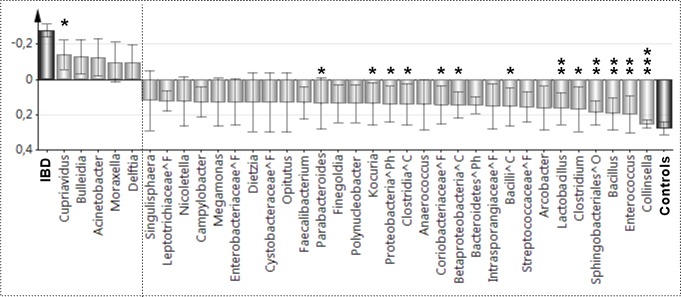
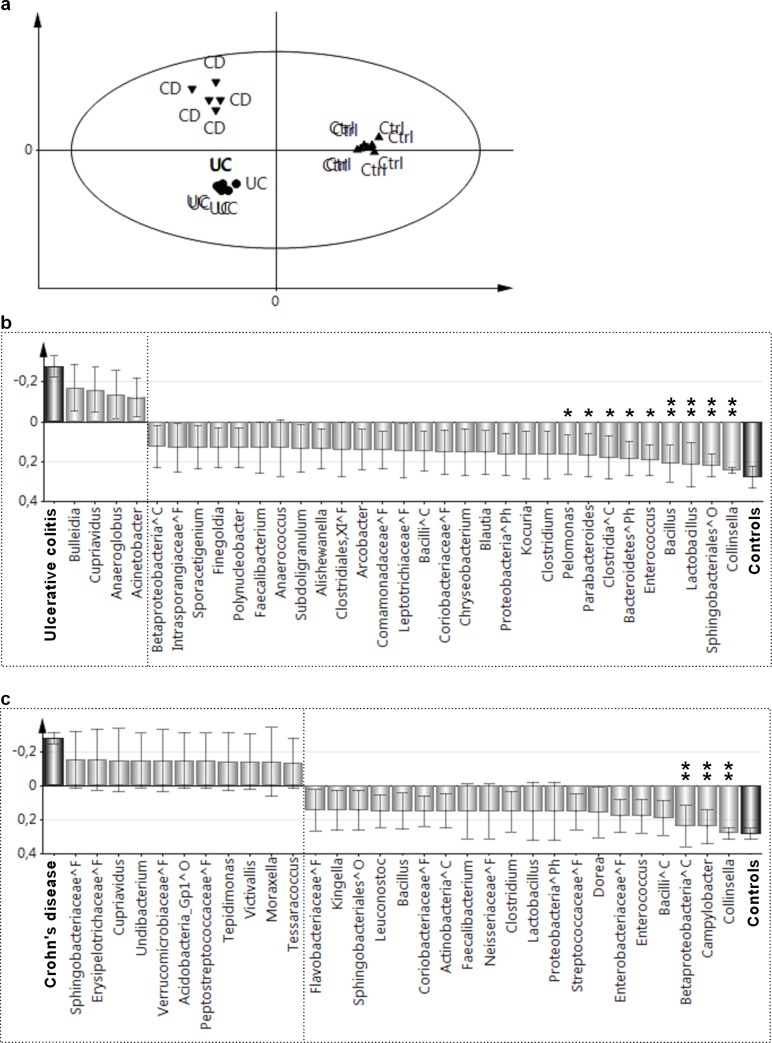
Pyrosequencing revealed that the duodenal microbiota of children with ulcerative colitis contained fewer Operational Taxonomic Units (OTUs) per individual than the duodenal microbiota of the controls (P = 0.005). This reduction in richness of the duodenal microbiota was seen for three major phyla: Firmicutes, Actinobacteria, and Bacteroidetes. Several bacterial genera were detected less frequently in the children with ulcerative colitis than in the non-IBD controls, including Collinsella (P = 0.001), Lactobacillus (P = 0.007), and Bacillus (P = 0.007), as well as a non-identified member of the order Sphingobacteriales (P = 0.007).
In this pilot study, we show that the duodenal microbiota of children with ulcerative colitis exhibits reduced overall richness, despite the fact that the inflammation is primarily localized to the colon. These results should be corroborated in a larger study.
炎症性肠病(IBD)的特征是肠道微生物群失调。迄今为止,大肠微生物群一直是研究重点。然而,小肠微生物群可能也很重要,因为小肠是黏膜免疫反应诱导和控制的部位,而局部微生物群的成分可对其进行调节。
在对疑似患有IBD的未接受过治疗的儿童进行诊断检查期间收集十二指肠液。通过焦磷酸测序分析十二指肠液(每个样本平均32000条读数,读长500个核苷酸)。诊断后,比较了溃疡性结肠炎患者(N = 8)、克罗恩病患者(N = 5)和非IBD对照组(N = 8)的十二指肠微生物群。
焦磷酸测序显示,溃疡性结肠炎患儿十二指肠微生物群中每个个体的可操作分类单元(OTU)数量少于对照组(P = 0.005)。在三个主要门类中均观察到十二指肠微生物群丰富度的这种降低:厚壁菌门、放线菌门和拟杆菌门。在溃疡性结肠炎患儿中检测到的几种细菌属的频率低于非IBD对照组,包括柯林斯菌属(P = 0.001)、乳杆菌属(P = 0.007)和芽孢杆菌属(P = 0.007),以及鞘脂杆菌目一个未鉴定的成员(P = 0.007)。
在这项初步研究中,我们表明,尽管炎症主要局限于结肠,但溃疡性结肠炎患儿的十二指肠微生物群总体丰富度降低。这些结果应在更大规模的研究中得到证实。