Université de Strasbourg, CNRS, Architecture et Réactivité de l'ARN, UPR 9002, F-67000, Strasbourg, France.
Normandie Univ, UNIROUEN, EA2656 GRAM, Rouen, France.
Sci Rep. 2017 Oct 20;7(1):13715. doi: 10.1038/s41598-017-14135-z.
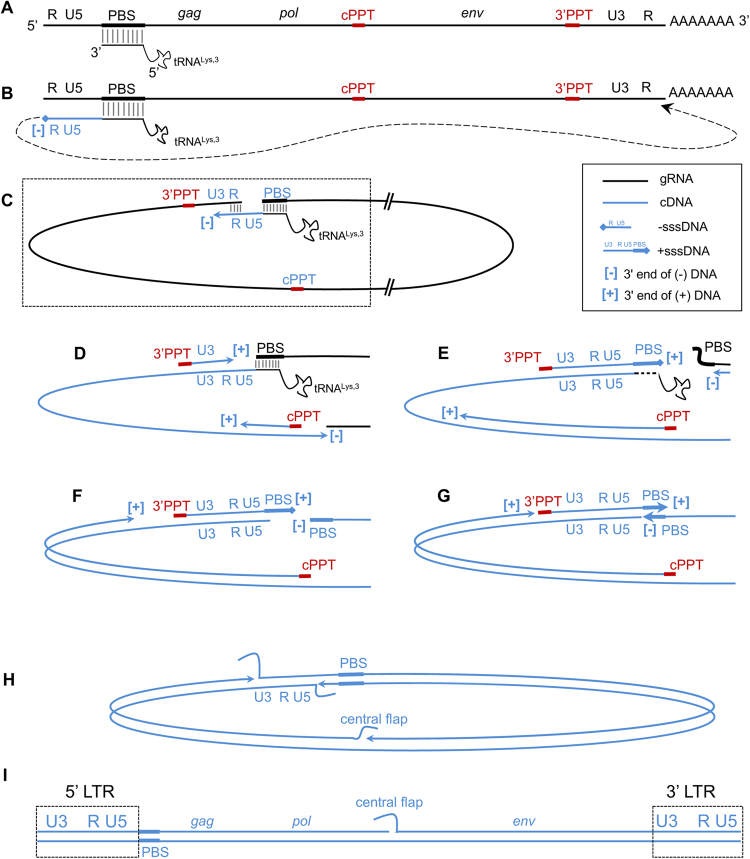
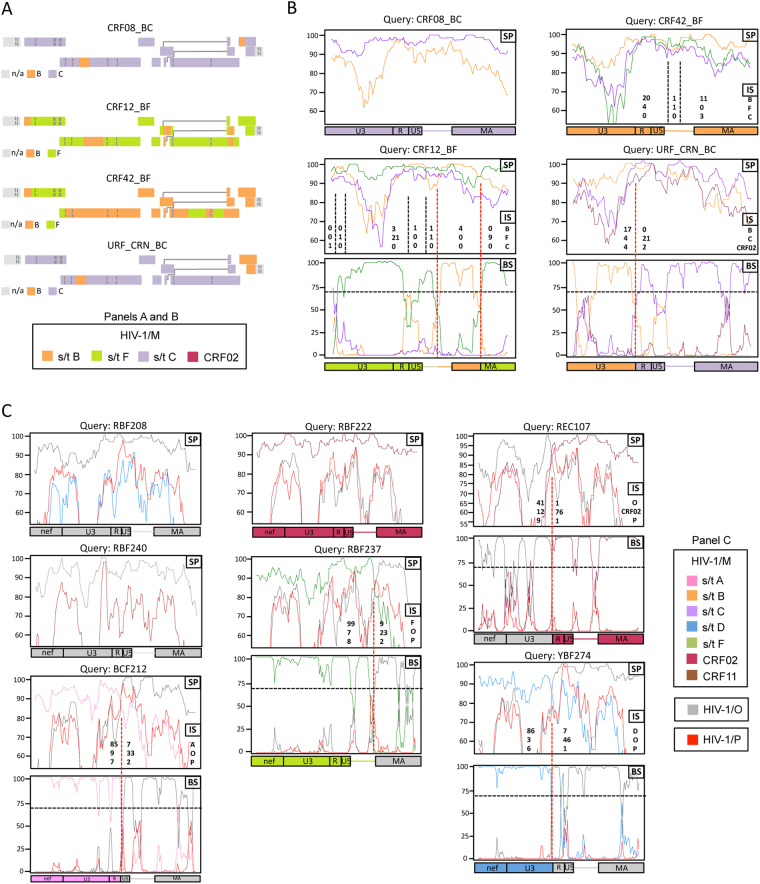
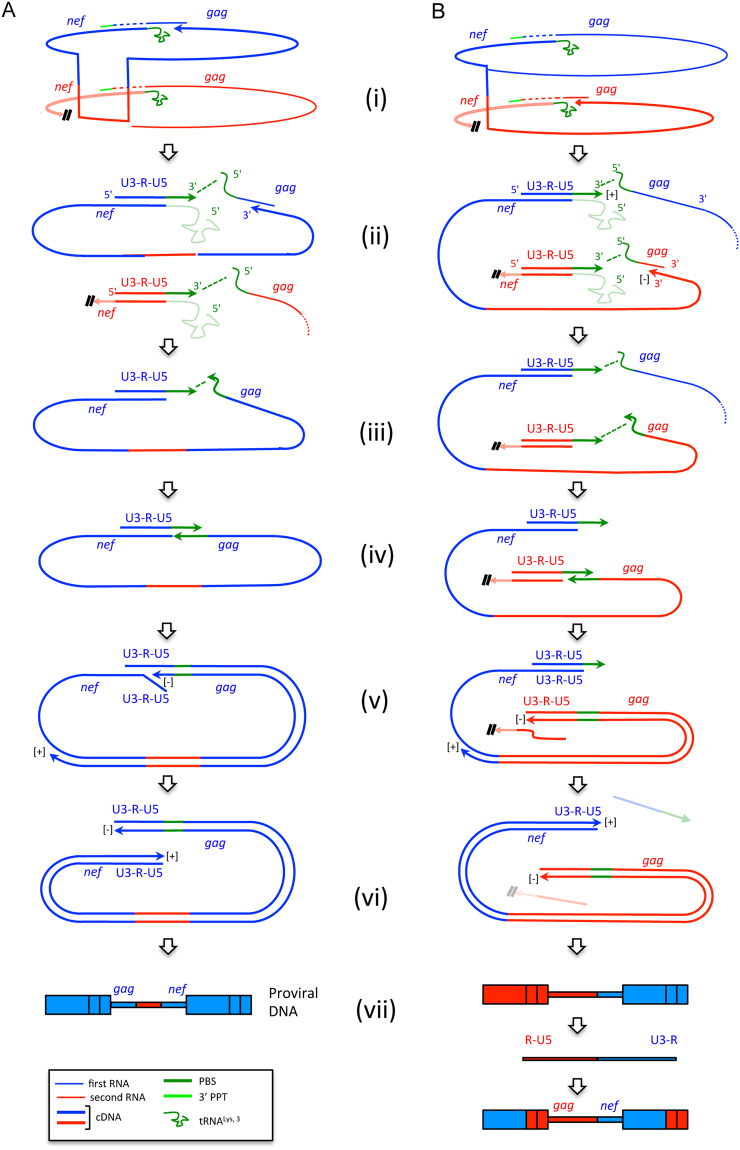
To generate the long-terminal repeats (LTR) that border the integrated viral genome, two-strand transfer steps must occur during reverse transcription. Analysis of the genetic polymorphisms that are present in the LTR of HIV-1 heterozygous virions in single infection cycle studies has revealed which of the two copies of genomic RNAs is used for each transfer event. Thus, the first event of strand transfer has been described to be either intra- or intermolecular, while the second event is generally intramolecular. Here, we repeated these analyses using sequences from HIV databases and extended the study to the regions surrounding the LTR. We observed a striking correlation between the pattern of recombination in the LTR and the phylogenetic origin of the surrounding sequences. This correlation suggests that the second-strand transfer can be either intra- or intermolecular and, interestingly, could reflect an effect of proximity between nucleic acids that would guide this transfer. This factor could be particularly relevant for heterozygous viruses containing highly divergent genomic RNAs, such as those considered in the present study.
为了生成整合病毒基因组边缘的长末端重复序列(LTR),在逆转录过程中必须发生双链转移步骤。在单感染周期研究中,对 HIV-1 杂合病毒体 LTR 中存在的遗传多态性进行分析,揭示了每一次转移事件中使用了基因组 RNA 的两个拷贝中的哪一个。因此,已经描述了第一个链转移事件是内或分子间的,而第二个事件通常是分子内的。在这里,我们使用 HIV 数据库中的序列重复了这些分析,并将研究扩展到 LTR 周围的区域。我们观察到 LTR 中的重组模式与周围序列的系统发育起源之间存在惊人的相关性。这种相关性表明,第二条链的转移可以是内或分子间的,有趣的是,它可能反映了核酸之间的接近程度,这将指导这种转移。对于含有高度分化基因组 RNA 的杂合病毒,如本研究中考虑的那些病毒,这个因素可能特别重要。