Anderson Craig, Beare Mike, Buckley Hannah L, Lear Gavin
Plant and Food Research, Lincoln, New Zealand.
School of Science, Auckland University of Technology, Auckland, New Zealand.
PeerJ. 2017 Oct 17;5:e3930. doi: 10.7717/peerj.3930. eCollection 2017.
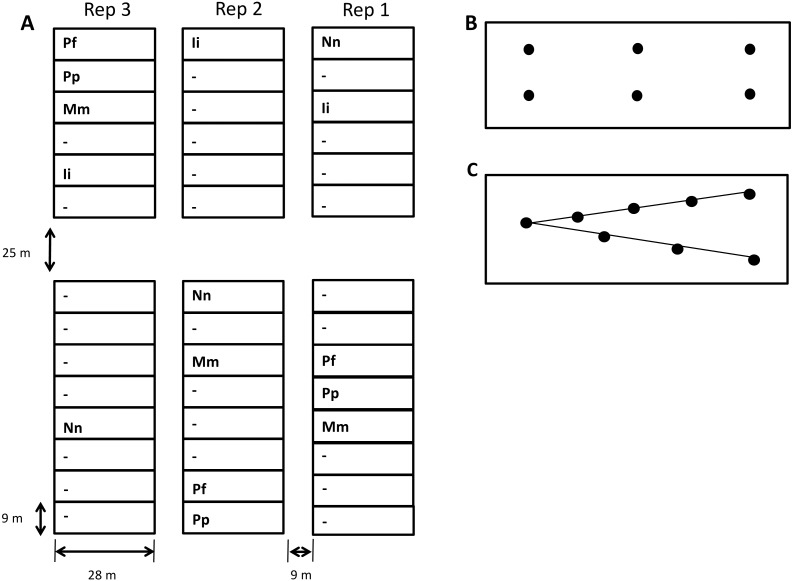
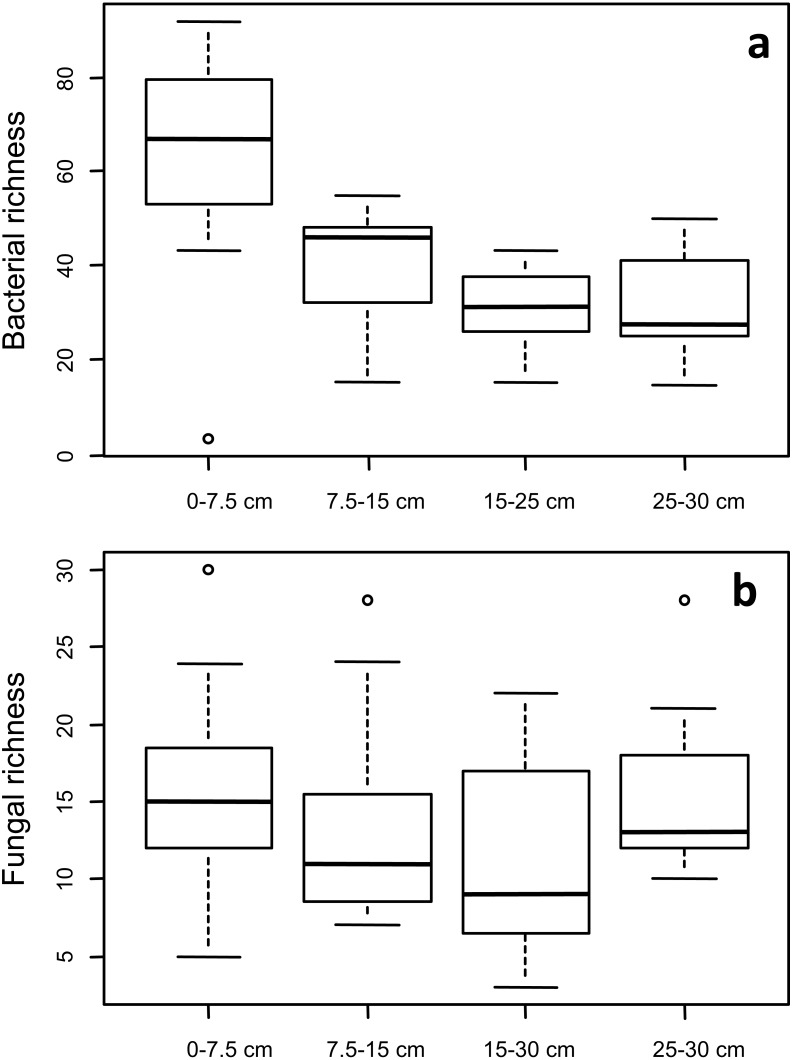
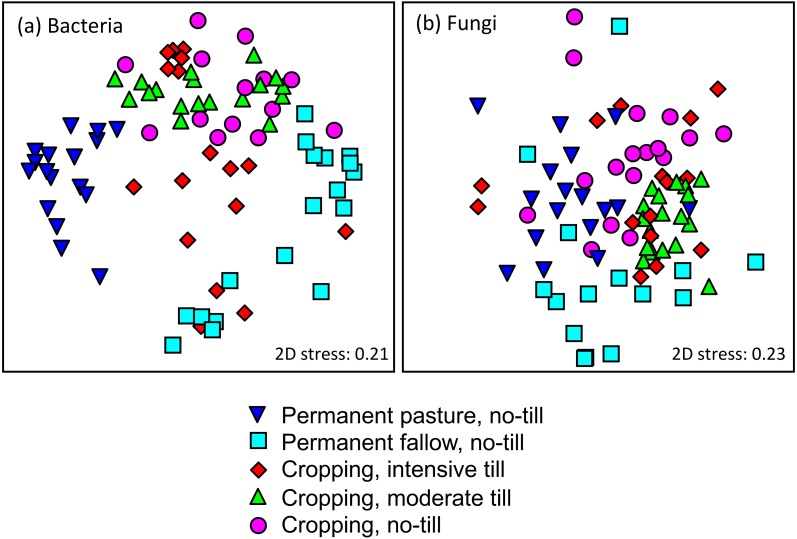
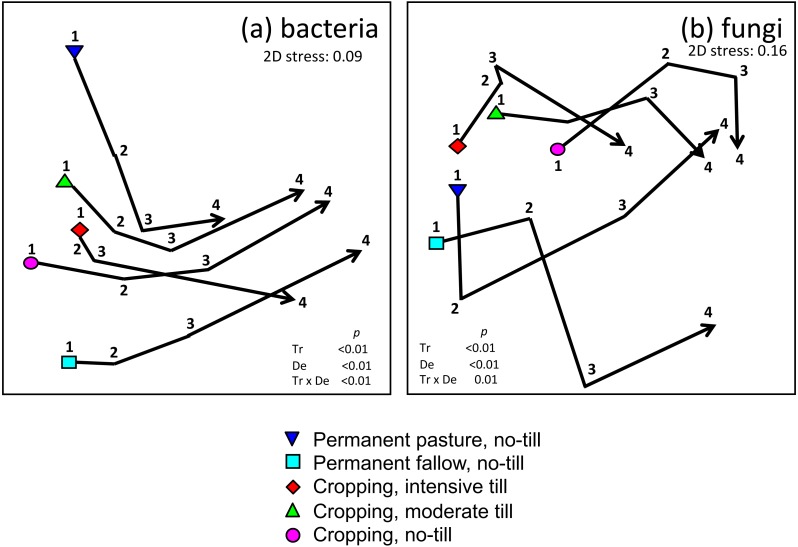
In arable cropping systems, reduced or conservation tillage practices are linked with improved soil quality, C retention and higher microbial biomass, but most long-term studies rarely focus on depths greater than 15 cm nor allow comparison of microbial community responses to agricultural practices. We investigated microbial community structure in a long-term field trial (12-years, Lincoln, New Zealand) established in a silt-loam soil over four depth ranges down to 30 cm. Our objectives were to investigate the degree of homogenisation of soil biological and chemical properties with depth, and to determine the main drivers of microbial community response to tillage. We hypothesised that soil microbiological responses would depend on tillage depth, observed by a homogenisation of microbial community composition within the tilled zone. Tillage treatments were mouldboard plough and disc harrow, impacting soil to ∼20 and ∼10 cm depth, respectively. These treatments were compared to a no-tillage treatment and two control treatments, both permanent pasture and permanent fallow. Bacterial and fungal communities collected from the site were not impacted by the spatial location of sampling across the study area but were affected by physicochemical changes associated with tillage induced soil homogenisation and plant presence. Tillage treatment effects on both species richness and composition were more evident for bacterial communities than fungal communities, and were greater at depths <15 cm. Homogenisation of soil and changing land management appears to redistribute both microbiota and nutrients deeper in the soil profile while consequences for soil biogeochemical functioning remain poorly understood.
在可耕地种植系统中,减少耕作或保护性耕作措施与土壤质量改善、碳固存增加及微生物生物量提高相关,但大多数长期研究很少关注大于15厘米的深度,也不允许比较微生物群落对农业实践的反应。我们在新西兰林肯市一个粉质壤土上建立的长期田间试验(12年)中,研究了四个深度范围直至30厘米的微生物群落结构。我们的目标是研究土壤生物和化学性质随深度的均质化程度,并确定微生物群落对耕作反应的主要驱动因素。我们假设土壤微生物反应将取决于耕作深度,这可通过耕作区内微生物群落组成的均质化来观察。耕作处理为铧式犁和圆盘耙,分别将土壤翻耕至约20厘米和10厘米深度。将这些处理与免耕处理以及两种对照处理(永久牧场和永久休耕)进行比较。从该地点采集的细菌和真菌群落不受研究区域内采样空间位置的影响,但受与耕作引起的土壤均质化和植物存在相关的物理化学变化的影响。耕作处理对细菌群落的物种丰富度和组成的影响比对真菌群落更明显,且在深度<15厘米时更大。土壤均质化和土地管理变化似乎将微生物群和养分重新分布到土壤剖面更深层,而对土壤生物地球化学功能的影响仍知之甚少。