Mowlaboccus Shakeel, Mullally Christopher A, Richmond Peter C, Howden Benjamin P, Stevens Kerrie, Speers David J, Keil Anthony D, Bjørnstad Ottar N, Perkins Timothy T, Kahler Charlene M
Marshall Center for Infectious Disease Research and Training, School of Biomedical Sciences, The University of Western Australia, Perth, Western Australia, Australia.
Division of Paediatrics, School of Medicine, The University of Western Australia, Perth, Western Australia, Australia.
PLoS One. 2017 Oct 24;12(10):e0186839. doi: 10.1371/journal.pone.0186839. eCollection 2017.
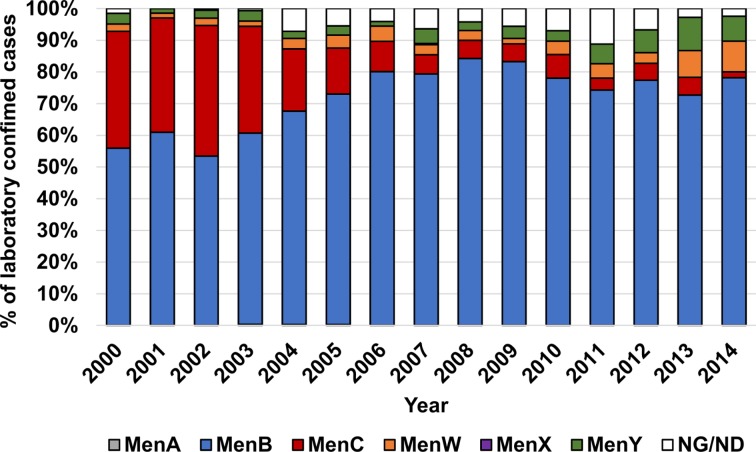
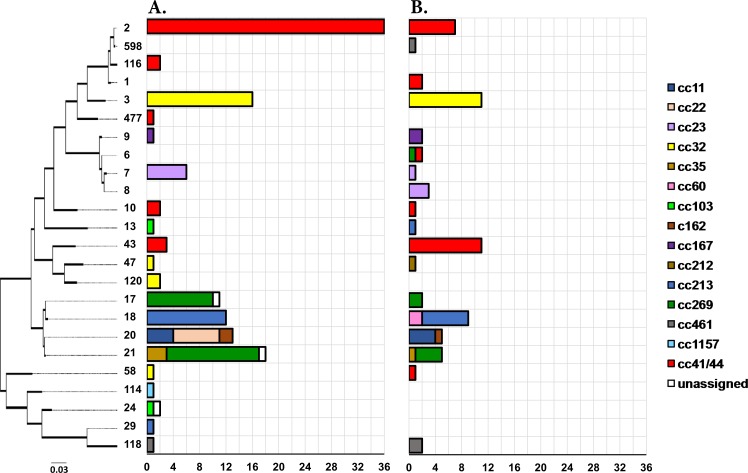
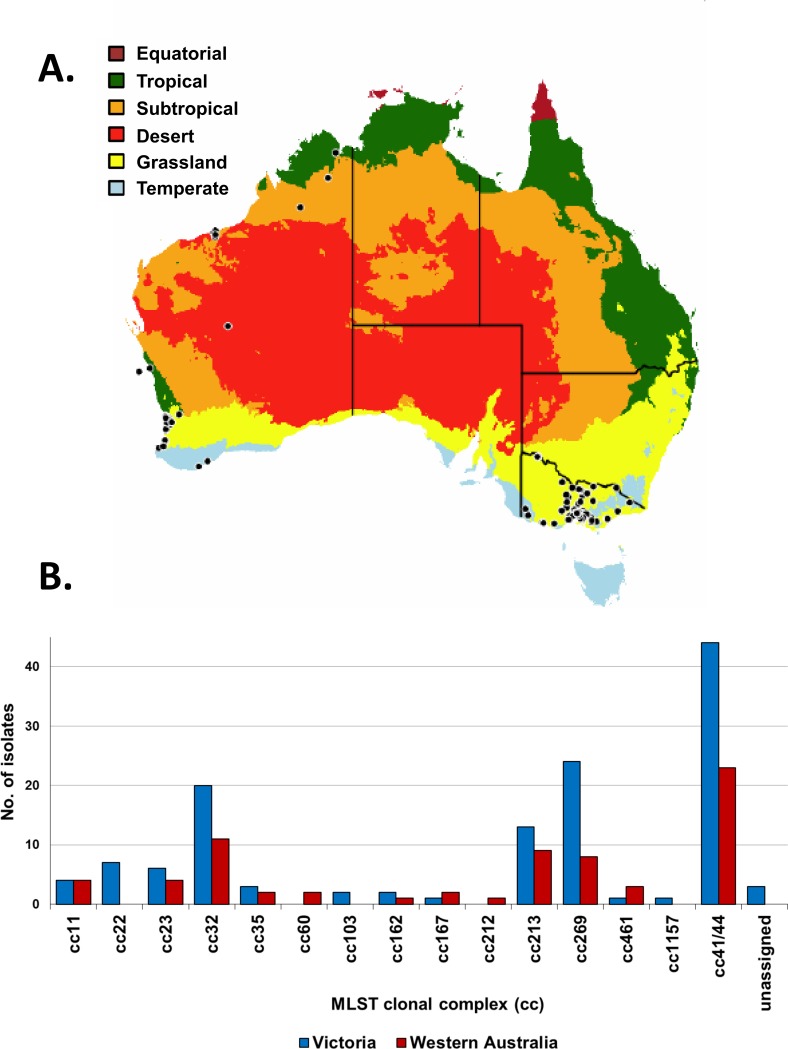
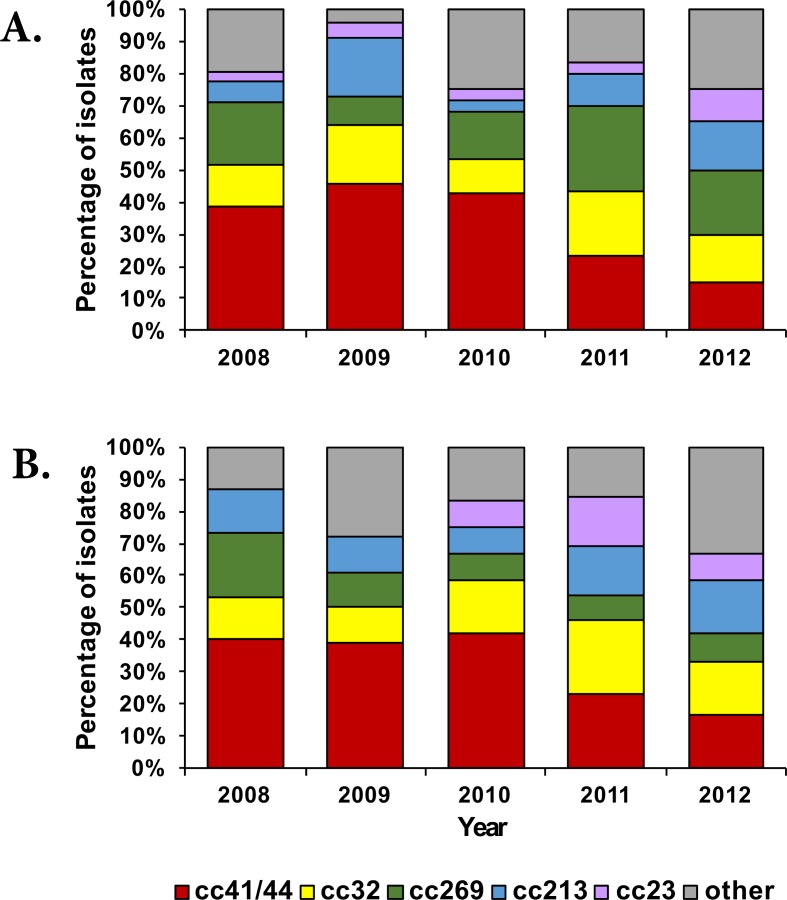
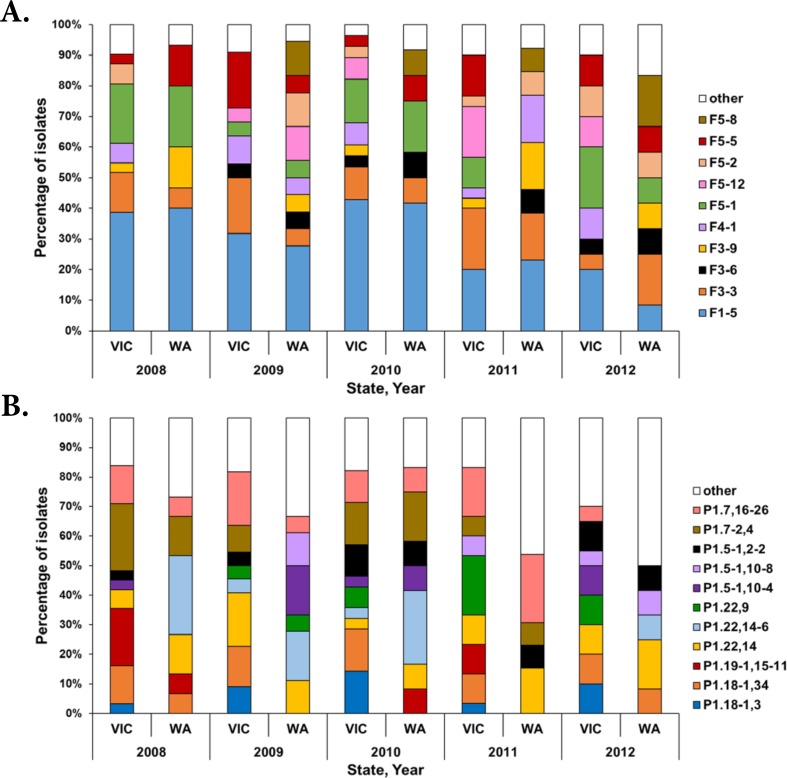
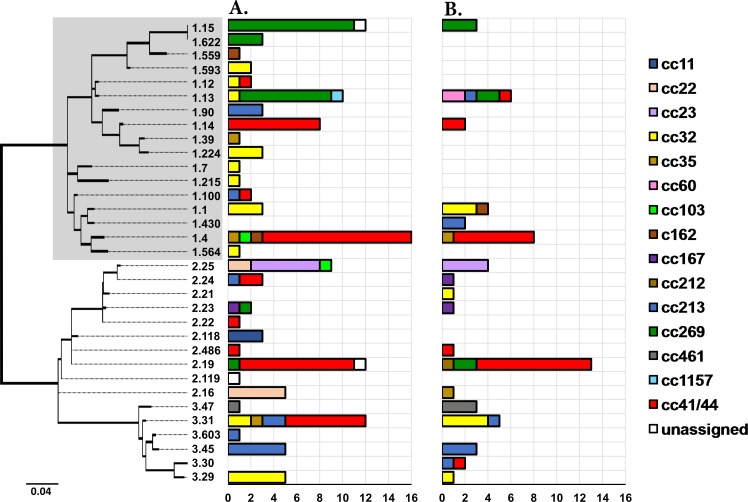
Neisseria meningitidis is the causative agent of invasive meningococcal disease (IMD). A recombinant vaccine called Bexsero® incorporates four subcapsular antigens (fHbp, NHBA, NadA and PorA) which are used to assign a Bexsero® antigen sequence type (BAST) to each meningococcal strain. The vaccine elicits an immune response against combinations of variants of these antigens which have been grouped into specific BAST profiles that have been shown to have different distributions within geographical locations thus potentially affecting the efficacy of the vaccine. In this study, invasive meningococcal disease isolates from the western seaboard of Australia (Western Australia; WA) were compared to those from the south-eastern seaboard (Victoria; VIC) from 2008 to 2012. Whole-genome sequencing (WGS) of 131 meningococci from VIC and 70 meningococci from WA were analysed for MLST, FetA and BAST profiling. Serogroup B predominated in both jurisdictions and a total of 10 MLST clonal complexes (cc) were shared by both states. Isolates belonging to cc22, cc103 and cc1157 were unique to VIC whilst isolates from cc60 and cc212 were unique to WA. Clonal complex 41/44 represented one-third of the meningococcal population in each state but the predominant ST was locally different: ST-6058 in VIC and ST-146 in WA. Of the 108 BAST profiles identified in this collection, only 9 BASTs were simultaneously observed in both states. A significantly larger proportion of isolates in VIC harboured alleles for the NHBA-2 peptide and fHbp-1, antigenic variants predicted to be covered by the Bexsero® vaccine. The estimate for vaccine coverage in WA (47.1% [95% CI: 41.1-53.1%]) was significantly lower than that in VIC (66.4% [95% CI: 62.3-70.5%]). In conclusion, the antigenic structure of meningococci causing invasive disease in two geographically distinct states of Australia differed significantly during the study period which may affect vaccine effectiveness and highlights the need for representative surveillance when predicting potential impact of meningococcal B vaccines.
脑膜炎奈瑟菌是侵袭性脑膜炎球菌病(IMD)的病原体。一种名为Bexsero®的重组疫苗包含四种包膜下抗原(fHbp、NHBA、NadA和PorA),这些抗原用于为每个脑膜炎球菌菌株指定一个Bexsero®抗原序列类型(BAST)。该疫苗可引发针对这些抗原变体组合的免疫反应,这些变体已被分组为特定的BAST谱,研究表明这些谱在不同地理位置具有不同的分布,从而可能影响疫苗的效力。在本研究中,对2008年至2012年从澳大利亚西海岸(西澳大利亚州;WA)和东南海岸(维多利亚州;VIC)分离出的侵袭性脑膜炎球菌病菌株进行了比较。对来自VIC的131株脑膜炎球菌和来自WA的70株脑膜炎球菌进行全基因组测序(WGS),分析其多位点序列分型(MLST)、FetA和BAST谱。B血清群在两个辖区均占主导地位,两个州共有10个MLST克隆复合体(cc)。属于cc22、cc103和cc1157的菌株是VIC特有的,而来自cc60和cc212的菌株是WA特有的。克隆复合体41/44在每个州的脑膜炎球菌群体中占三分之一,但主要的序列型在当地有所不同:VIC为ST-6058,WA为ST-146。在该样本中鉴定出的108种BAST谱中,两个州同时观察到的只有9种。VIC中携带NHBA-2肽和fHbp-1等位基因的分离株比例显著更高,这两种抗原变体预计可被Bexsero®疫苗覆盖。WA的疫苗覆盖率估计值(47.1%[95%CI:41.1 - 53.1%])显著低于VIC(66.4%[95%CI:62.3 - 70.5%])。总之,在研究期间,澳大利亚两个地理位置不同的州引起侵袭性疾病的脑膜炎球菌的抗原结构存在显著差异,这可能影响疫苗效果,并突出了在预测B群脑膜炎球菌疫苗的潜在影响时进行代表性监测的必要性。