Xinjiang Academy of Forestry, Urumqi 830000, China.
Economic forest product quality inspection and testing center of the State Forestry Administration (Urumqi), Urumqi 830052, China.
Molecules. 2017 Oct 23;22(10):1790. doi: 10.3390/molecules22101790.
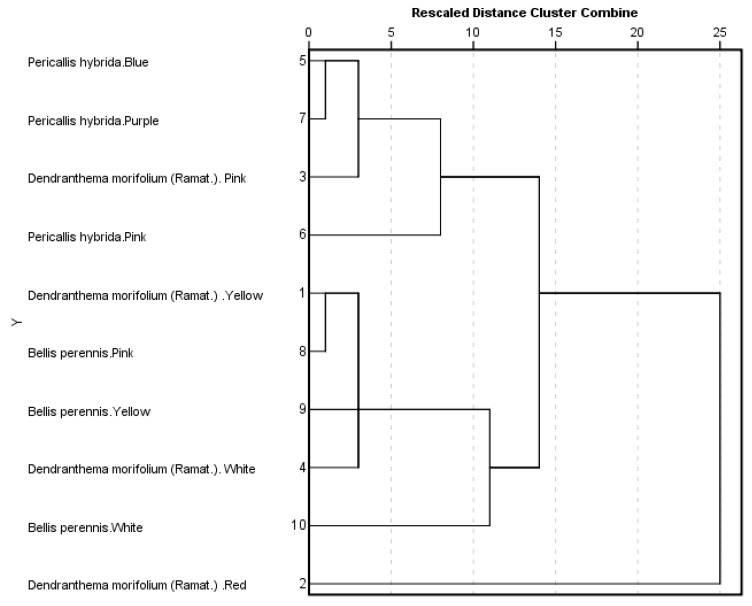
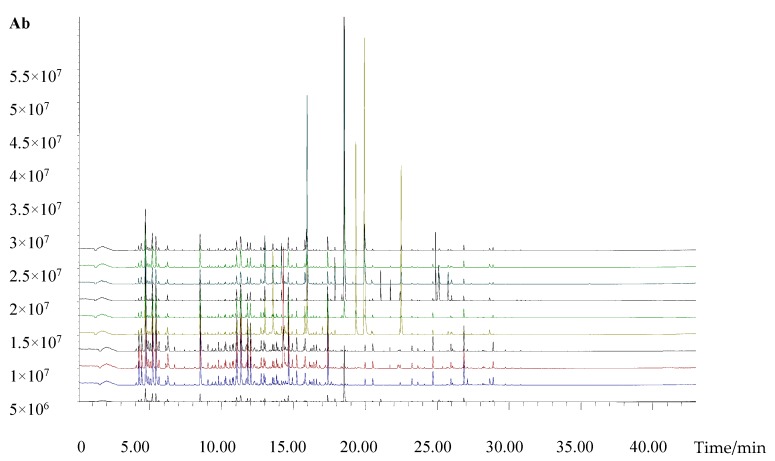
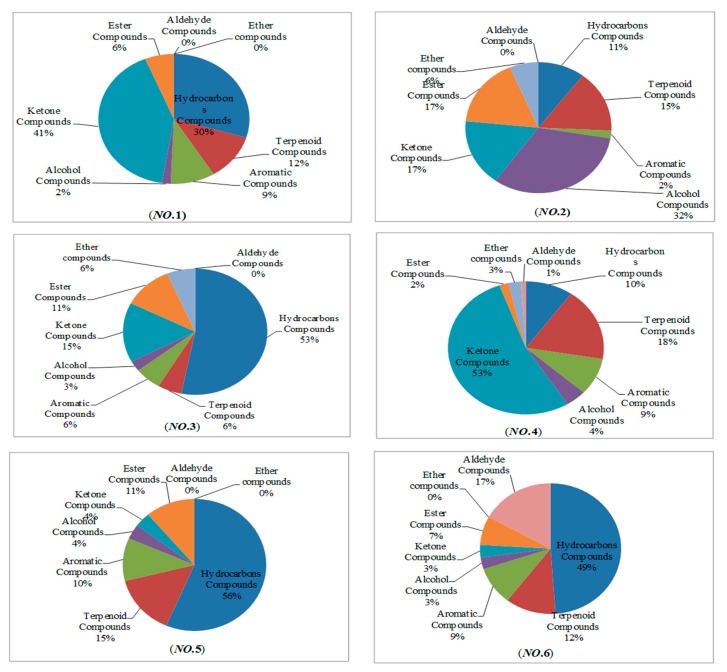
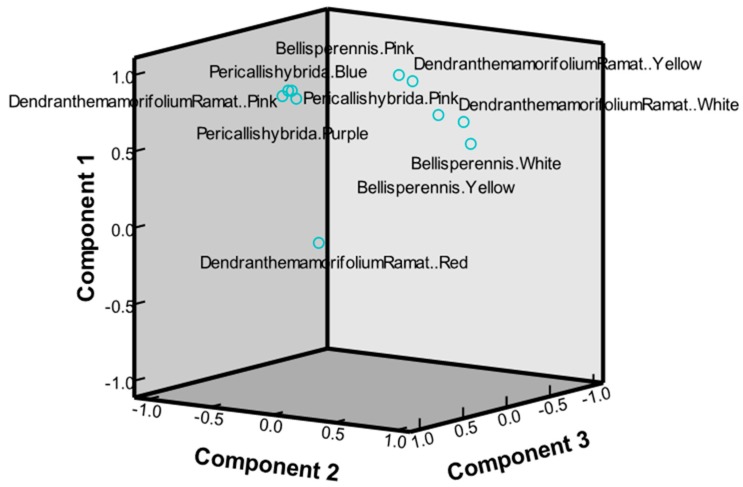
This study investigated the volatile flavor compounds and antioxidant properties of the essential oil of chrysanthemums that was extracted from the fresh flowers of 10 taxa of from three species; namely Yellow, Red, Pink, White, Blue, Pink, Purple, Pink, Yellow, and White. The antioxidant capacity of the essential oil was assayed by spectrophotometric analysis. The volatile flavor compounds from the fresh flowers were collected using dynamic headspace collection, analyzed using auto thermal desorber-gas chromatography/mass spectrometry, and identified with quantification using the external standard method. The antioxidant activities of were evaluated by DPPH and FRAP assays, and the results showed that the antioxidant activity of each sample was not the same. The different varieties of fresh flowers were distinguished and classified by fingerprint similarity evaluation, principle component analysis (PCA), and cluster analysis. The results showed that the floral volatile component profiles were significantly different among the different varieties. A total of 36 volatile flavor compounds were identified with eight functional groups: hydrocarbons, terpenoids, aromatic compounds, alcohols, ketones, ethers, aldehydes, and esters. Moreover, the variability among in basis to the data, and the first three principal components (PC1, PC2, and PC3) accounted for 96.509% of the total variance (55.802%, 30.599%, and 10.108%, respectively). PCA indicated that there were marked differences among varieties. The cluster analysis confirmed the results of the PCA analysis. In conclusion, the results of this study provide a basis for breeding cultivars with desirable floral scents, and they further support the view that some plants are promising sources of natural antioxidants.
本研究调查了从三种物种的 10 个分类群的新鲜菊花花朵中提取的菊花精油的挥发性风味化合物和抗氧化特性; 即黄色、红色、粉红色、白色、蓝色、粉红色、紫色、粉红色、黄色和白色。通过分光光度分析测定精油的抗氧化能力。使用动态顶空收集法收集新鲜花朵中的挥发性风味化合物,使用自动热解吸-气相色谱/质谱法进行分析,并使用外标法进行定量鉴定。通过 DPPH 和 FRAP 测定评估 的抗氧化活性,结果表明,每个样品的抗氧化活性并不相同。通过指纹相似性评估、主成分分析 (PCA) 和聚类分析对不同品种的新鲜菊花进行区分和分类。结果表明,不同品种的菊花花挥发性成分图谱存在显著差异。共鉴定出 36 种挥发性风味化合物,分为 8 个功能组:碳氢化合物、萜类化合物、芳香族化合物、醇类、酮类、醚类、醛类和酯类。此外,基于数据的 之间的变异性,前三个主成分 (PC1、PC2 和 PC3) 占总方差的 96.509% (分别为 55.802%、30.599%和 10.108%)。PCA 表明品种之间存在明显差异。聚类分析证实了 PCA 分析的结果。总之,本研究的结果为培育具有理想花香的菊花品种提供了依据,进一步支持了一些植物是天然抗氧化剂的有前途的来源的观点。