Roncero Carlos, Kniefel Heike, Service Erik, Thiel Alexander, Probst Stephan, Chertkow Howard
Bloomfield Centre for Research in Aging, Lady Davis Institute of Research, Jewish General Hospital, McGill University, Montréal, Quebec, Canada.
Alzheimers Dement (N Y). 2017 Mar 24;3(2):247-253. doi: 10.1016/j.trci.2017.03.003. eCollection 2017 Jun.
We evaluated whether transcranial direct current stimulation (tDCS) can improve picture-naming abilities in subjects with anomic Alzheimer or frontotemporal dementias.
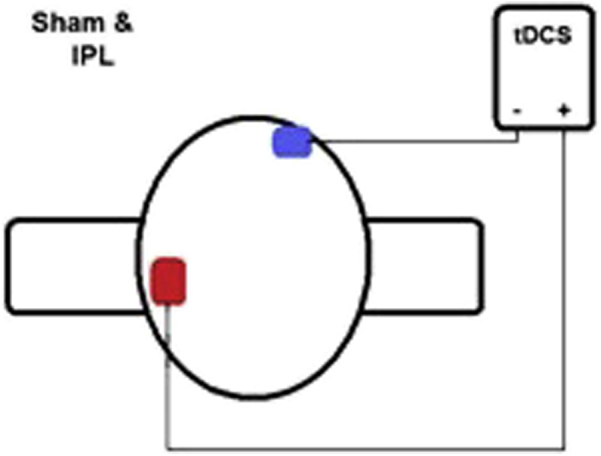
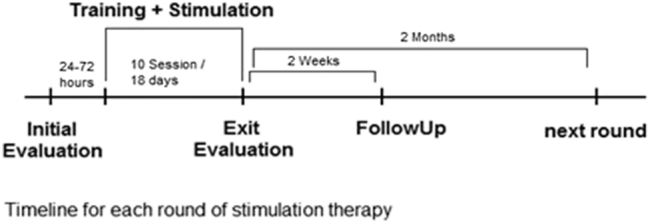
Using a double-blind crossover design, 10 participants were trained on picture naming over a series of 10 sessions with either 30 minutes of anodal (2 mA) tDCS stimulation to the left inferior parieto-temporal region (P3) or sham stimulation. We evaluated performance on a trained picture-naming list, an equivalent untrained list, and additional neuropsychological tasks.
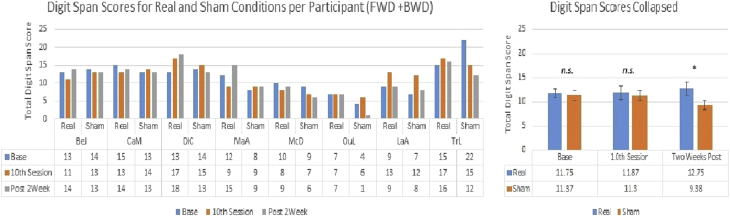
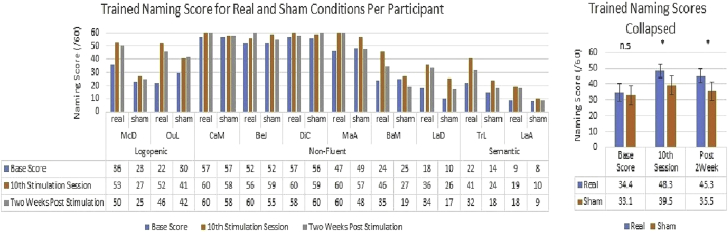
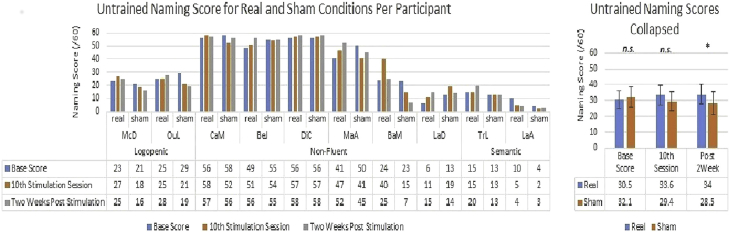
Participants improved significantly more receiving real stimulation rather than sham stimulation (40% vs. 19%, < .01), lasting at least 2 weeks after stimulation. Furthermore, these participants showed a small increase for untrained picture-naming items and digit span when they received real stimulation but a decrease when sham stimulation was received.
tDCS stimulation has promise as a treatment for anomia in demented individuals and the effect can generalize to unstudied items as well as other cognitive abilities.
我们评估了经颅直流电刺激(tDCS)能否改善命名性失语型阿尔茨海默病或额颞叶痴呆患者的图片命名能力。
采用双盲交叉设计,10名参与者在一系列10次训练中接受针对图片命名的训练,其中一组接受30分钟阳极(2毫安)tDCS刺激左侧顶颞叶下部区域(P3),另一组接受假刺激。我们评估了参与者在已训练图片命名列表、等效未训练列表以及其他神经心理学任务上的表现。
接受真实刺激的参与者比接受假刺激的参与者改善更为显著(40%对19%,<0.01),且这种改善在刺激后至少持续2周。此外,这些参与者在接受真实刺激时,未训练图片命名项目和数字广度有小幅增加,而接受假刺激时则下降。
tDCS刺激有望成为治疗痴呆患者命名性失语的一种方法,其效果可推广到未研究的项目以及其他认知能力。