Department Microbial Pathogenicity Mechanisms, Leibniz Institute for Natural Product Research and Infection Biology- Hans Knoell Institute, 07745 Jena, Germany.
FEMS Microbiol Rev. 2018 Jan 1;42(1). doi: 10.1093/femsre/fux050.
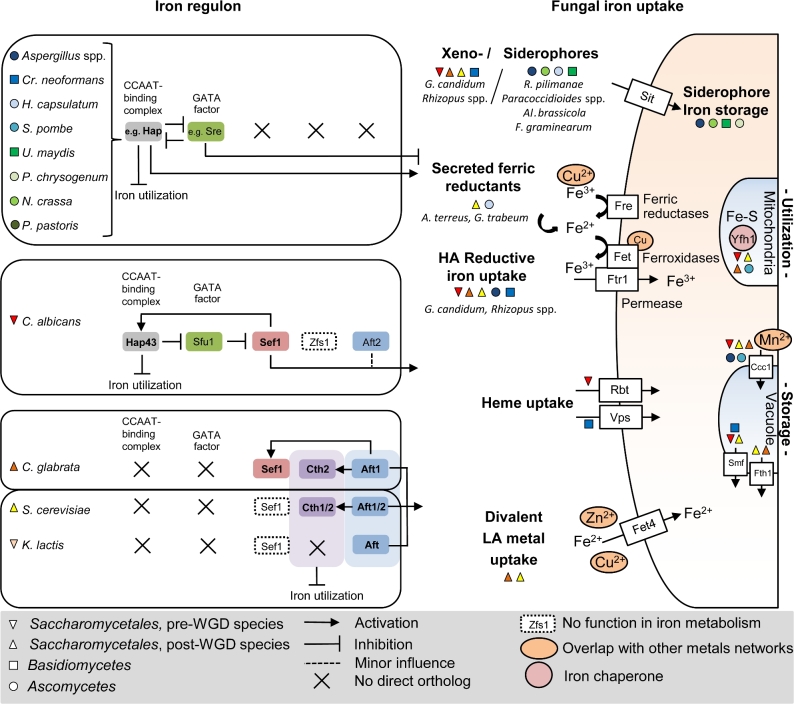
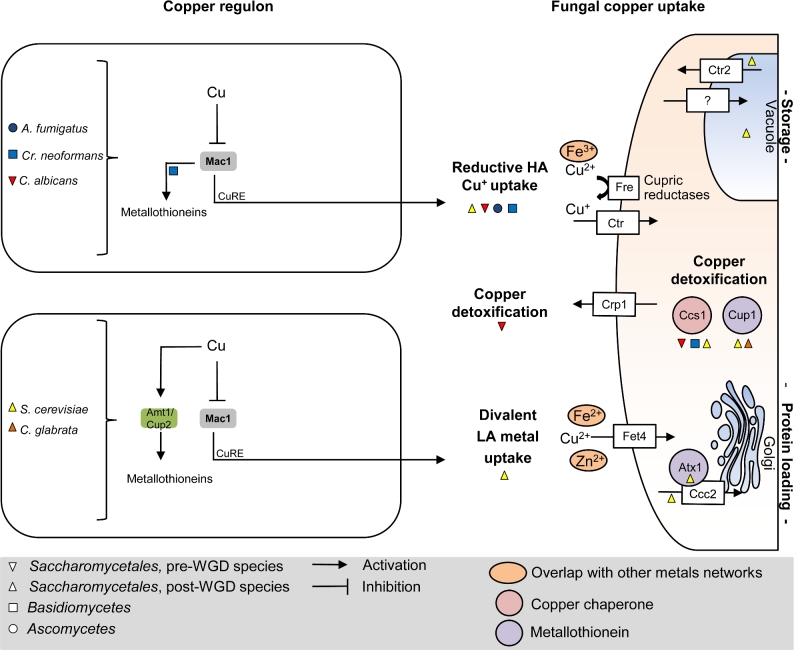
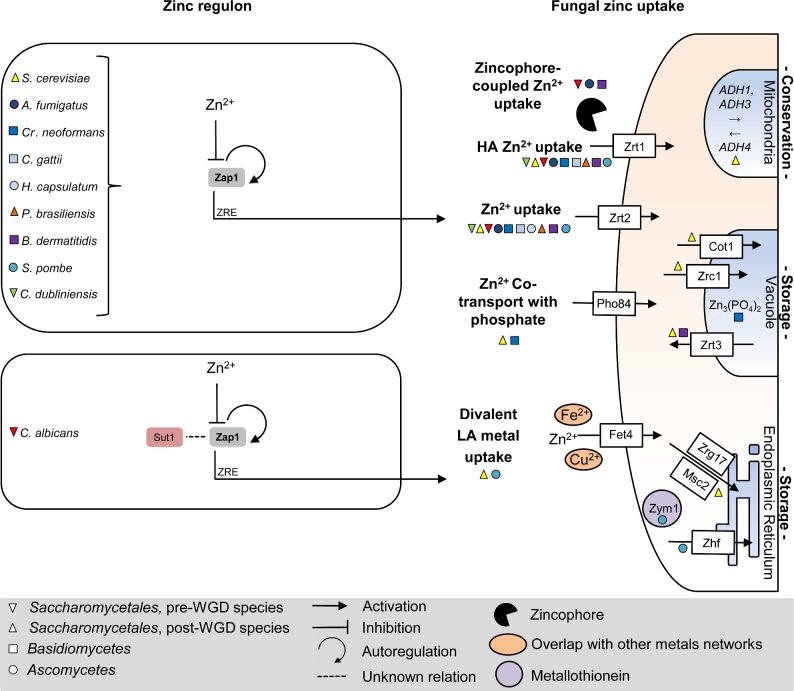
Metals are essential for life, and they play a central role in the struggle between infecting microbes and their hosts. In fact, an important aspect of microbial pathogenesis is the 'nutritional immunity', in which metals are actively restricted (or, in an extended definition of the term, locally enriched) by the host to hinder microbial growth and virulence. Consequently, fungi have evolved often complex regulatory networks, uptake and detoxification systems for essential metals such as iron, zinc, copper, nickel and manganese. These systems often differ fundamentally from their bacterial counterparts, but even within the fungal pathogens we can find common and unique solutions to maintain metal homeostasis. Thus, we here compare the common and species-specific mechanisms used for different metals among different fungal species-focusing on important human pathogens such as Candida albicans, Aspergillus fumigatus or Cryptococcus neoformans, but also looking at model fungi such as Saccharomyces cerevisiae or A. nidulans as well-studied examples for the underlying principles. These direct comparisons of our current knowledge reveal that we have a good understanding how model fungal pathogens take up iron or zinc, but that much is still to learn about other metals and specific adaptations of individual species-not the least to exploit this knowledge for new antifungal strategies.
金属是生命所必需的,它们在感染微生物与其宿主之间的斗争中起着核心作用。事实上,微生物发病机制的一个重要方面是“营养免疫”,在这种免疫中,宿主会积极限制(或者,在该术语的扩展定义中,局部富集)金属,以阻碍微生物的生长和毒力。因此,真菌已经进化出了复杂的调控网络、摄取和解毒系统,用于获取铁、锌、铜、镍和锰等必需金属。这些系统通常与细菌的系统有根本的不同,但即使在真菌病原体中,我们也可以找到维持金属体内平衡的共同和独特的解决方案。因此,我们在这里比较了不同真菌物种中不同金属的共同和特定的机制——重点关注白色念珠菌、烟曲霉或新生隐球菌等重要的人类病原体,但也研究了模式真菌,如酿酒酵母或构巢曲霉,作为潜在原理的研究实例。对我们现有知识的这些直接比较表明,我们很好地理解了模式真菌病原体如何摄取铁或锌,但对于其他金属以及特定物种的特定适应,我们还有很多需要了解的地方——这至少是为了利用这些知识来制定新的抗真菌策略。