Bioseparation Engineering Group, Department of Mechanical Engineering, Technical University of Munich, 85748, Garching b. München, Germany.
Institute of Nanotechnology, Karlsruhe Institute of Technology, 76344, Eggenstein-Leopoldshafen, Germany.
Sci Rep. 2017 Oct 25;7(1):14047. doi: 10.1038/s41598-017-13928-6.
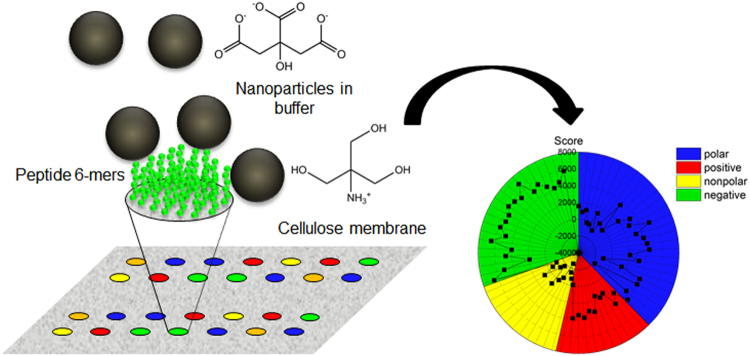
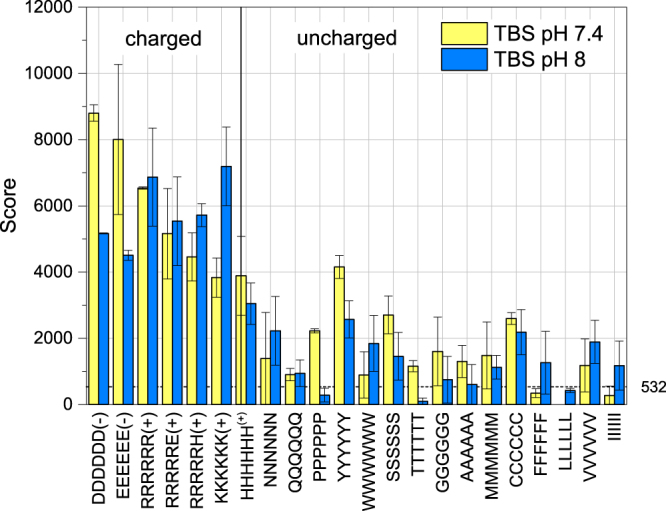
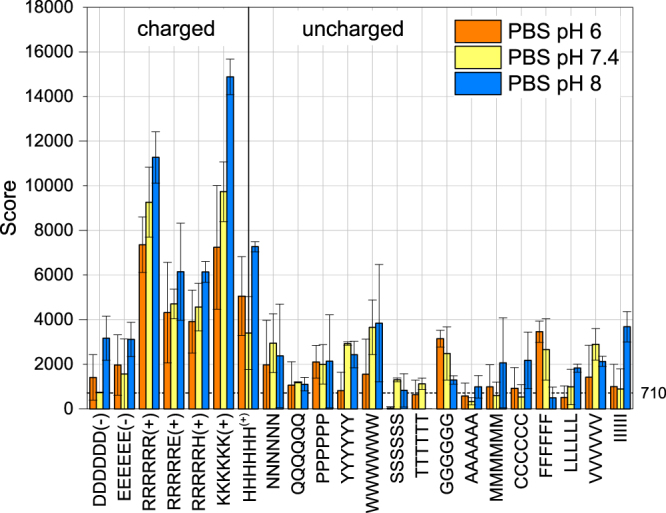
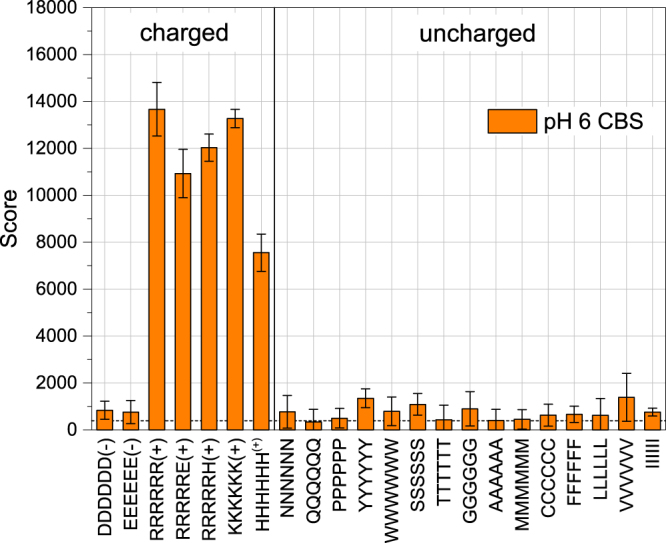
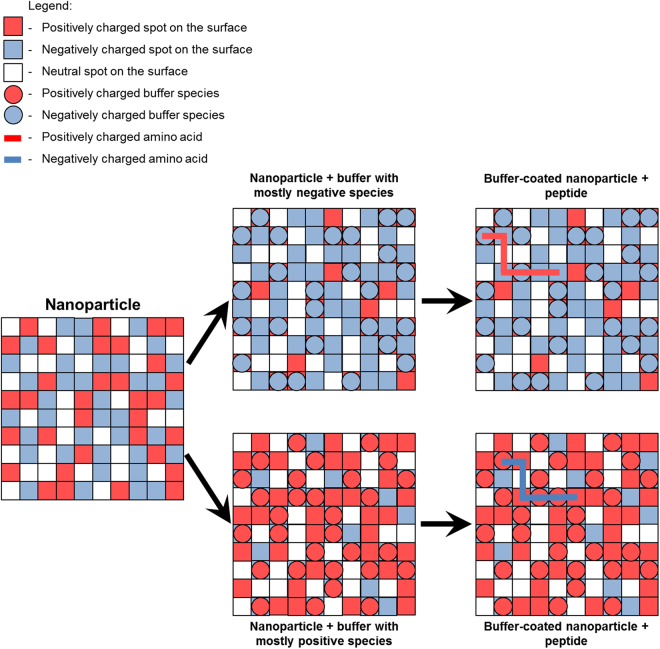
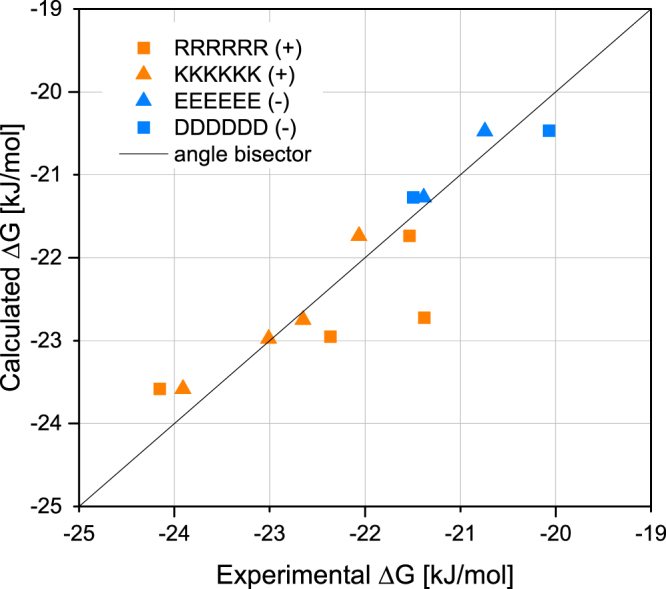
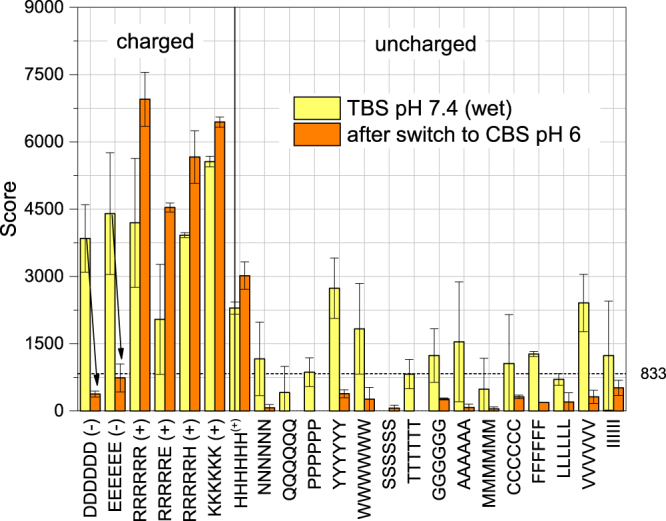
Magnetic nanoparticles (MNP) are intensively investigated for applications in nanomedicine, catalysis and biotechnology, where their interaction with peptides and proteins plays an important role. However, the characterisation of the interaction of individual amino acids with MNP remains challenging. Here, we classify the affinity of 20 amino acid homo-hexamers to unmodified iron oxide nanoparticles using peptide arrays in a variety of conditions as a basis to identify and rationally design selectively binding peptides. The choice of buffer system is shown to strongly influence the availability of peptide binding sites on the MNP surface. We find that under certain buffer conditions peptides of different charges can bind the MNP and that the relative strength of the interactions can be modulated by changing the buffer. We further present a model for the competition between the buffer and the MNP's electrostatically binding to the adsorption sites. Thereby, we demonstrate that the charge distribution on the surface can be used to correlate the binding of positively and negatively charged peptides to the MNP. This analysis enables us to engineer the binding of MNP on peptides and contribute to better understand the bio-nano interactions, a step towards the design of affinity tags for advanced biomaterials.
磁性纳米粒子(MNP)在纳米医学、催化和生物技术等领域的应用得到了广泛研究,其与肽和蛋白质的相互作用起着重要作用。然而,单个氨基酸与 MNP 的相互作用的特征仍然具有挑战性。在这里,我们使用肽阵列在多种条件下对 20 种氨基酸同六聚体与未修饰的氧化铁纳米粒子的亲和力进行分类,以此为基础来识别和合理设计选择性结合肽。缓冲体系的选择被证明强烈影响 MNP 表面上肽结合位点的可用性。我们发现,在某些缓冲条件下,不同电荷的肽可以结合 MNP,并且通过改变缓冲液可以调节相互作用的相对强度。我们进一步提出了一个模型,用于缓冲液和 MNP 与吸附位点的静电结合之间的竞争。由此,我们证明了表面上的电荷分布可用于将带正电荷和带负电荷的肽与 MNP 的结合相关联。这种分析使我们能够设计用于修饰 MNP 与肽的结合,并有助于更好地理解生物-纳米相互作用,朝着为先进生物材料设计亲和标签迈出了一步。