Bobadilla-Suarez Sebastian, Sunstein Cass R, Sharot Tali
Affective Brain Lab, Department of Experimental Psychology, University College London, WC1H 0AP, London, UK.
The Alan Turing Institute, 96 Euston Road, London, NW1 2DB UK.
J Risk Uncertain. 2017;54(3):187-202. doi: 10.1007/s11166-017-9259-x. Epub 2017 Jul 27.
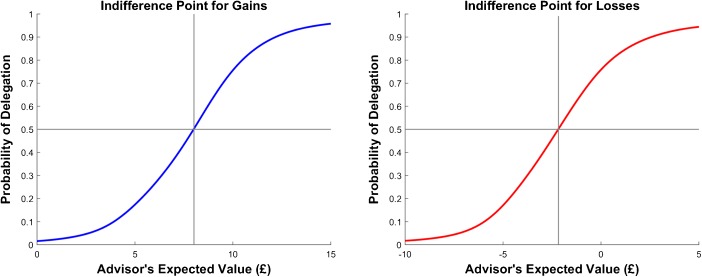
Human beings are often faced with a pervasive problem: whether to make their own decision or to delegate the decision task to someone else. Here, we test whether people are inclined to forgo monetary rewards in order to retain agency when faced with choices that could lead to losses and gains. In a simple choice task, we show that participants choose to pay in order to control their own payoff more than they should if they were to maximize monetary rewards and minimize monetary losses. This tendency cannot be explained by participants' overconfidence in their own ability, as their perceived ability was elicited and accounted for. Nor can the results be explained by lack of information. Rather, the results seem to reflect an intrinsic value for choice, which emerges in the domain of both gains and of losses. Moreover, our data indicate that participants are aware that they are making suboptimal choices in the normative sense, but do so anyway, presumably for psychological gains.
是自己做决定还是将决策任务委托给他人。在此,我们测试当人们面对可能带来损失和收益的选择时,是否倾向于放弃金钱奖励以保留自主权。在一个简单的选择任务中,我们发现,与为了最大化金钱奖励和最小化金钱损失而应该做出的选择相比,参与者会选择支付费用来更多地控制自己的收益。这种倾向无法用参与者对自身能力的过度自信来解释,因为我们已经引出并考虑了他们对自身能力的认知。这些结果也不能用信息不足来解释。相反,这些结果似乎反映了选择的内在价值,这种价值在收益和损失领域都会出现。此外,我们的数据表明,参与者意识到他们在规范意义上做出了次优选择,但无论如何还是这样做了,大概是为了心理上的收获。