Williams Vivienne L, Loveridge Andrew J, Newton David J, Macdonald David W
School of Animal, Plant & Environmental Sciences; University of the Witwatersrand, Wits, South Africa.
Wildlife Conservation Research Unit, Department of Zoology, Oxford University, The Recananti-Kaplan Centre, Tubney House, Tubney, Oxon, United Kingdom.
PLoS One. 2017 Oct 26;12(10):e0187060. doi: 10.1371/journal.pone.0187060. eCollection 2017.
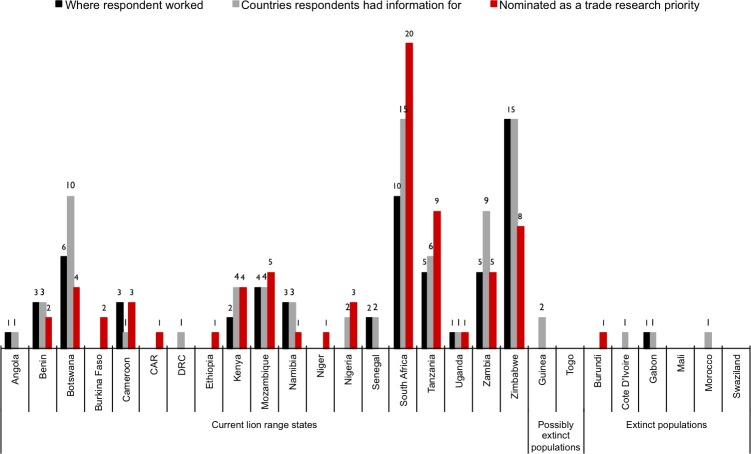
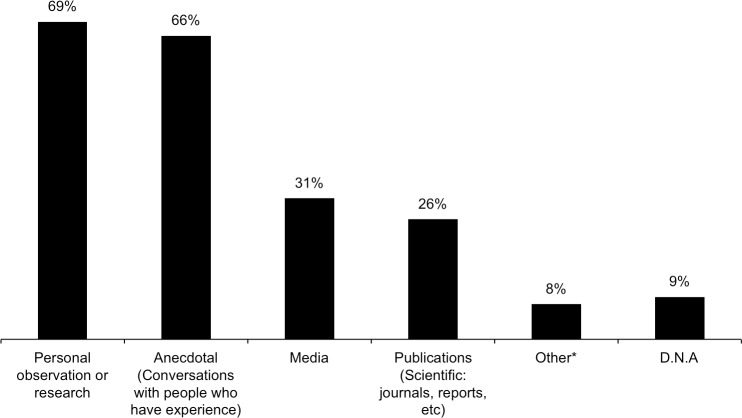
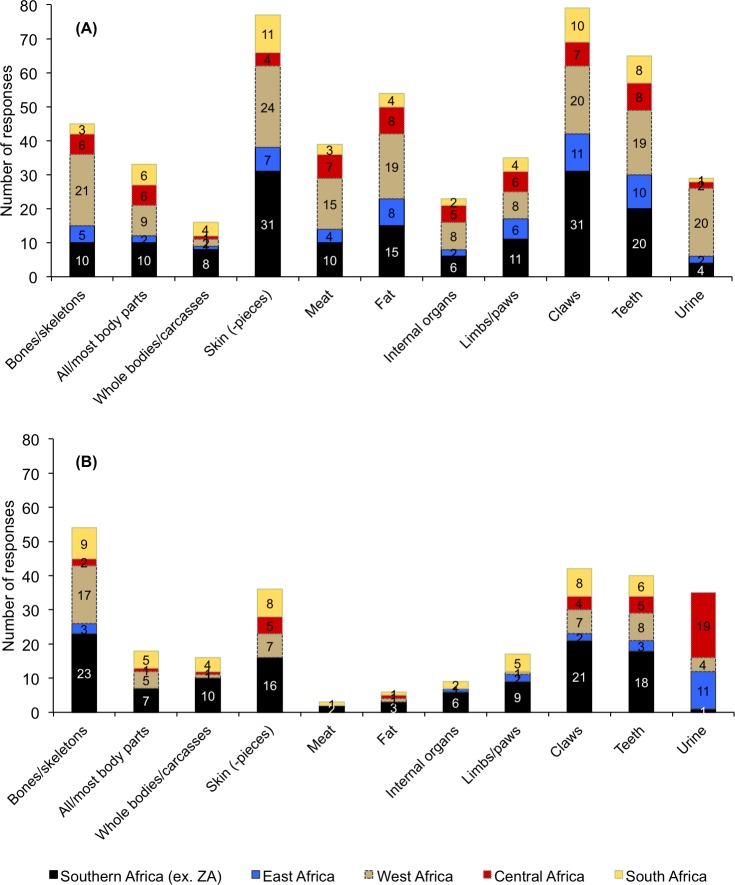
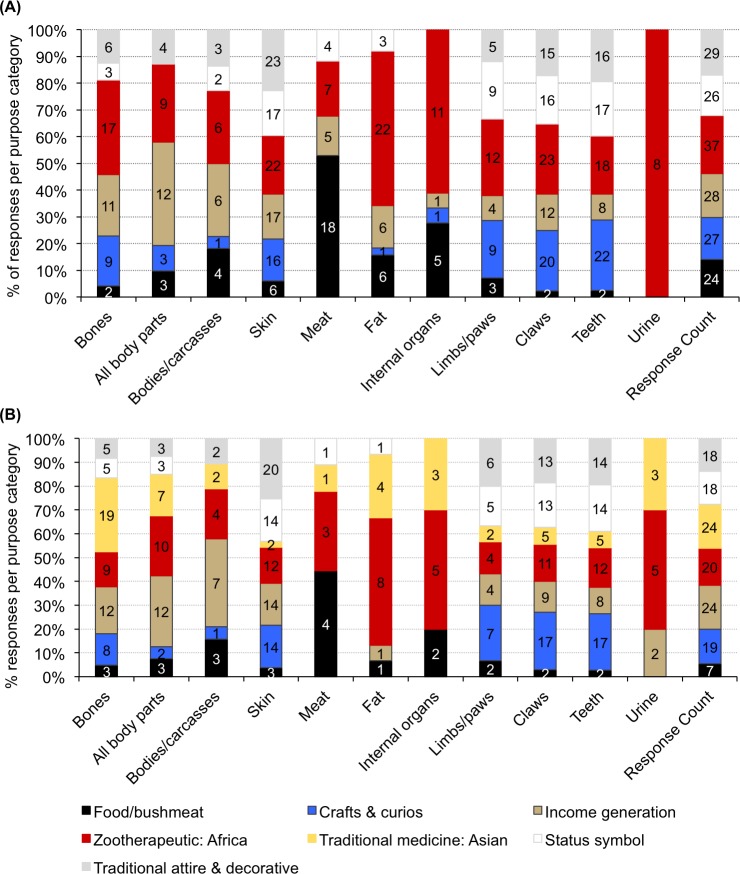
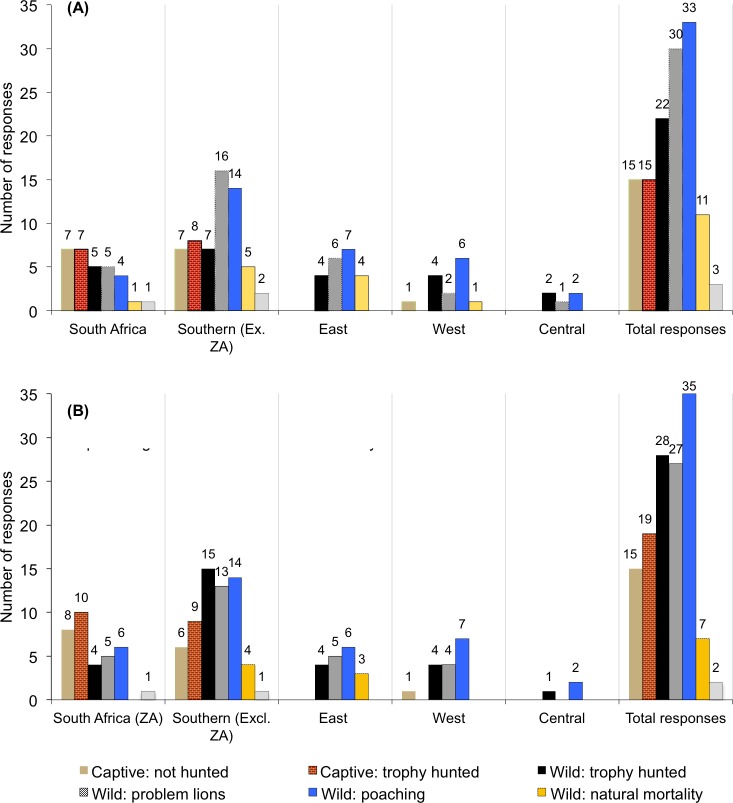
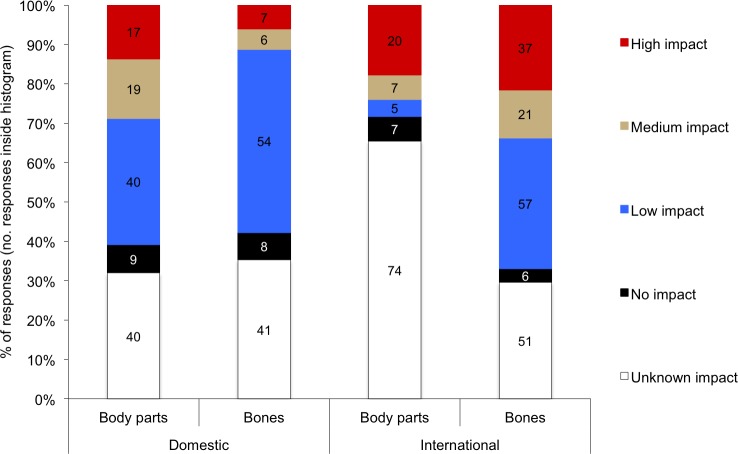
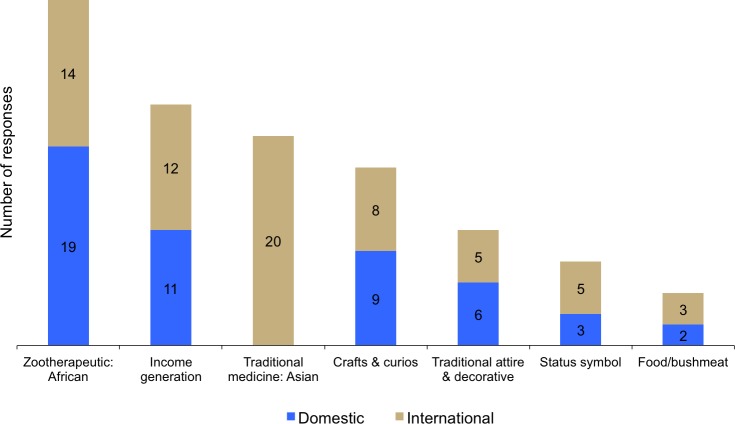
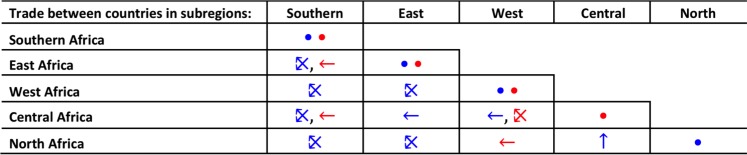
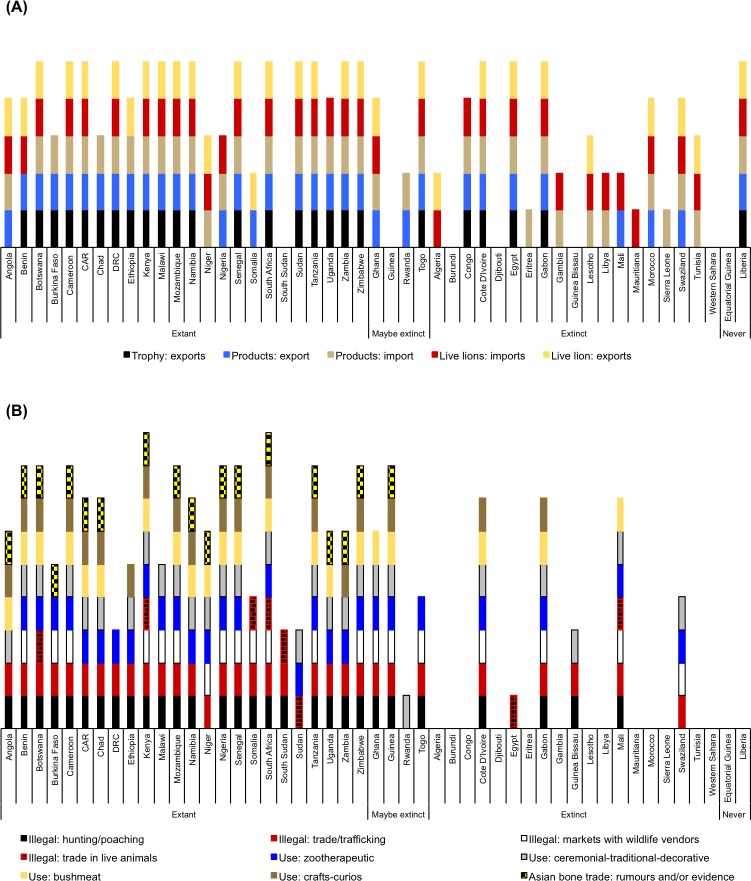
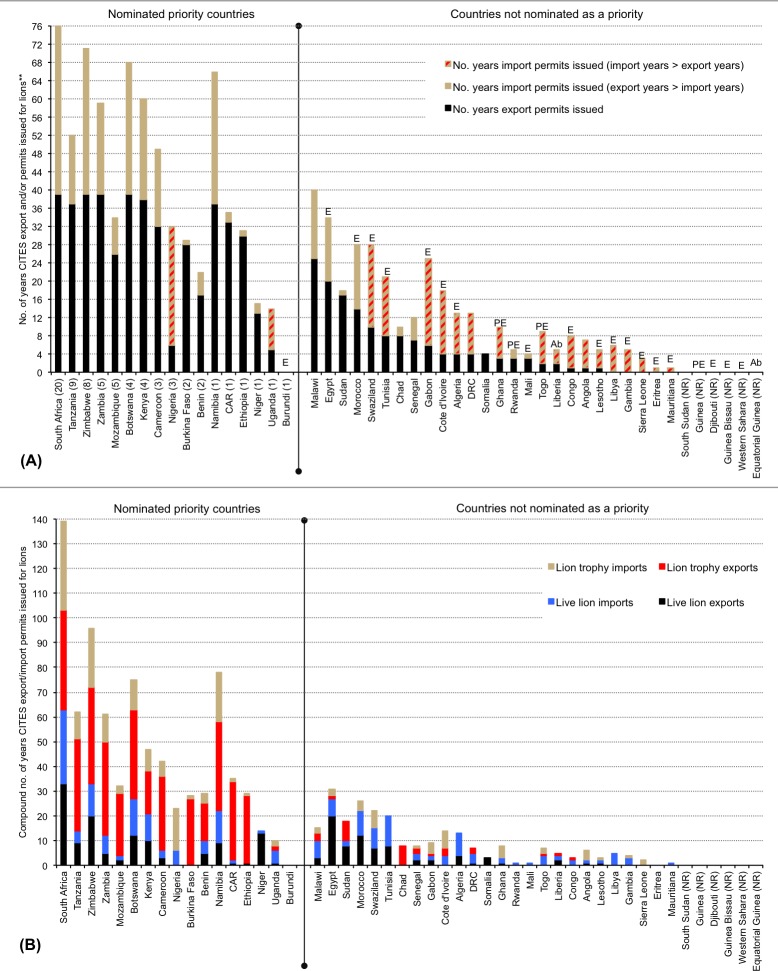
The African lion is in decline across its range, and consumptive utilisation and trade of their body parts and skins has been postulated as a cause for concern. We undertook a pan-African questionnaire and literature survey to document informed opinion and evidence for the occurrence of domestic and international trade and consumption in African lion body parts across current and former range states. Sixty-five people from 18 countries participated in the online questionnaire survey (run from July 2014 to May 2015), with information provided for 28 countries (including 20 out of 24 countries believed to have extant populations). Respondents were experts within their professional spheres, and 77% had ≥6 years relevant experience within lion conservation or allied wildlife matters. Their opinions revealed wide sub-regional differences in consumptive use, drivers of trade, and access to lions that impact wild lion populations in different ways. Traditional medicine practices (African and Asian) were perceived to be the main uses to which lion body parts and bones are put domestically and traded internationally, and there is reason for concern about persistent imports from former lion range states (mainly in West Africa) for parts for this purpose. The domestic, rather than international, trade in lion body parts was perceived to be a bigger threat to wild lion populations. Parts such as skin, claws, teeth and bones are thought to be in most demand across the continent. The impact of international trade on wild populations was acknowledged to be largely unknown, but occasionally was judged to be 'high', and therefore vigilance is needed to monitor emerging detrimental impacts. Seventeen countries were nominated as priorities for immediate monitoring, including: South Africa, Tanzania, Zimbabwe, Mozambique, Zambia, Botswana, Kenya, Nigeria, and Cameroon. Reasons for their selection include: prevalence of trophy hunting, 'hot spots' for poaching, active domestic trade in lion body parts, trade in curios for the tourist market, and histories of legal-illegal wildlife trade. This survey, and increased incident reports since mid-2015 of lion poisoning and poaching in Mozambique, Zimbabwe and South Africa, and sporadic poaching events in Uganda and Tanzania, are signalling an escalating trend in the trade of lion products that is an increasing threat to some national populations. The evidence is sufficient to make more detailed investigation of this trade a conservation priority.
非洲狮在其整个分布范围内数量都在减少,其身体部位和皮毛的消耗性利用及贸易被认为是一个令人担忧的原因。我们开展了一项泛非问卷调查和文献调查,以记录关于非洲狮身体部位在当前及以前分布国的国内和国际贸易及消费情况的专业意见和证据。来自18个国家的65人参与了在线问卷调查(于2014年7月至2015年5月进行),提供了28个国家的信息(包括24个据信有现存种群的国家中的20个)。受访者是各自专业领域的专家,77%的人在狮子保护或相关野生动物事务方面有≥6年的相关经验。他们的意见揭示了在消耗性利用、贸易驱动因素以及获取狮子途径方面存在广泛的次区域差异,这些以不同方式影响着野生狮子种群。传统医学做法(非洲和亚洲的)被认为是狮子身体部位和骨骼在国内使用及国际交易的主要用途,对于从前狮子分布国(主要在西非)持续进口用于此目的的部位,有理由感到担忧。狮子身体部位的国内贸易而非国际贸易被认为对野生狮子种群构成更大威胁。诸如皮肤、爪子、牙齿和骨骼等部位被认为在整个非洲大陆需求最大。国际贸易对野生种群的影响在很大程度上尚不明确,但偶尔被判定为“高”,因此需要保持警惕以监测新出现的有害影响。17个国家被提名为立即监测的重点国家,包括:南非、坦桑尼亚、津巴布韦、莫桑比克、赞比亚、博茨瓦纳、肯尼亚、尼日利亚和喀麦隆。选择它们的原因包括:战利品狩猎盛行、偷猎“热点”地区、狮子身体部位的活跃国内贸易、面向旅游市场的纪念品交易以及合法 - 非法野生动物贸易历史。这项调查,以及自2015年年中以来莫桑比克、津巴布韦和南非狮子中毒和偷猎事件的报告增加,以及乌干达和坦桑尼亚偶尔发生的偷猎事件,都表明狮子产品贸易呈上升趋势,这对一些国家的狮子种群构成越来越大的威胁。现有证据足以使对该贸易进行更详细的调查成为保护工作的重点。