Hall Jean A, Brockman Jeff A, Davidson Stephen J, MacLeay Jen M, Jewell Dennis E
Department of Biomedical Sciences, College of Veterinary Medicine, Oregon State University, Corvallis, Oregon, United States of America.
Pet Nutrition Center, Hill's Pet Nutrition, Topeka, Kansas, United States of America.
PLoS One. 2017 Oct 26;12(10):e0187133. doi: 10.1371/journal.pone.0187133. eCollection 2017.
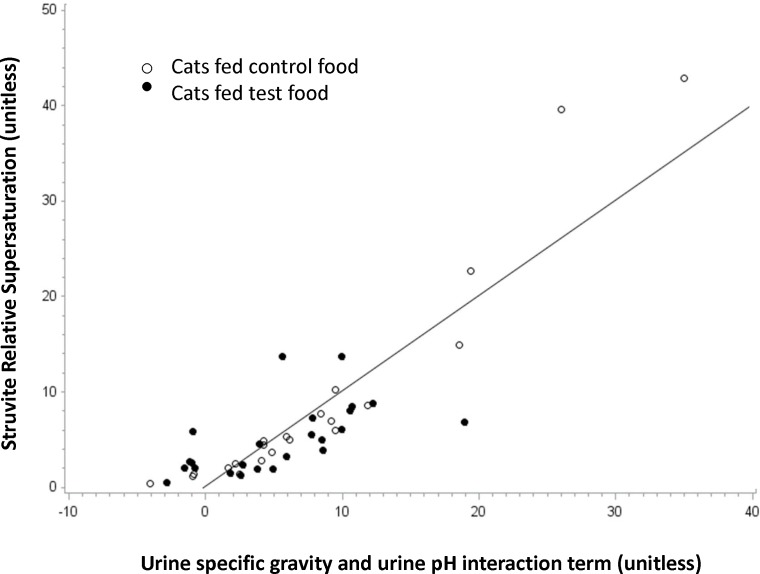
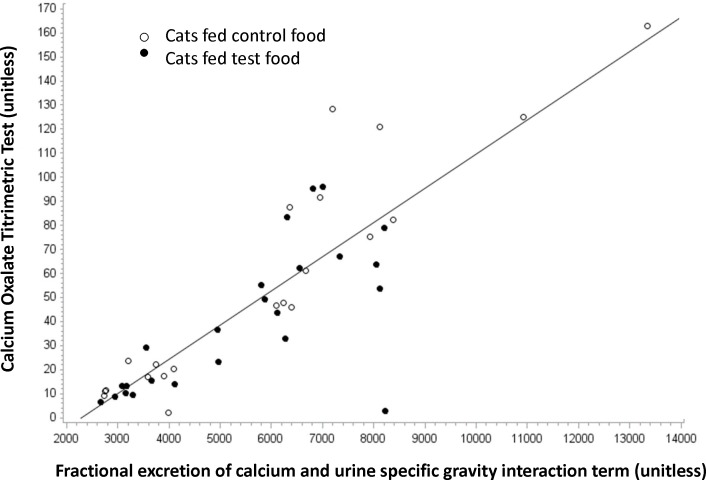
The lifespan of cats with non-obstructive kidney stones is shortened compared with healthy cats indicating a need to reduce stone formation and minimize chronic kidney disease. The purpose of this study was to investigate the effects of increasing dietary polyunsaturated fatty acids (PUFA) on urine characteristics. Domestic-short-hair cats (n = 12; mean age 5.6 years) were randomized into two groups and fed one of two dry-cat foods in a cross-over study design. For one week before study initiation, all cats consumed control food that contained 0.07% arachidonic acid (AA), but no eicosapentaenoic acid (EPA) or docosahexaenoic acid (DHA). Group 1 continued eating control food for 56 days. Group 2 was fed test food for 56 days, which was control food plus fish oil and high-AA oil. Test food contained 0.17% AA, 0.09% EPA and 0.18% DHA. After 56 days, cats were fed the opposite food for another 56 days. At baseline and after each feeding period, serum was analyzed for fatty acid concentrations, and urine for specific gravity, calcium concentration, relative-super-saturation for struvite crystals, and a calcium-oxalate-titrimetric test was performed. After consuming test food, cats had increased (all P<0.001) serum concentrations of EPA (173%), DHA (61%), and AA (35%); decreased urine specific gravity (P = 0.02); decreased urine calcium concentration (P = 0.06); decreased relative-super-saturation for struvite crystals (P = 0.03); and increased resistance to oxalate crystal formation (P = 0.06) compared with cats consuming control food. Oxalate crystal formation was correlated with serum calcium concentration (r = 0.41; P<0.01). These data show benefits for reducing urine stone formation in cats by increasing dietary PUFA.
与健康猫相比,患有非阻塞性肾结石的猫的寿命缩短,这表明需要减少结石形成并尽量降低慢性肾病的发生。本研究的目的是调查增加饮食中多不饱和脂肪酸(PUFA)对尿液特征的影响。在一项交叉研究设计中,将家养短毛猫(n = 12;平均年龄5.6岁)随机分为两组,并喂食两种干粮中的一种。在研究开始前一周,所有猫都食用含有0.07%花生四烯酸(AA)但不含二十碳五烯酸(EPA)或二十二碳六烯酸(DHA)的对照食物。第1组连续56天食用对照食物。第2组喂食测试食物56天,测试食物是对照食物加鱼油和高AA油。测试食物含有0.17% AA、0.09% EPA和0.18% DHA。56天后,猫再食用相反的食物56天。在基线期和每个喂食期结束后,分析血清中的脂肪酸浓度,并检测尿液的比重、钙浓度、鸟粪石晶体的相对过饱和度,同时进行草酸钙滴定试验。食用测试食物后,与食用对照食物的猫相比,猫的血清EPA浓度增加(所有P<0.001)173%、DHA浓度增加61%、AA浓度增加35%;尿液比重降低(P = 0.02);尿液钙浓度降低(P = 0.06);鸟粪石晶体的相对过饱和度降低(P = 0.03);草酸钙晶体形成的抗性增加(P = 0.06)。草酸钙晶体形成与血清钙浓度相关(r = 0.41;P<0.01)。这些数据表明,通过增加饮食中的PUFA对减少猫尿结石形成有益。