Department of Physiological Sciences, College of Veterinary Medicine, University of Florida, Gainesville, FL, USA.
Department of Urology, College of Medicine, University of Illinois at Chicago, Chicago, IL, USA.
Andrology. 2017 Nov;5(6):1165-1173. doi: 10.1111/andr.12415. Epub 2017 Oct 26.
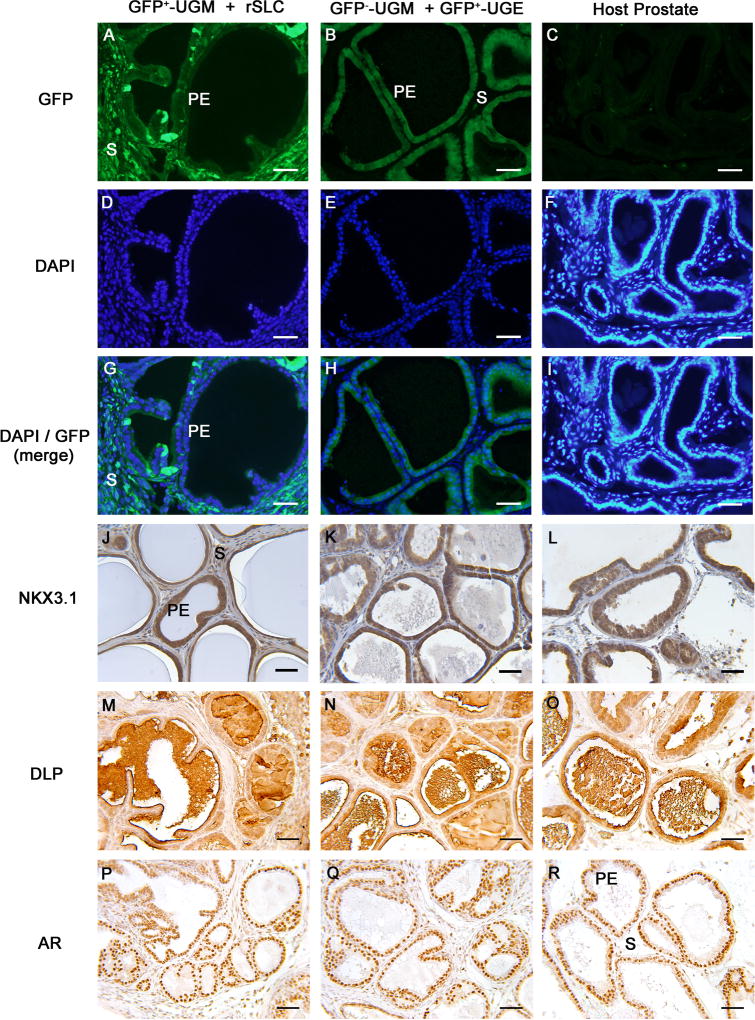
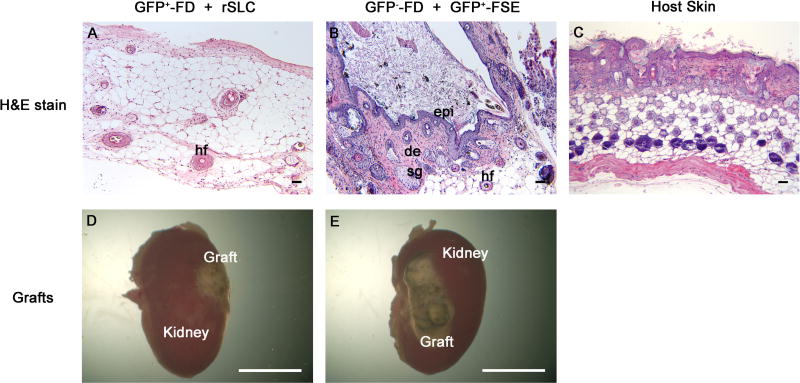
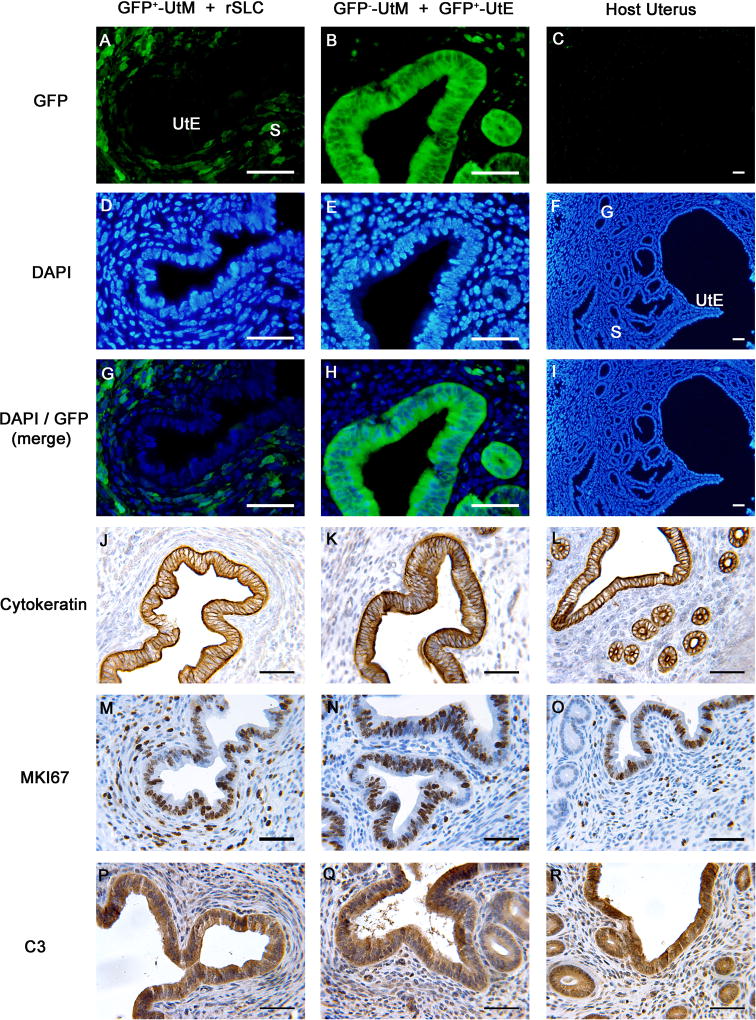
Stem Leydig cells (SLCs), precursors of testicular Leydig cells that secrete testosterone required for male sexual differentiation, spermatogenesis, and fertility, were recently identified in rat testes. Various types of stem cells have shown the ability to differentiate into other tissues, but there is no information on the plasticity of adult rat SLCs (rSLCs). This study investigated the ability of rSLCs to transdifferentiate into cell types from all three germ layers-prostatic epithelium (endoderm), uterine epithelium (mesoderm), and epidermis (ectoderm)-under the influence of inductive mesenchyme from fetal and neonatal tissues. To differentiate rSLCs into cells of other lineages, mesenchyme from green fluorescent protein (GFP)-expressing mice was used. Tissue recombinants of urogenital sinus mesenchyme (a potent prostate inducer) and rSLCs grafted into adult male hosts formed ductal structures resembling prostate after 5 weeks. Prostate epithelium was of rSLC origin as determined by absence of GFP expression, and expressed characteristic markers of prostatic epithelium. Similarly, uterine mesenchyme + rSLCs tissue recombinants contained a simple columnar epithelium that was histologically similar to normal uterine epithelium and expressed typical uterine epithelial markers, but was of rSLC origin. In contrast, epidermal tissue was absent in fetal dermis + rSLCs recombinants, suggesting rSLCs did not form skin epithelium. Thus, rSLCs can transdifferentiate into uterine and prostatic epithelium, mesodermal, and endodermal derivatives, respectively, but they may have a limited transdifferentiation potential, as shown by their inability to form epidermis, an ectodermal derivative.
睾丸间质干细胞(SLCs)是睾丸间质细胞的前体细胞,分泌雄性性分化、精子发生和生育所必需的睾酮,最近在大鼠睾丸中被鉴定出来。各种类型的干细胞都表现出向其他组织分化的能力,但关于成年大鼠 SLCs(rSLCs)的可塑性尚无信息。本研究调查了 rSLCs 在诱导性胎儿和新生儿组织间充质的影响下,向三个胚层的细胞类型(前列腺上皮(内胚层)、子宫上皮(中胚层)和表皮(外胚层))转分化的能力。为了将 rSLCs 分化为其他谱系的细胞,使用了表达绿色荧光蛋白(GFP)的小鼠间充质。将泌尿生殖窦间充质(一种有效的前列腺诱导物)和 rSLCs 的组织重组体移植到成年雄性宿主中,5 周后形成类似于前列腺的导管结构。前列腺上皮没有 GFP 表达,来源于 rSLCs,并表达了前列腺上皮的特征性标志物。同样,子宫间充质+ rSLCs 组织重组体含有类似于正常子宫上皮的简单柱状上皮,表达了典型的子宫上皮标志物,但来源于 rSLCs。相比之下,胎儿真皮+rSLCs 重组体中没有表皮组织,表明 rSLCs 不能形成皮肤上皮。因此,rSLCs 可以分别转分化为子宫和前列腺上皮、中胚层和内胚层衍生物,但它们的转分化潜能可能有限,因为它们不能形成表皮,这是外胚层衍生物。