Department of Experimental Psychology, The John Paul II Catholic University of Lublin, Lublin, Poland.
Institute of Computer Science, Maria Curie-Sklodowska University, Lublin, Poland.
Appl Psychophysiol Biofeedback. 2018 Mar;43(1):23-35. doi: 10.1007/s10484-017-9383-z.
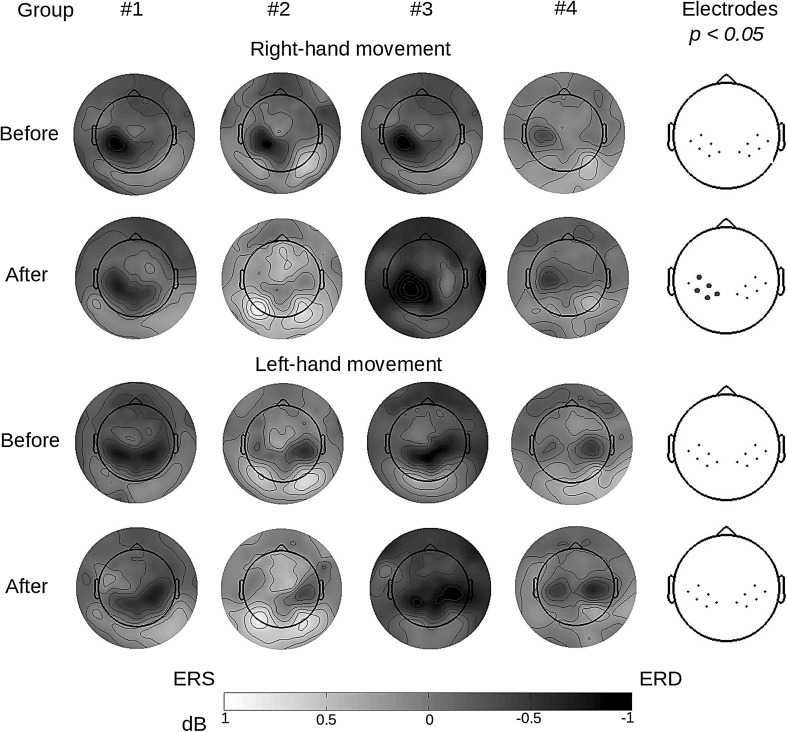
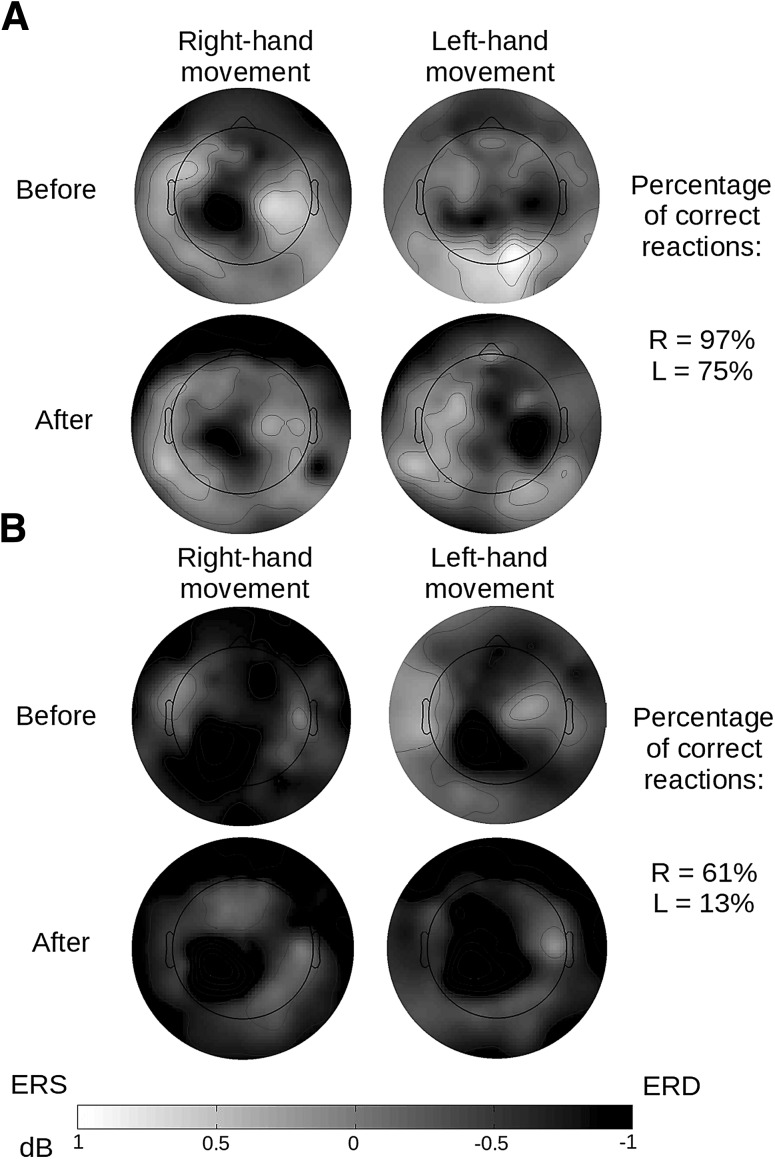
The challenges of research into brain-computer interfaces (BCI) include significant individual differences in learning pace and in the effective operation of BCI devices. The use of neurofeedback training is a popular method of improving the effectiveness BCI operation. The purpose of the present study was to determine to what extent it is possible to improve the effectiveness of operation of sensorimotor rhythm-based brain-computer interfaces (SMR-BCI) by supplementing user training with elements modifying the characteristics of visual feedback. Four experimental groups had training designed to reinforce BCI control by: visual feedback in the form of dummy faces expressing emotions (Group 1); flashing the principal elements of visual feedback (Group 2) and giving both visual feedbacks in one condition (Group 3). The fourth group participated in training with no modifications (Group 4). Training consisted of a series of trials where the subjects directed a ball into a basket located to the right or left side of the screen. In Group 1 a schematic image a face, placed on the controlled object, showed various emotions, depending on the accuracy of control. In Group 2, the cue and targets were flashed with different frequency (4 Hz) than the remaining elements visible on the monitor. Both modifications were also used simultaneously in Group 3. SMR activity during the task was recorded before and after the training. In Group 3 there was a significant improvement in SMR control, compared to subjects in Group 2 and 4 (control). Differences between subjects in Groups 1, 2 and 4 (control) were insignificant. This means that relatively small changes in the training procedure may significantly impact the effectiveness of BCI control. Analysis of behavioural data acquired from all participants at training showed greater effectiveness in directing the object towards the right side of the screen. Subjects with the greatest improvement in SMR control showed a significantly lower difference in the accuracy of rightward and leftward movement than others.
脑-机接口(BCI)研究面临的挑战包括学习速度和 BCI 设备有效运行方面存在显著的个体差异。使用神经反馈训练是提高 BCI 运行效果的一种流行方法。本研究的目的是确定通过补充修改视觉反馈特征的元素来补充用户训练,是否可以在多大程度上提高基于感觉运动节律的脑-机接口(SMR-BCI)的运行效果。四个实验组的训练旨在通过以下方式增强 BCI 控制:以表达情绪的虚拟面孔形式呈现的视觉反馈(第 1 组);闪烁视觉反馈的主要元素(第 2 组)和在一种条件下同时呈现两种视觉反馈(第 3 组)。第四组没有进行修改(第 4 组)。训练包括一系列试验,其中受试者将球引导到屏幕右侧或左侧的篮子中。在第 1 组中,放置在受控对象上的示意性图像的脸会根据控制的准确性显示出各种情绪。在第 2 组中,提示和目标以比显示器上可见的其余元素(第 2 组)快 4Hz 的频率闪烁。第 3 组同时使用这两种修改。在训练前后记录任务期间的 SMR 活动。与第 2 组和第 4 组(对照组)相比,第 3 组的 SMR 控制有显著改善。第 1 组、第 2 组和第 4 组(对照组)之间的受试者差异不显著。这意味着训练过程中相对较小的变化可能会显著影响 BCI 控制的效果。对所有参与者在训练期间获得的行为数据的分析表明,将物体引导到屏幕右侧的效果更好。在 SMR 控制方面有较大改善的受试者,其向右和向左运动的准确性差异明显小于其他人。