Kumar Shivani, Chowdhury Suman, Kumar Suresh
University School of Biotechnology, GGS Indraprastha University, Sector-16C, Dwarka, New Delhi, 110075, India.
BMC Neurosci. 2017 Oct 27;18(1):76. doi: 10.1186/s12868-017-0394-8.
Alzheimer's disease (AD) is the most prevalent form of dementia and represents one of the highest unmet requirements in medicine today. There is shortage of novel molecules entering into market because of poor pharmacokinetic properties and safety issues. Drug repurposing offers an opportunity to reinvigorate the slowing drug discovery process by finding new uses for existing drugs. The major advantage of the drug repurposing approach is that the safety issues are already investigated in the clinical trials and the drugs are commercially available in the marketplace. As this approach provides an effective solution to hasten the process of providing new alternative drugs for AD, the current study shows the molecular interaction of already known antipsychotic drugs with the different protein targets implicated in AD using in silico studies.
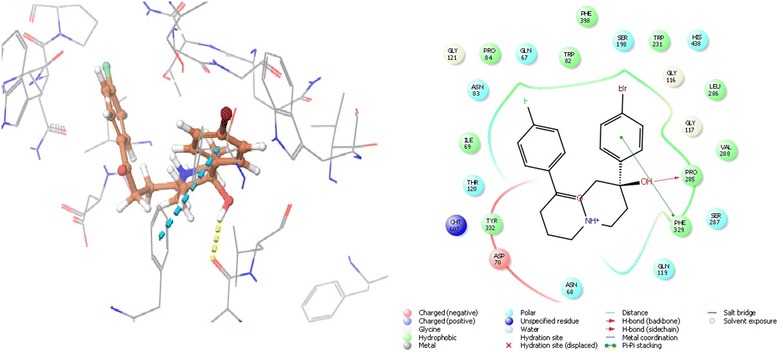
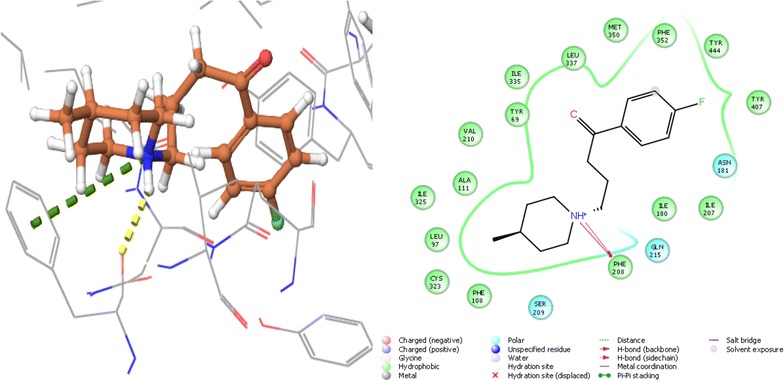
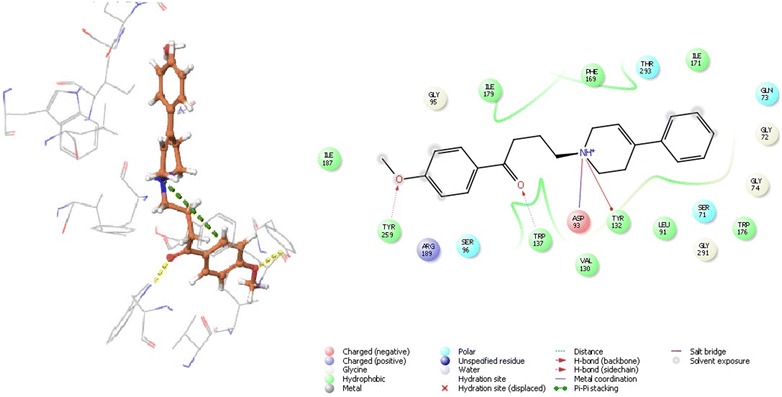
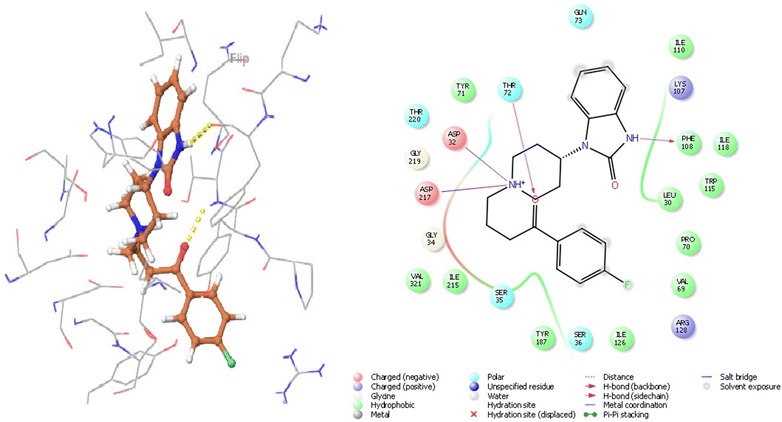
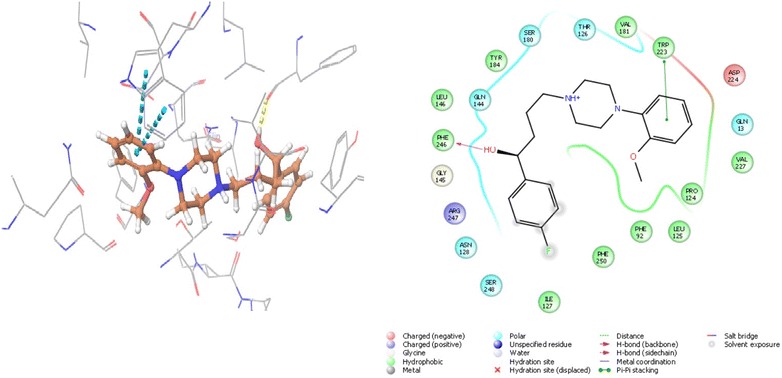
A computational method based on ligand-protein interaction was adopted in present study to explore potential antipsychotic drugs for the treatment of AD. The screening of approximately 150 antipsychotic drugs was performed on five major protein targets (AChE, BuChE, BACE 1, MAO and NMDA) by molecular docking. In this study, for each protein target, the best drug was identified on the basis of dock score and glide energy. The top hits were then compared with the already known inhibitor of the respective proteins. Some of the drugs showed relatively better docking score and binding energies as compared to the already known inhibitors of the respective targets. Molecular descriptors like molecular weight, number of hydrogen bond donors, acceptors, predicted octanol/water partition coefficient and percentage human oral absorption were also analysed to determine the in silico ADME properties of these drugs and all were found in the acceptable range and follows Lipinski's rule.
The present study have led to unravel the potential of leading antipsychotic drugs such as pimozide, bromperidol, melperone, anisoperidone, benperidol and anisopirol against multiple targets associated with AD. Benperidol was found to be the best candidate drug interacting with different target proteins involved in AD.
阿尔茨海默病(AD)是最常见的痴呆形式,也是当今医学中未满足需求最高的病症之一。由于药代动力学性质不佳和安全问题,进入市场的新分子短缺。药物重新利用为通过寻找现有药物的新用途来重振放缓的药物发现过程提供了机会。药物重新利用方法的主要优点是安全性问题已在临床试验中得到研究,并且这些药物已在市场上商业化。由于这种方法为加速为AD提供新替代药物的过程提供了有效解决方案,当前研究使用计算机模拟研究显示了已知抗精神病药物与AD中涉及的不同蛋白质靶点的分子相互作用。
本研究采用基于配体 - 蛋白质相互作用的计算方法来探索用于治疗AD的潜在抗精神病药物。通过分子对接对约150种抗精神病药物在五个主要蛋白质靶点(乙酰胆碱酯酶、丁酰胆碱酯酶、β-分泌酶1、单胺氧化酶和N-甲基-D-天冬氨酸受体)上进行筛选。在本研究中,对于每个蛋白质靶点,根据对接分数和滑行能量确定最佳药物。然后将顶级命中结果与相应蛋白质的已知抑制剂进行比较。与相应靶点的已知抑制剂相比,一些药物显示出相对更好的对接分数和结合能。还分析了分子量、氢键供体数量、受体数量、预测的辛醇/水分配系数和人体口服吸收百分比等分子描述符,以确定这些药物的计算机模拟ADME性质,并且所有这些性质都在可接受范围内并符合Lipinski规则。
本研究揭示了匹莫齐特、溴哌利多、美哌隆、阿立哌酮、苯哌利多和阿尼西哌醇等主要抗精神病药物对与AD相关的多个靶点的潜在作用。发现苯哌利多是与AD中涉及的不同靶蛋白相互作用的最佳候选药物。