Laboratory of Malaria Immunology and Vaccinology, National Institute of Allergy and Infectious Diseases, NIH, Rockville, MD, United States of America.
Laboratory of Clinical Infectious Diseases - Epidemiology Unit, National Institute of Allergy and Infectious Diseases, NIH, Bethesda, MD, United States of America.
Sci Rep. 2017 Oct 27;7(1):14267. doi: 10.1038/s41598-017-14627-y.
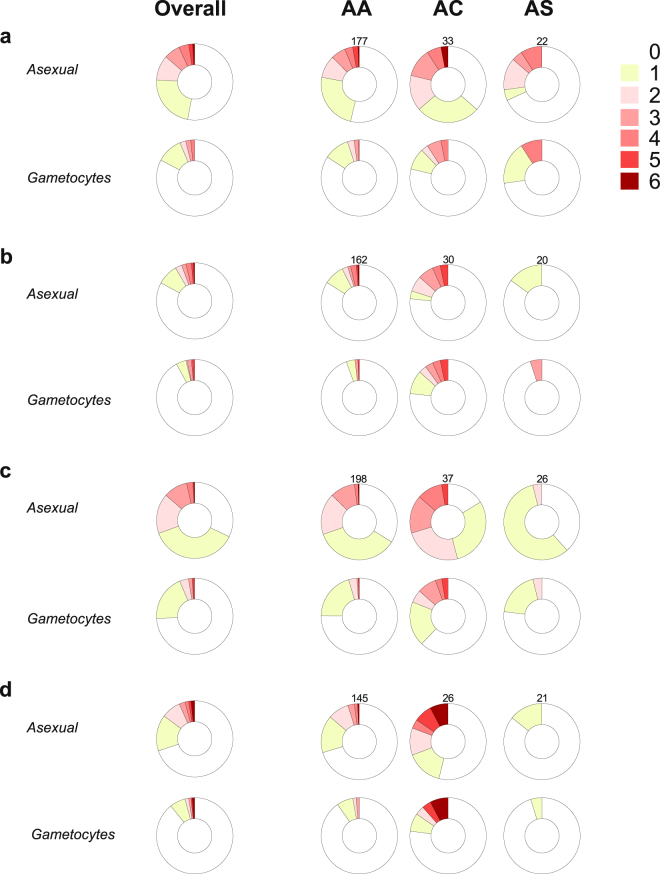
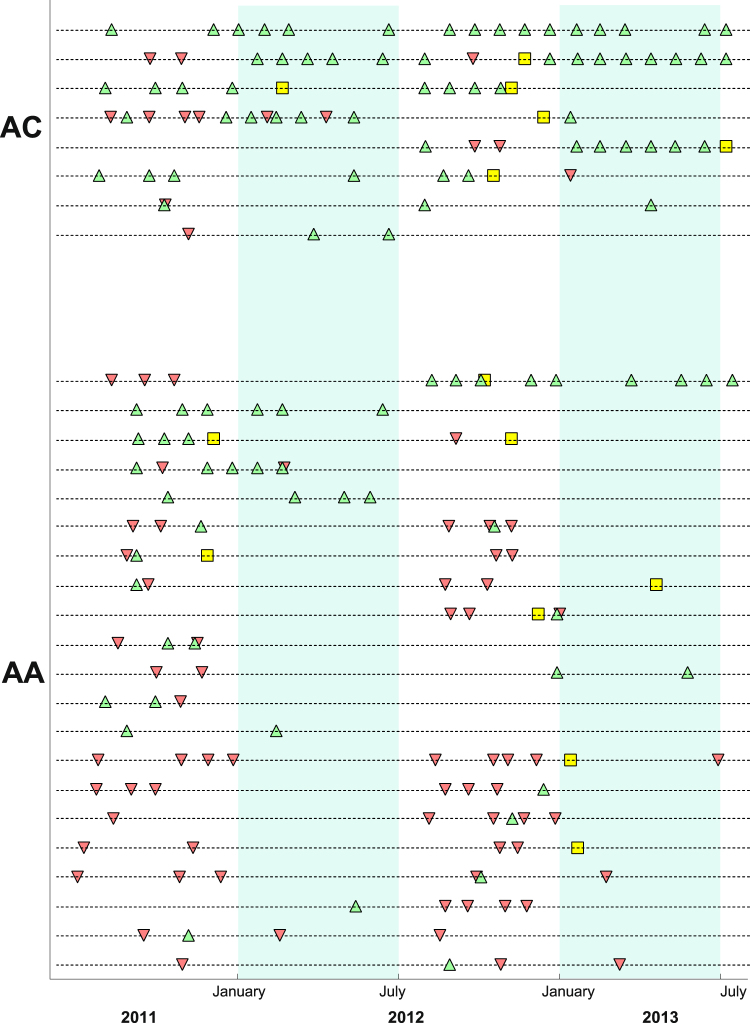
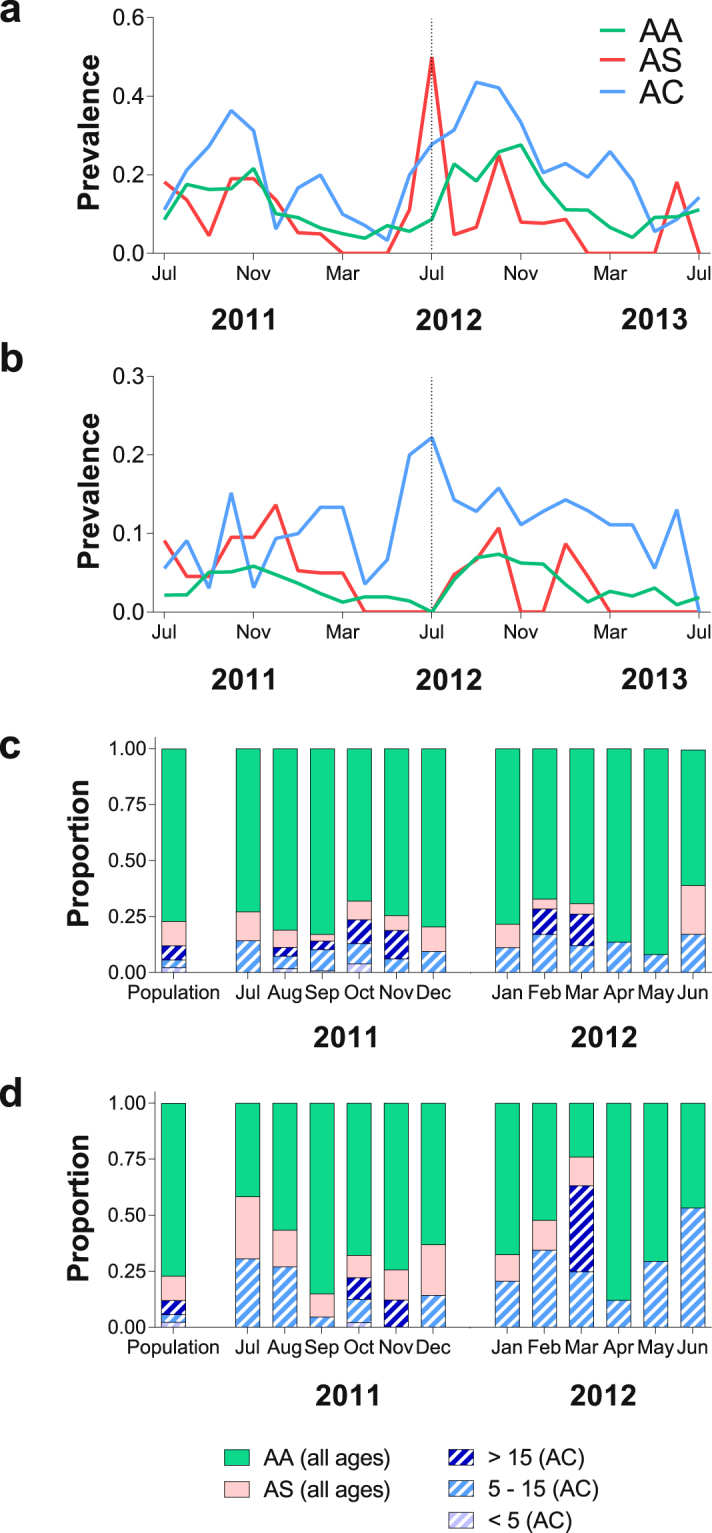
Hemoglobin variants C and S protect against severe malaria but their influence on parameters not directly linked to disease severity such as gametocyte carriage and infection chronicity is less well understood. To assess whether these infection-related phenotypes depend on the host hemoglobin genotype, we followed 500 Malian individuals over 1-2 years and determined their parasitological status during monthly visits and incidental clinical episodes. While adults heterozygous for hemoglobin S mutation were less often parasitemic compared to AA adults (odds ratio [OR] 0.50 95% confidence interval [CI] 0.31-0.79, P = 0.003), schoolchildren (but not toddlers or adults) with AC genotype carried parasites, including gametocytes, more often than their AA counterparts (OR 3.01 95% CI 1.38-6.57, P = 0.006). AC children were also likelier to be parasite-positive during the dry season, suggesting longer infections, and were more infectious in mosquito skin feeding assays than AA children. Notably, AC school-aged children, who comprise ~5% of the population, harbor a third of infections with patent gametocytes between May and August, when transmission transitions from very low to intense. These findings indicate that schoolchildren with hemoglobin C mutation might contribute disproportionately to the seasonal malaria resurgence in parts of West Africa where the HbC variant is common.
血红蛋白 C 和 S 变体可预防严重疟疾,但它们对与疾病严重程度不直接相关的参数(如配子体携带和感染持续性)的影响了解较少。为了评估这些与感染相关的表型是否取决于宿主血红蛋白基因型,我们在 1-2 年内对 500 名马里人进行了随访,并在每月的就诊和偶然的临床发作期间确定了他们的寄生虫状况。与 AA 成年人相比,携带血红蛋白 S 突变杂合子的成年人的寄生虫血症发生率较低(比值比 [OR] 0.50 95%置信区间 [CI] 0.31-0.79,P = 0.003),但具有 AC 基因型的学龄儿童(而非幼儿或成年人)携带寄生虫的情况更为常见,包括配子体(OR 3.01 95% CI 1.38-6.57,P = 0.006)。AC 儿童在旱季也更有可能呈寄生虫阳性,表明感染时间更长,并且在蚊虫皮肤喂养试验中比 AA 儿童更具传染性。值得注意的是,AC 学龄儿童约占人口的 5%,在 5 月至 8 月期间携带有可检测配子体的感染比例占三分之一,此时传播从非常低到强烈转变。这些发现表明,在西非人血红蛋白 C 变体常见的地区,携带血红蛋白 C 突变的学龄儿童可能不成比例地导致季节性疟疾复发。