Benedetti Rosaria, Dell'Aversana Carmela, Giorgio Cristina, Astorri Roberta, Altucci Lucia
Dipartimento di Biochimica Biofisica e Patologia generale, Università degli Studi della Campania 'L. Vanvitelli' Naples, Naples, Italy.
Dipartimento di Medicina e Scienze della Salute "Vincenzo Tiberio", Università degli Studi del Molise, Campobasso, Italy.
Front Endocrinol (Lausanne). 2017 Oct 13;8:270. doi: 10.3389/fendo.2017.00270. eCollection 2017.
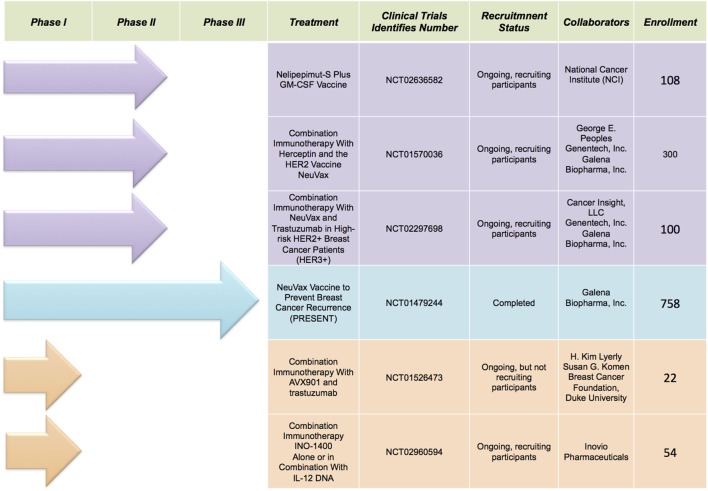
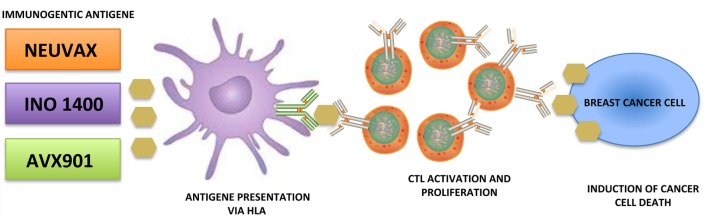
Breast cancer (BC) is a persistent global challenge for its high frequency in women (although it seldom occurs in men), due to the large diffusion of risk factors and gene mutations, and for its peculiar biology and microenvironment. To date, BC can benefit from different therapeutic strategies involving surgery, ablation, chemotherapy, radiotherapy, and more specific approaches such as hormone therapy and the administration of various substances impairing cancer growth, aggressivity, and recurrence with different modalities. Despite these relatively wide chances, also used in combinatory protocols, relevant mortality and relapse rates, often associated with resistant phenotypes, stress the need for a personalized-medicine based on prompting the patient's immune system (IS) against cancer cells. BC immunogenicity was latterly proven, so the whole immunotherapy field for BC is still at a very early stage. This immunotherapeutic approach exploits both the high specificity of adaptive immune response and the immunological memory. This review is focused on some of the majorly relevant BC vaccines available (NeuVax, AVX901, and INO-1400), providing a description of the more promising clinical trials. The efficacy of cancer vaccines highly depends on the patient's IS, and a wide optimization is needed in terms of targets' selection, drug design and combinations, dose finding, protocol structuring, and patients' recruitment; moreover, new standards are being discussed for the outcome evaluation. However, early-phases excellent results suggest that the manipulation of the IS specific vaccines is a highly attractive approach for BC.
乳腺癌(BC)因其在女性中的高发病率(尽管在男性中很少发生)、危险因素和基因突变的广泛传播以及其独特的生物学特性和微环境,成为一项持续存在的全球挑战。迄今为止,BC可受益于不同的治疗策略,包括手术、消融、化疗、放疗,以及更具针对性的方法,如激素疗法和使用各种以不同方式损害癌症生长、侵袭性和复发的物质。尽管有这些相对广泛的治疗选择,这些方法也用于联合治疗方案,但与耐药表型相关的高死亡率和复发率,凸显了基于激发患者免疫系统(IS)对抗癌细胞的个性化医疗的必要性。BC的免疫原性最近已得到证实,因此BC的整个免疫治疗领域仍处于非常早期的阶段。这种免疫治疗方法利用了适应性免疫反应的高特异性和免疫记忆。本综述重点关注了一些主要的相关BC疫苗(NeuVax、AVX901和INO-1400),并对更有前景的临床试验进行了描述。癌症疫苗的疗效高度依赖于患者的IS,在靶点选择、药物设计和组合、剂量确定、方案构建以及患者招募方面需要进行广泛的优化;此外,正在讨论用于结果评估的新标准。然而,早期阶段的优异结果表明,通过特定疫苗操纵IS是一种极具吸引力的BC治疗方法。