Kumthip Kattareeya, Yang Darong, Li Nan L, Zhang Yunzhi, Fan Meiyun, Sethuraman Aarti, Li Kui
Department of Microbiology, Immunology and Biochemistry, University of Tennessee Health Science Center, Memphis, Tennessee, United States of America.
Department of Microbiology, Faculty of Medicine, Chiang Mai University, Chiang Mai, Thailand.
PLoS Pathog. 2017 Oct 30;13(10):e1006713. doi: 10.1371/journal.ppat.1006713. eCollection 2017 Oct.
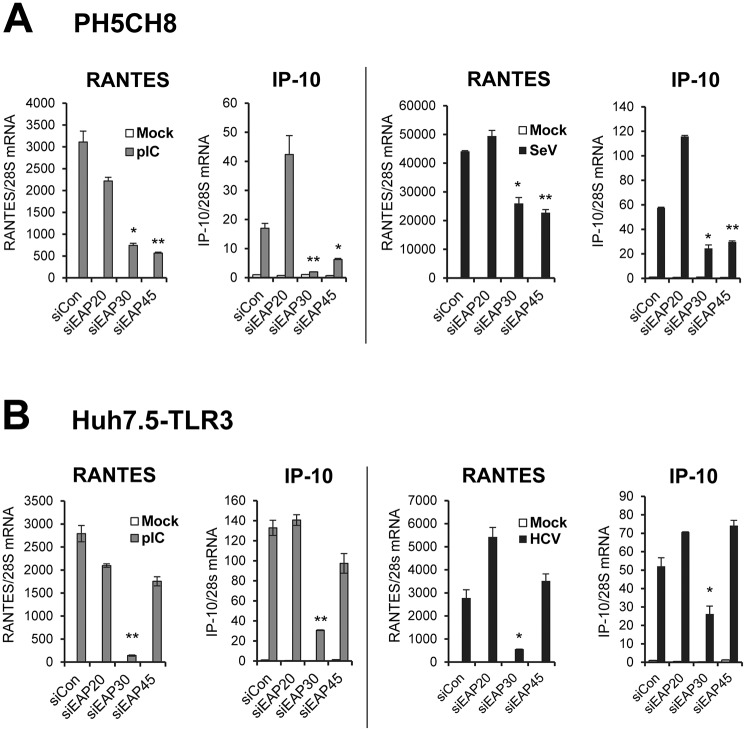
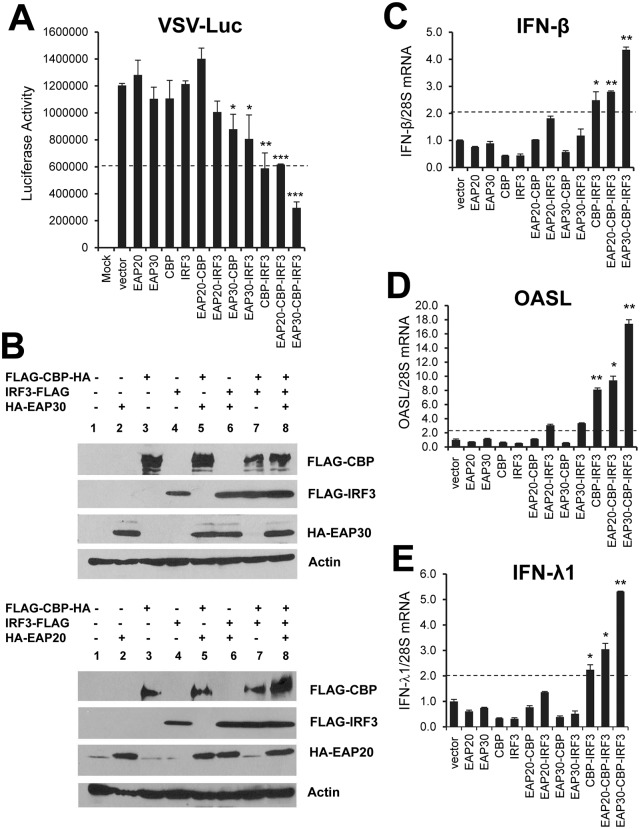
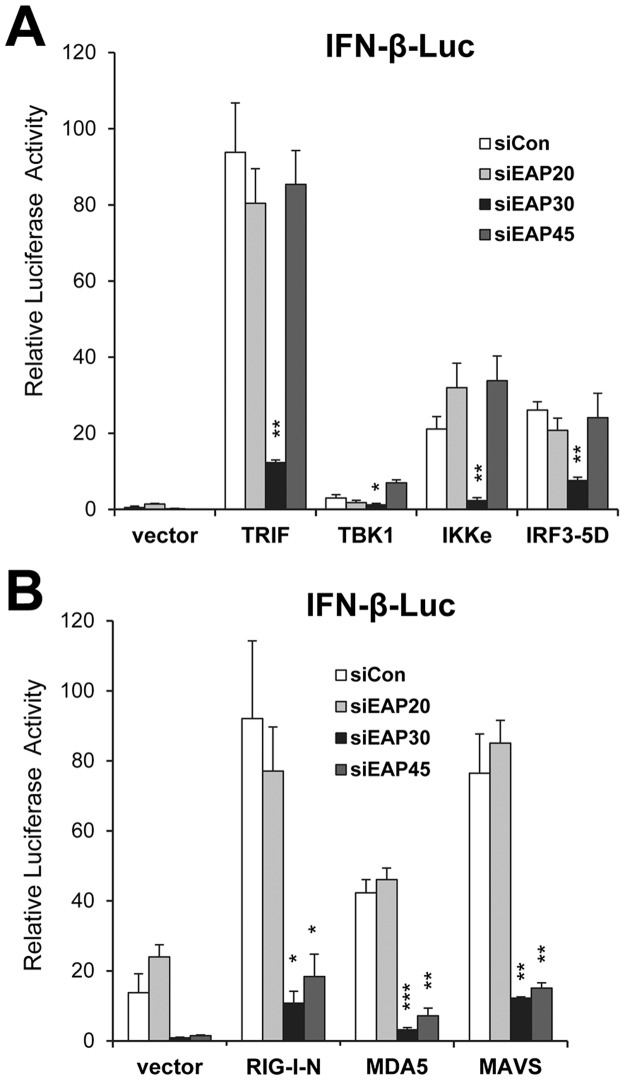
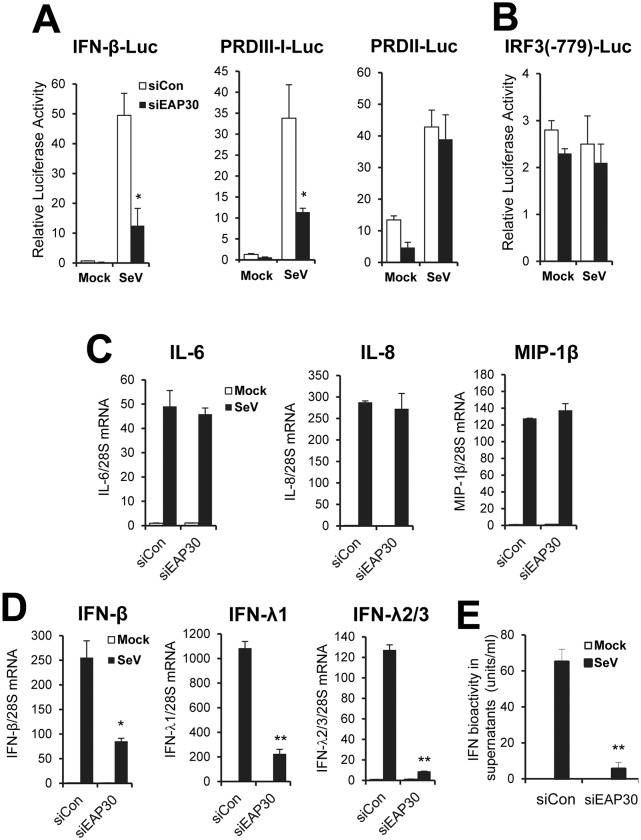
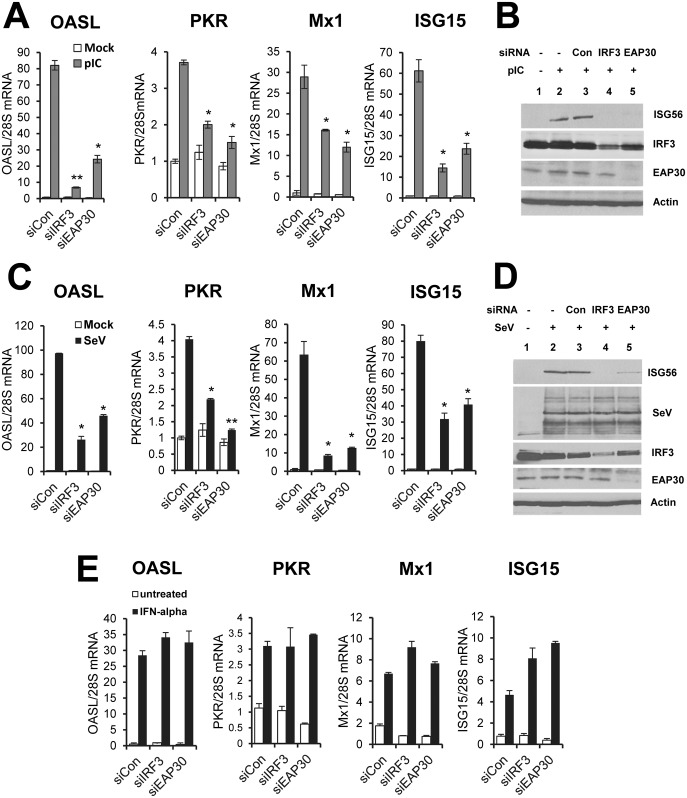
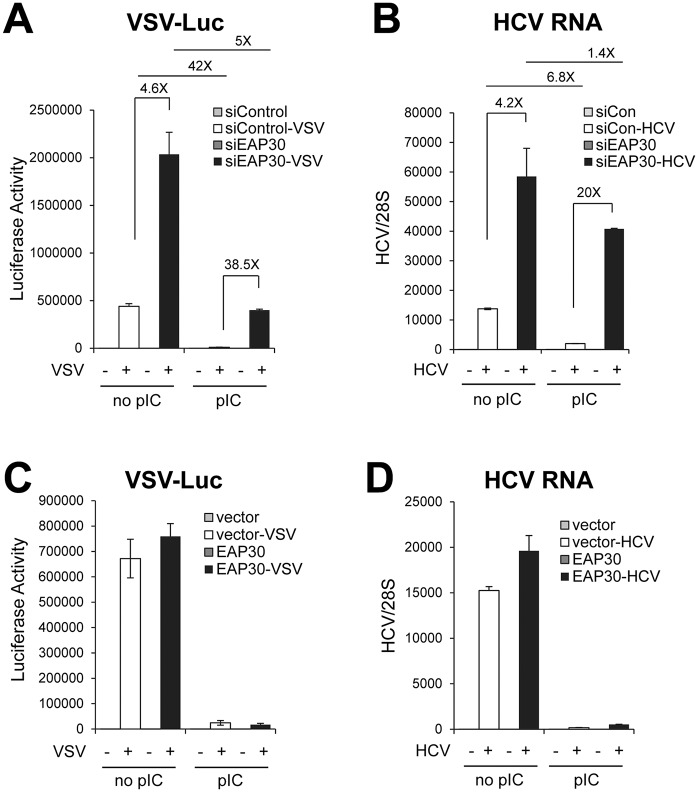
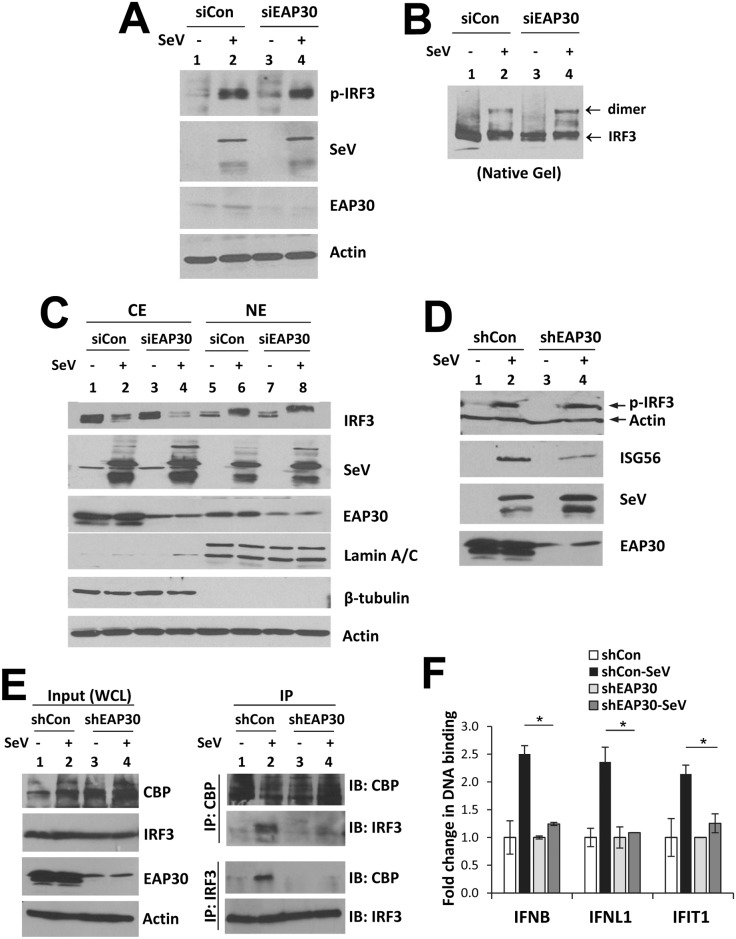
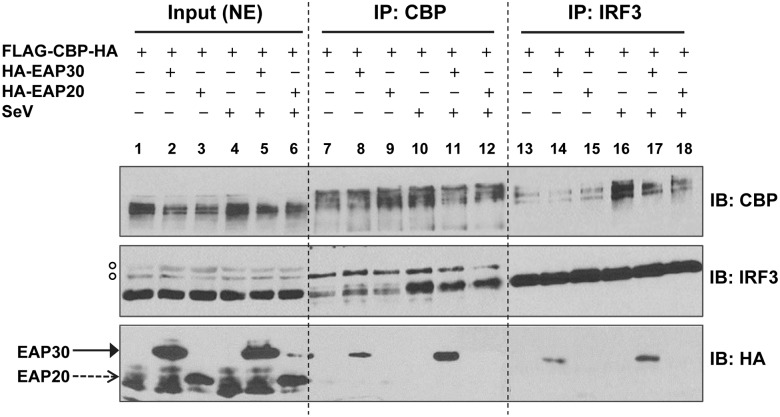
The activation of interferon (IFN)-regulatory factor-3 (IRF3), characterized by phosphorylation and nuclear translocation of the latent transcription factor, is central to initiating innate antiviral responses. Whereas much has been learned about the upstream pathways and signaling mechanisms leading to IRF3 activation, how activated IRF3 operates in the nucleus to control transcription of IFNs remains obscure. Here we identify EAP30 (a.k.a, SNF8/VPS22), an endosomal sorting complex required for transport (ESCRT)-II subunit, as an essential factor controlling IRF3-dependent antiviral defense. Depletion of EAP30, but not other ESCRT-II subunits, compromised IRF3-dependent induction of type I and III IFNs, IFN-stimulated genes (ISGs) and chemokines by double-stranded RNA or viruses. EAP30, however, was dispensable for the induction of inflammatory mediators of strict NF-κB target. Significantly, knockdown of EAP30 also impaired the establishment of an antiviral state against vesicular stomatitis virus and hepatitis C virus, which are of distinct viral families. Mechanistically, EAP30 was not required for IRF3 activation but rather acted at a downstream step. Specifically, a fraction of EAP30 localized within the nucleus, where it formed a complex with IRF3 and its transcriptional co-activator, CREB-binding protein (CBP), in a virus-inducible manner. These interactions promoted IRF3 binding to target gene promoters such as IFN-β, IFN-λ1 and ISG56. Together, our data describe an unappreciated role for EAP30 in IRF3-dependent innate antiviral response in the nucleus.
干扰素(IFN)调节因子3(IRF3)的激活以潜在转录因子的磷酸化和核转位为特征,是启动先天性抗病毒反应的核心。尽管人们已经对导致IRF3激活的上游途径和信号传导机制有了很多了解,但激活的IRF3如何在细胞核中发挥作用以控制IFN的转录仍不清楚。在这里,我们鉴定出EAP30(也称为SNF8/VPS22),一种运输所需的内体分选复合物(ESCRT)-II亚基,作为控制IRF3依赖性抗病毒防御的必需因子。EAP30的缺失,而不是其他ESCRT-II亚基的缺失,损害了双链RNA或病毒对I型和III型IFN、IFN刺激基因(ISG)和趋化因子的IRF3依赖性诱导。然而,EAP30对于严格的NF-κB靶标的炎症介质的诱导是可有可无的。值得注意的是,敲低EAP30也损害了针对水泡性口炎病毒和丙型肝炎病毒的抗病毒状态的建立,这两种病毒属于不同的病毒家族。从机制上讲,IRF3激活不需要EAP30,而是在下游步骤起作用。具体而言,一部分EAP30定位于细胞核内,在那里它以病毒诱导的方式与IRF3及其转录共激活因子CREB结合蛋白(CBP)形成复合物。这些相互作用促进了IRF3与靶基因启动子如IFN-β、IFN-λ1和ISG56的结合。总之,我们的数据描述了EAP30在细胞核中IRF3依赖性先天性抗病毒反应中未被认识的作用。