RNA Biology and Molecular Physiology, Faculty of Biology, Bielefeld University, Bielefeld, Germany.
Institute of Computer Science, Martin Luther University Halle-Wittenberg, Halle, Germany.
Genome Biol. 2017 Oct 31;18(1):204. doi: 10.1186/s13059-017-1332-x.
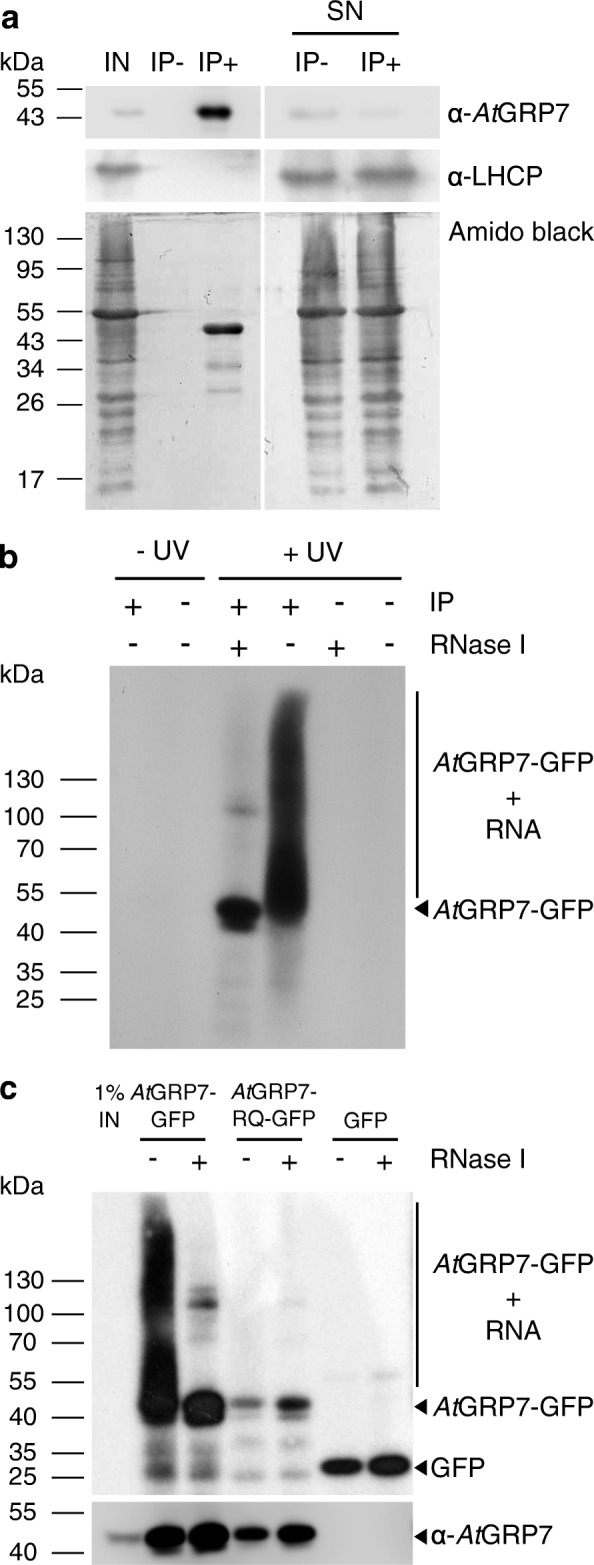
Functions for RNA-binding proteins in orchestrating plant development and environmental responses are well established. However, the lack of a genome-wide view of their in vivo binding targets and binding landscapes represents a gap in understanding the mode of action of plant RNA-binding proteins. Here, we adapt individual nucleotide resolution crosslinking and immunoprecipitation (iCLIP) genome-wide to determine the binding repertoire of the circadian clock-regulated Arabidopsis thaliana glycine-rich RNA-binding protein AtGRP7.
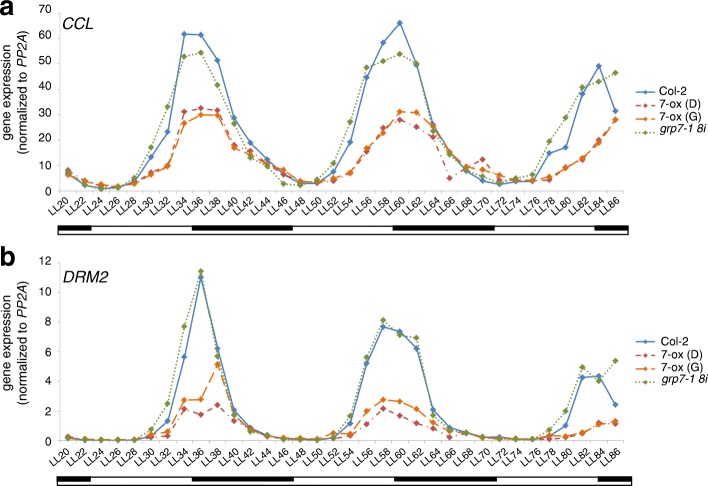
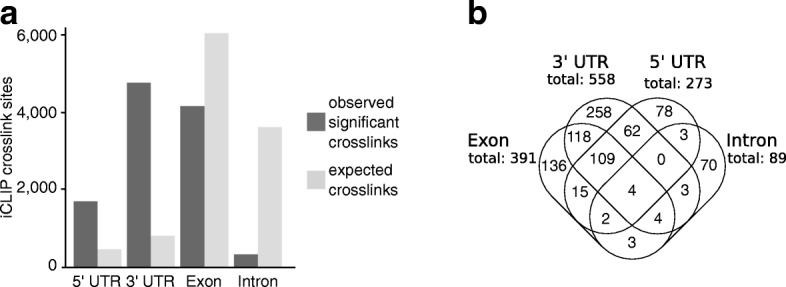
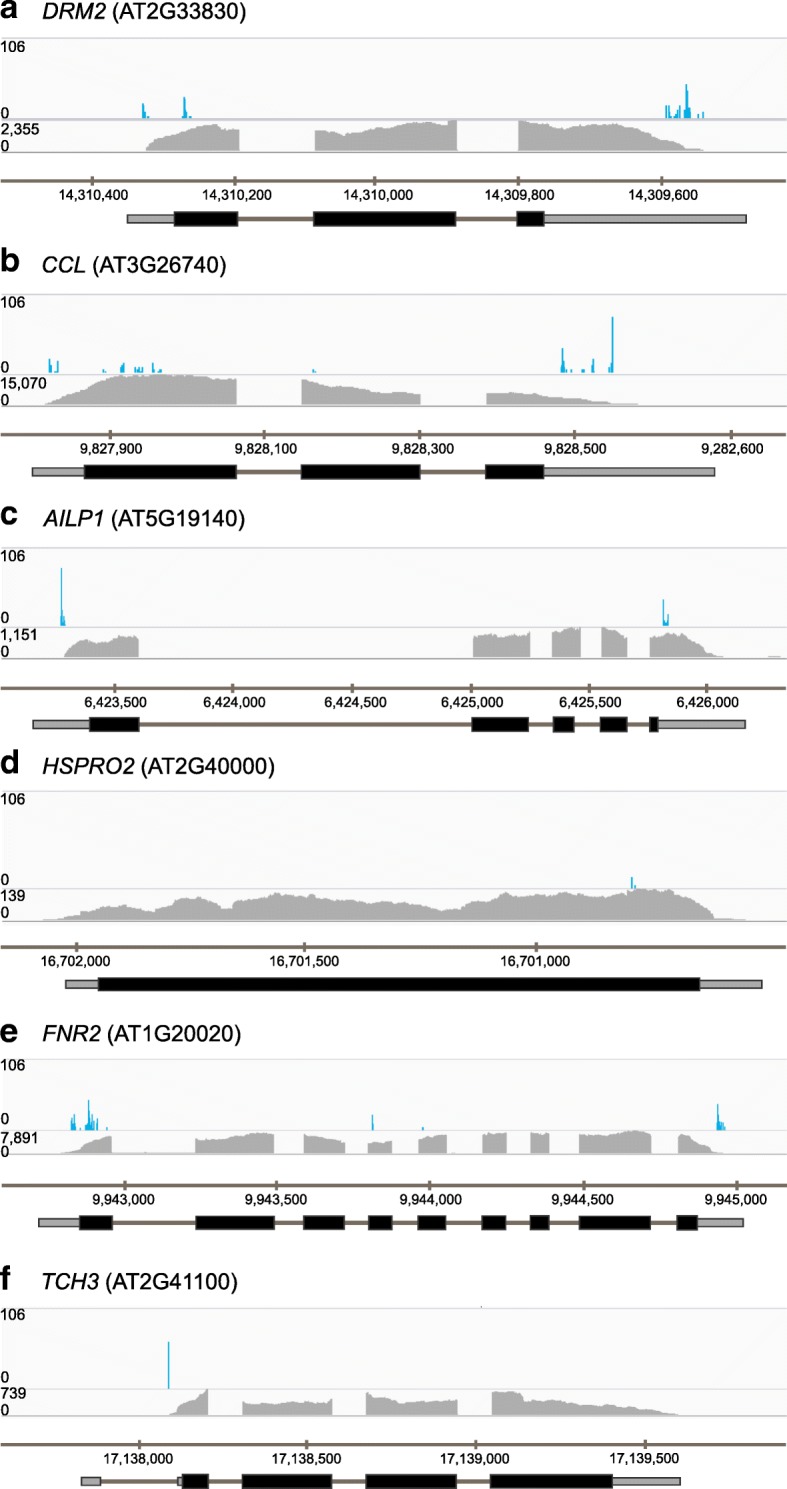
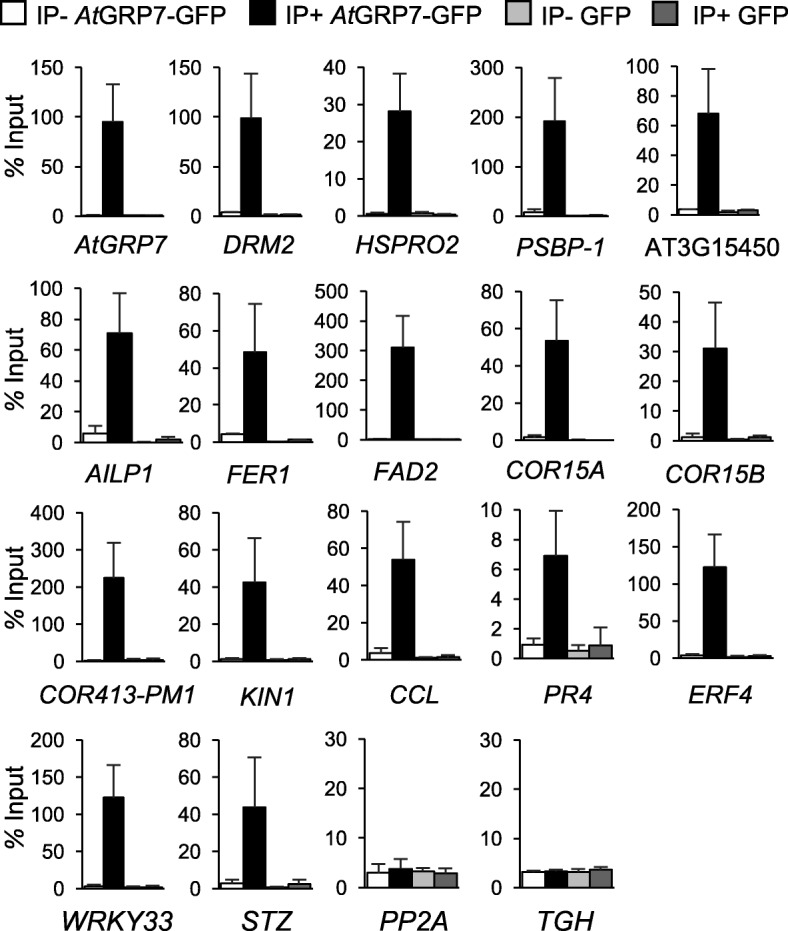
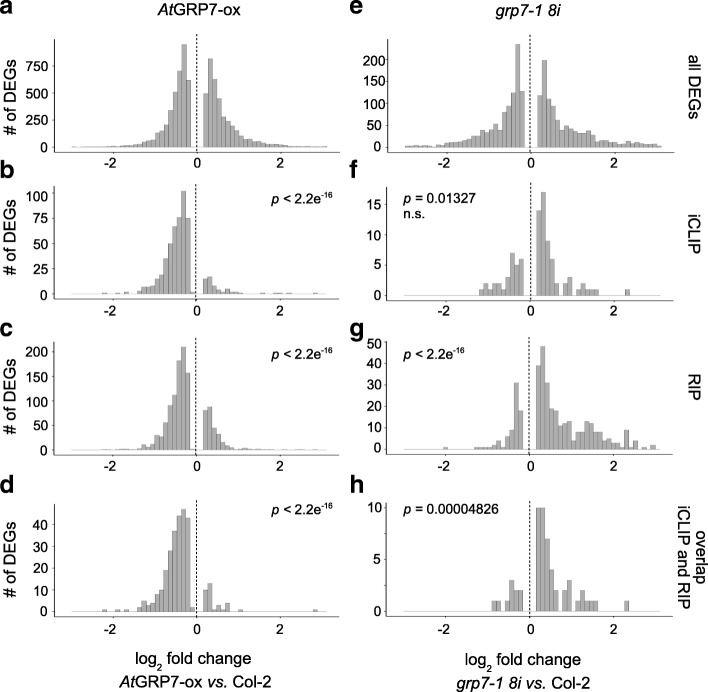
iCLIP identifies 858 transcripts with significantly enriched crosslink sites in plants expressing AtGRP7-GFP that are absent in plants expressing an RNA-binding-dead AtGRP7 variant or GFP alone. To independently validate the targets, we performed RNA immunoprecipitation (RIP)-sequencing of AtGRP7-GFP plants subjected to formaldehyde fixation. Of the iCLIP targets, 452 were also identified by RIP-seq and represent a set of high-confidence binders. AtGRP7 can bind to all transcript regions, with a preference for 3' untranslated regions. In the vicinity of crosslink sites, U/C-rich motifs are overrepresented. Cross-referencing the targets against transcriptome changes in AtGRP7 loss-of-function mutants or AtGRP7-overexpressing plants reveals a predominantly negative effect of AtGRP7 on its targets. In particular, elevated AtGRP7 levels lead to damping of circadian oscillations of transcripts, including DORMANCY/AUXIN ASSOCIATED FAMILY PROTEIN2 and CCR-LIKE. Furthermore, several targets show changes in alternative splicing or polyadenylation in response to altered AtGRP7 levels.
We have established iCLIP for plants to identify target transcripts of the RNA-binding protein AtGRP7. This paves the way to investigate the dynamics of posttranscriptional networks in response to exogenous and endogenous cues.
RNA 结合蛋白在协调植物发育和环境响应中的功能已得到充分证实。然而,缺乏对其体内结合靶标和结合景观的全基因组观察,这代表了对植物 RNA 结合蛋白作用模式理解的一个空白。在这里,我们适应了单个核苷酸分辨率交联和免疫沉淀(iCLIP)的全基因组方法,以确定生物钟调控的拟南芥甘氨酸丰富 RNA 结合蛋白 AtGRP7 的结合谱。
iCLIP 在表达 AtGRP7-GFP 的植物中鉴定出 858 个具有显著富集交联位点的转录本,而在表达 RNA 结合缺失的 AtGRP7 变体或 GFP 单独的植物中不存在这些转录本。为了独立验证这些靶标,我们对用甲醛固定的表达 AtGRP7-GFP 的植物进行了 RNA 免疫沉淀(RIP)测序。在 iCLIP 靶标中,有 452 个也被 RIP-seq 鉴定出来,代表了一组高可信度的结合物。AtGRP7 可以结合所有转录本区域,偏爱 3'非翻译区。在交联位点附近,U/C 丰富的基序过度表达。将这些靶标与 AtGRP7 功能丧失突变体或 AtGRP7 过表达植物中转录组变化进行交叉参考,揭示了 AtGRP7 对其靶标主要产生负效应。特别是,AtGRP7 水平升高会导致包括 DORMANCY/AUXIN ASSOCIATED FAMILY PROTEIN2 和 CCR-LIKE 在内的转录物的生物钟振荡阻尼。此外,一些靶标在改变 AtGRP7 水平时表现出可变剪接或多聚腺苷酸化的变化。
我们已经建立了用于植物的 iCLIP,以鉴定 RNA 结合蛋白 AtGRP7 的靶转录本。这为研究对外源和内源性信号的转录后网络动态奠定了基础。