Kusuma School of Biological Sciences, Indian Institute of Technology Delhi, New Delhi, India.
Sci Rep. 2017 Oct 30;7(1):14371. doi: 10.1038/s41598-017-14652-x.
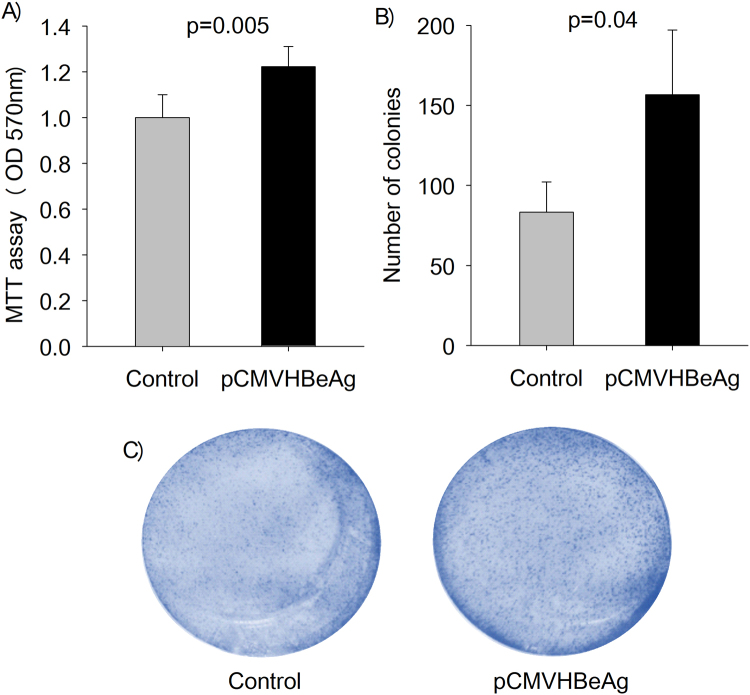
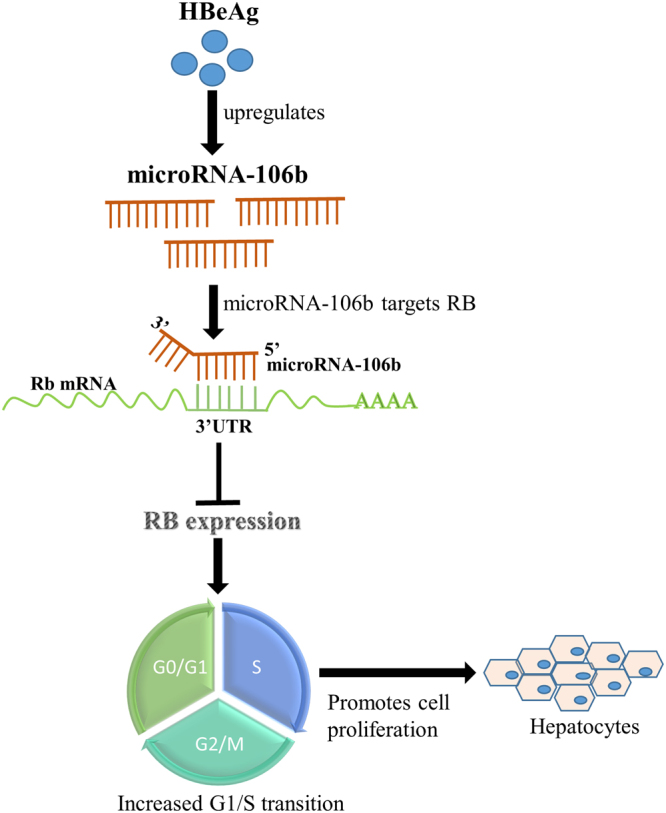
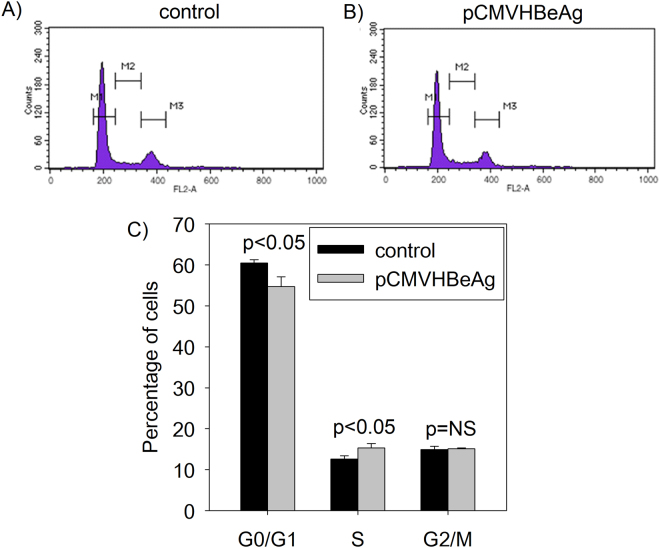
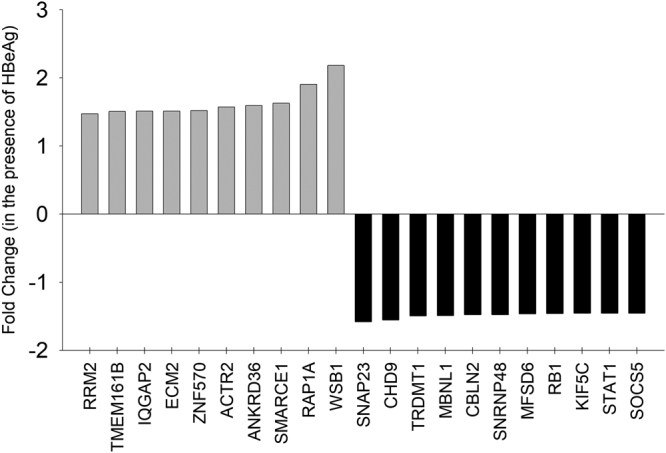
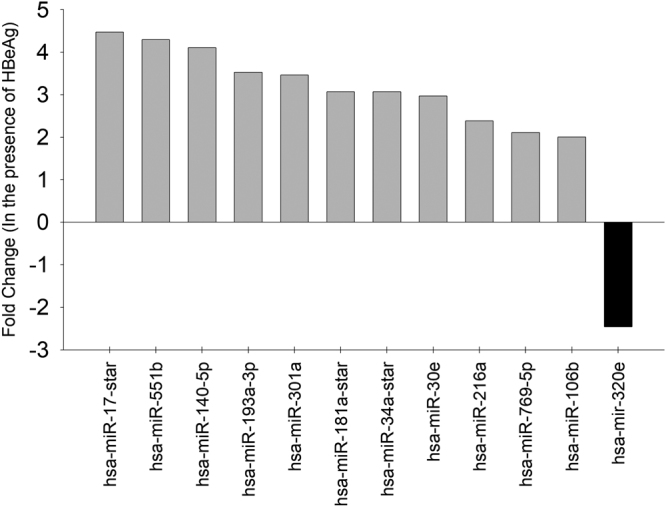
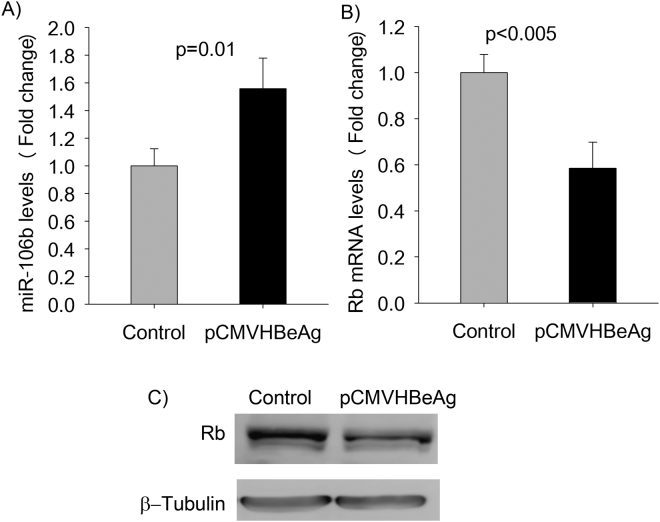
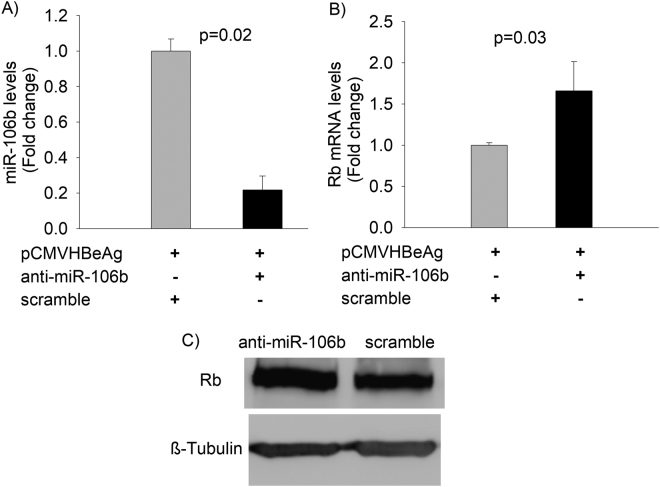
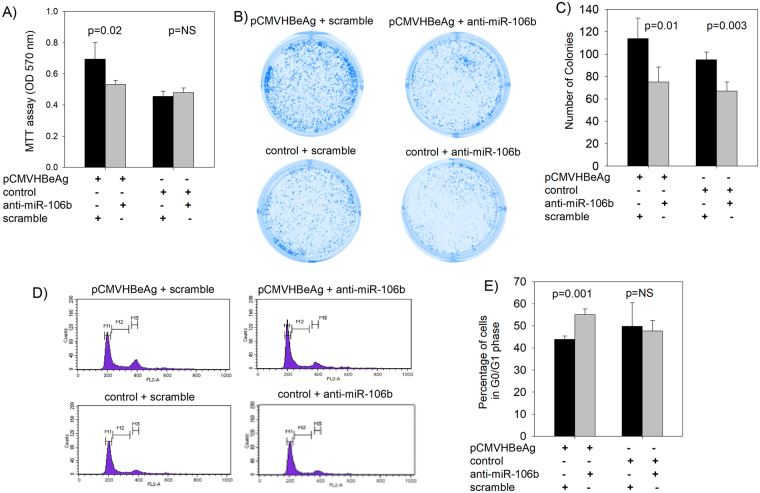
Chronic HBV infection is a major cause of hepatocellular carcinoma (HCC). The association between hepatitis B "e" antigen (HBeAg) and HCC is well-established by epidemiological studies. Nonetheless, the biological role of HBeAg in HCC remains enigmatic. We investigate the role of HBeAg in HBV-related HCC. Our findings suggest that HBeAg enhances cell proliferation and accelerates progression from G0/G1 phase to the S phase of the cell cycle in Huh7 cells. Examination of host gene expression and miRNA expression profiles reveals a total of 21 host genes and 12 host miRNAs that were differentially regulated in cells expressing HBeAg. Importantly, HBeAg induced the expression of miR-106b, an oncogenic miRNA. Interestingly, HBeAg-expression results in a significant reduction in the expression of retinoblastoma (Rb) gene, an experimentally validated target of miR-106b. Inhibition of miR-106b significantly increased the expression of the Rb gene, resulting in reduced cell proliferation and slowing of cell cycle progression from the G0/G1 phase to S phase. These observations suggest that the up-regulation of miR-106b by HBeAg contributes to the pathogenesis of HBV-related HCC by down-regulating the Rb gene. Our results highlight a role for HBeAg in HCC and provide a novel perspective on the molecular mechanisms underlying HBV-related HCC.
慢性乙型肝炎病毒感染是肝细胞癌(HCC)的主要病因。流行病学研究证实了乙型肝炎“e”抗原(HBeAg)与 HCC 之间的关联。尽管如此,HBeAg 在 HCC 中的生物学作用仍然是个谜。我们研究了 HBeAg 在乙型肝炎病毒相关 HCC 中的作用。我们的研究结果表明,HBeAg 增强了 Huh7 细胞的细胞增殖,并加速了细胞周期从 G0/G1 期向 S 期的进展。对宿主基因表达和 miRNA 表达谱的检查揭示了总共 21 个宿主基因和 12 个宿主 miRNA 在表达 HBeAg 的细胞中被差异调控。重要的是,HBeAg 诱导了致癌 miRNA miR-106b 的表达。有趣的是,HBeAg 的表达导致视网膜母细胞瘤(Rb)基因的表达显著减少,Rb 基因是 miR-106b 的实验验证靶标。抑制 miR-106b 显著增加了 Rb 基因的表达,导致细胞增殖减少,并减缓细胞周期从 G0/G1 期向 S 期的进展。这些观察结果表明,HBeAg 通过下调 Rb 基因上调 miR-106b 促进了乙型肝炎病毒相关 HCC 的发病机制。我们的研究结果突出了 HBeAg 在 HCC 中的作用,并为乙型肝炎病毒相关 HCC 的分子机制提供了新的视角。