Liao Tao, Xue Youqiu, Zhao Daqiang, Li Siwen, Liu Mingyu, Chen Jingrong, Brand David Douglass, Zheng Haofeng, Zhang Yannan, Zheng Song Guo, Sun Qiquan
Division of Kidney Transplantation, Department of Surgery, The Third Affiliated Hospital of Sun Yat-sen University, Guangzhou, China.
Department of Clinical Immunology, The Third Affiliated Hospital of Sun Yat-sen University, Guangzhou, China.
Front Immunol. 2017 Oct 16;8:1334. doi: 10.3389/fimmu.2017.01334. eCollection 2017.
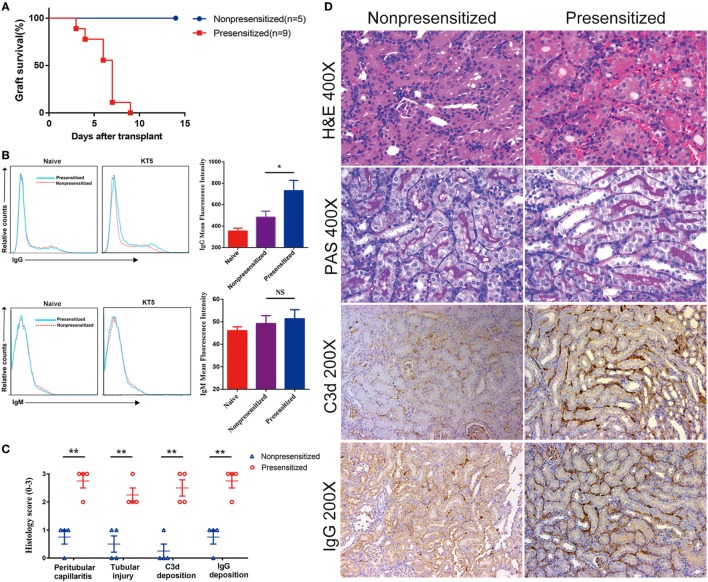
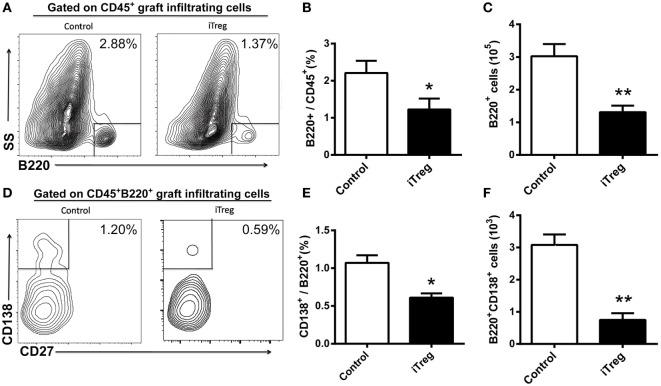
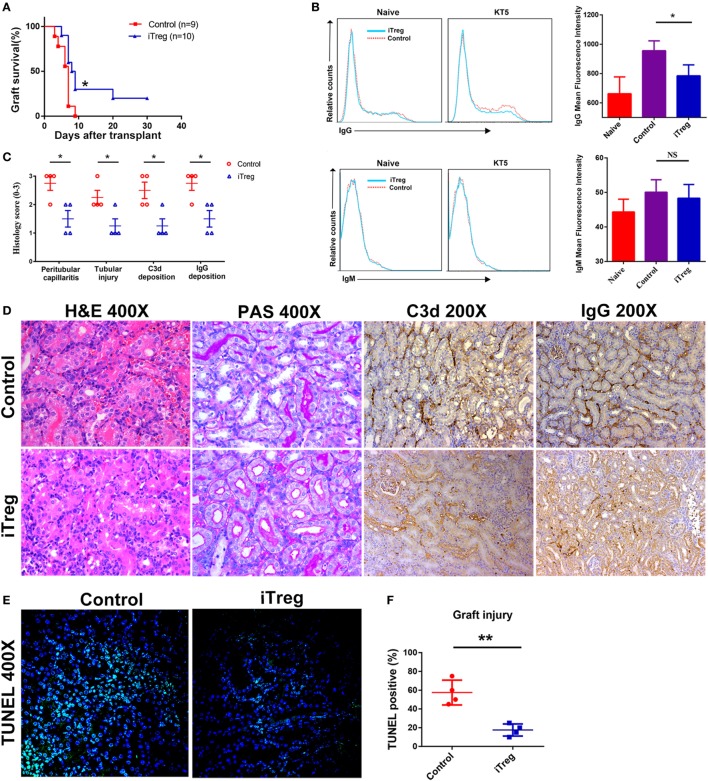
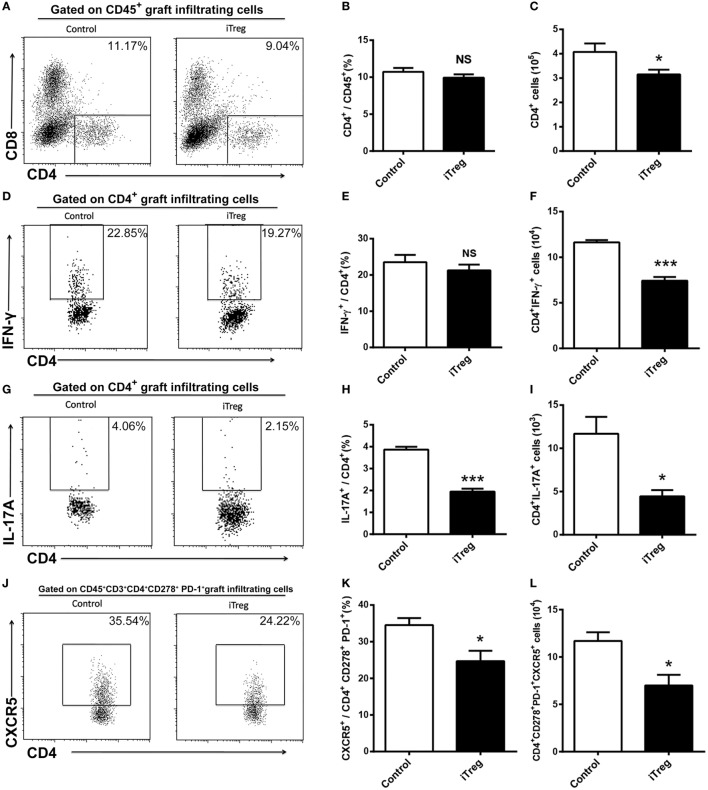
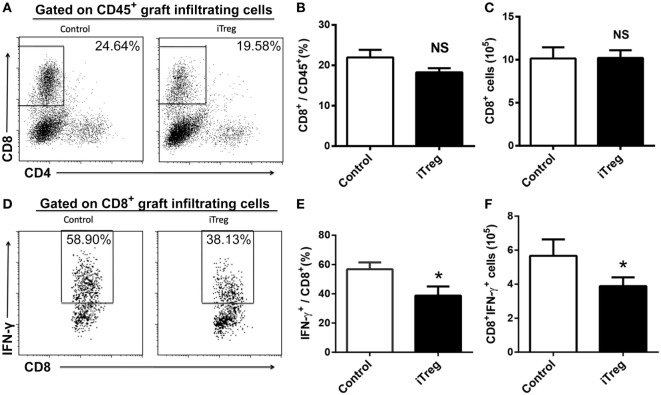
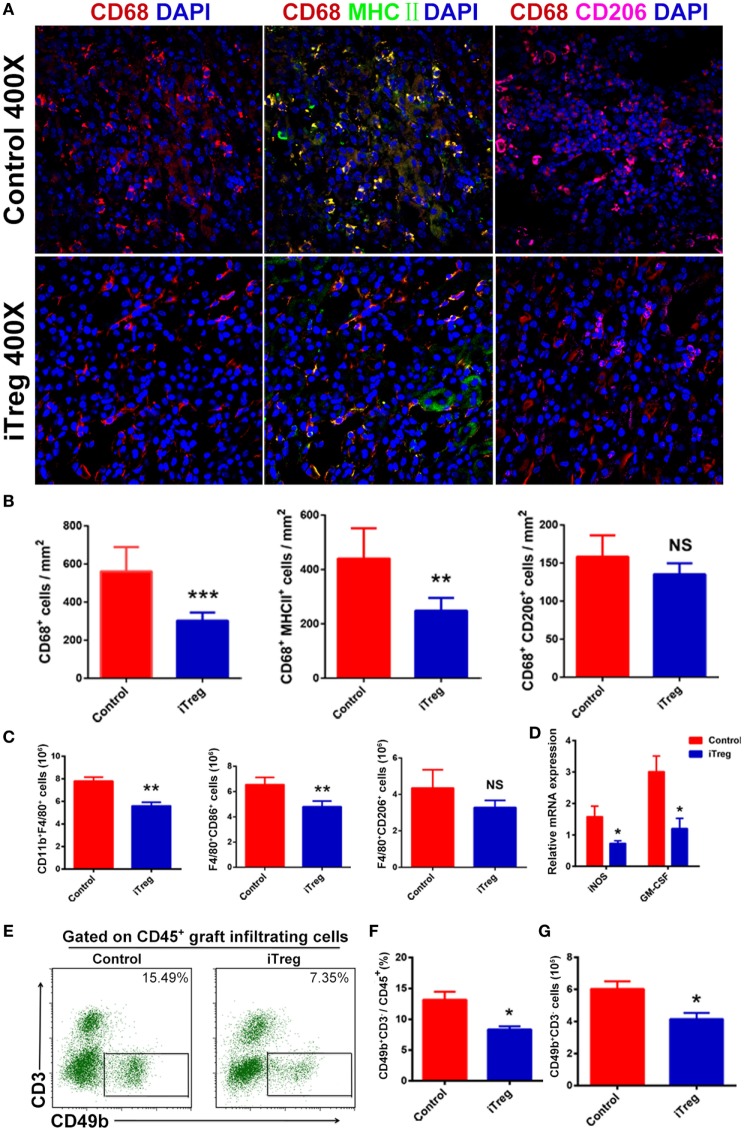
Antibody-mediated rejection (AMR) has emerged as the major cause of renal allograft dysfunction, and more effective strategies need to be explored for improving transplant outcomes. Regulatory T cells (Tregs), consisting of at least natural and induced Treg subsets, suppress effector responses at multiple levels and play a key role in transplantation tolerance. In this study, we investigated the effect of induced Tregs (iTregs) on preventing antibody-mediated renal injury and rejection in a mouse model. We observed that infusion of iTregs markedly attenuated histological graft injury and rejection and significantly improved renal allograft survival. iTregs exhibited a comprehensive ability to regulate immunological disorders in AMR. First, iTreg treatment decreased the levels of circulating antidonor antibody and the antibody deposition within allografts. Second, iTregs significantly reduced cell infiltration including CD4 T cells (including Th1, Th17, and Tfh), CD8IFN-γ cells, natural killer cells, B cells, and plasma cells, which are involved in the process of AMR. Our results also highlight a predominance of M1 macrophage infiltration in grafts with acute AMR, and M1 macrophage could be reduced by iTreg treatment. Collectively, our data demonstrate, for the first time, that TGF-β-induced Tregs can attenuate antibody-mediated acute renal allograft injury through targeting multiple effectors. Thus, use of iTregs in prevention of AMR in clinical practice could be expected.
抗体介导的排斥反应(AMR)已成为肾移植功能障碍的主要原因,需要探索更有效的策略来改善移植结局。调节性T细胞(Tregs)至少由天然和诱导性Treg亚群组成,在多个水平上抑制效应反应,在移植耐受中起关键作用。在本研究中,我们在小鼠模型中研究了诱导性Tregs(iTregs)对预防抗体介导的肾损伤和排斥反应的作用。我们观察到,输注iTregs可显著减轻组织学上的移植物损伤和排斥反应,并显著提高肾移植存活率。iTregs在AMR中表现出全面调节免疫紊乱的能力。首先,iTreg治疗降低了循环抗供体抗体水平以及同种异体移植物内的抗体沉积。其次,iTregs显著减少了包括CD4 T细胞(包括Th1、Th17和Tfh)、CD8 IFN-γ细胞、自然杀伤细胞、B细胞和浆细胞在内的细胞浸润,这些细胞参与了AMR的过程。我们的结果还突出了急性AMR移植物中M1巨噬细胞浸润占主导地位,iTreg治疗可减少M1巨噬细胞。总体而言,我们的数据首次证明,转化生长因子-β诱导的Tregs可通过靶向多种效应器减轻抗体介导的急性肾移植损伤。因此,可以预期在临床实践中使用iTregs预防AMR。