Oncología Médica, Hospital del Mar-Parc de Salut Mar, Barcelona, Spain.
Neuro-radiología, Hospital Ruber Internacional, Madrid, Spain.
Clin Transl Oncol. 2018 Jan;20(1):22-28. doi: 10.1007/s12094-017-1763-6. Epub 2017 Oct 30.
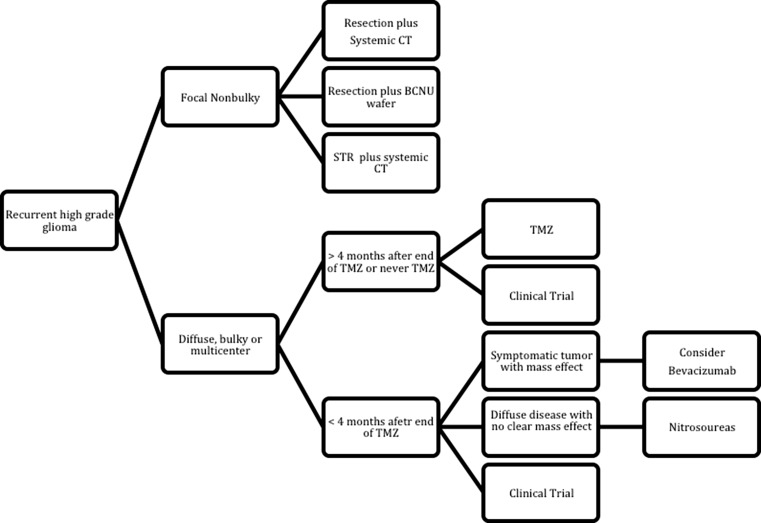
Glioblastoma (GB) is the most common brain malignancy and accounts for over 50% of all high-grade gliomas. Radiotherapy (RT) with concomitant and adjuvant temozolomide (TMZ) chemotherapy is the current standard of care for patients with newly diagnosed GB up to age 70. Recently, a new standard of care has been adopted for elderly patients (≥ 65 years) based on short course of RT and TMZ. Several clinically relevant molecular markers that assist in diagnosis and prognosis have recently been identified. The treatment for recurrent GB is not well defined, and decision-making is usually based on prior strategies as well as several clinical and radiological factors. The presence of neurologic deficits and seizures can significantly impact quality of life.
胶质母细胞瘤(GB)是最常见的脑恶性肿瘤,占所有高级别胶质瘤的 50%以上。对于年龄在 70 岁以下的新诊断为 GB 的患者,放射治疗(RT)联合替莫唑胺(TMZ)化疗是目前的标准治疗方法。最近,老年患者(≥65 岁)采用了新的标准治疗方法,即短程 RT 和 TMZ。最近已经确定了一些有助于诊断和预后的临床相关分子标志物。复发性 GB 的治疗方法尚未明确,决策通常基于先前的治疗策略以及几个临床和影像学因素。神经功能缺损和癫痫发作的存在会显著影响生活质量。