Goldberg Simon B, Tucker Raymond P, Greene Preston A, Simpson Tracy L, Kearney David J, Davidson Richard J
VA Puget Sound Health Care System-Seattle Division, Seattle, Washington, United States of America.
Center for Healthy Minds, University of Wisconsin-Madison, Madison, WI, United States of America.
PLoS One. 2017 Oct 31;12(10):e0187298. doi: 10.1371/journal.pone.0187298. eCollection 2017.
Despite an exponential growth in research on mindfulness-based interventions, the body of scientific evidence supporting these treatments has been criticized for being of poor methodological quality.
The current systematic review examined the extent to which mindfulness research demonstrated increased rigor over the past 16 years regarding six methodological features that have been highlighted as areas for improvement. These feature included using active control conditions, larger sample sizes, longer follow-up assessment, treatment fidelity assessment, and reporting of instructor training and intent-to-treat (ITT) analyses.
We searched PubMed, PsychInfo, Scopus, and Web of Science in addition to a publically available repository of mindfulness studies.
Randomized clinical trials of mindfulness-based interventions for samples with a clinical disorder or elevated symptoms of a clinical disorder listed on the American Psychological Association's list of disorders with recognized evidence-based treatment.
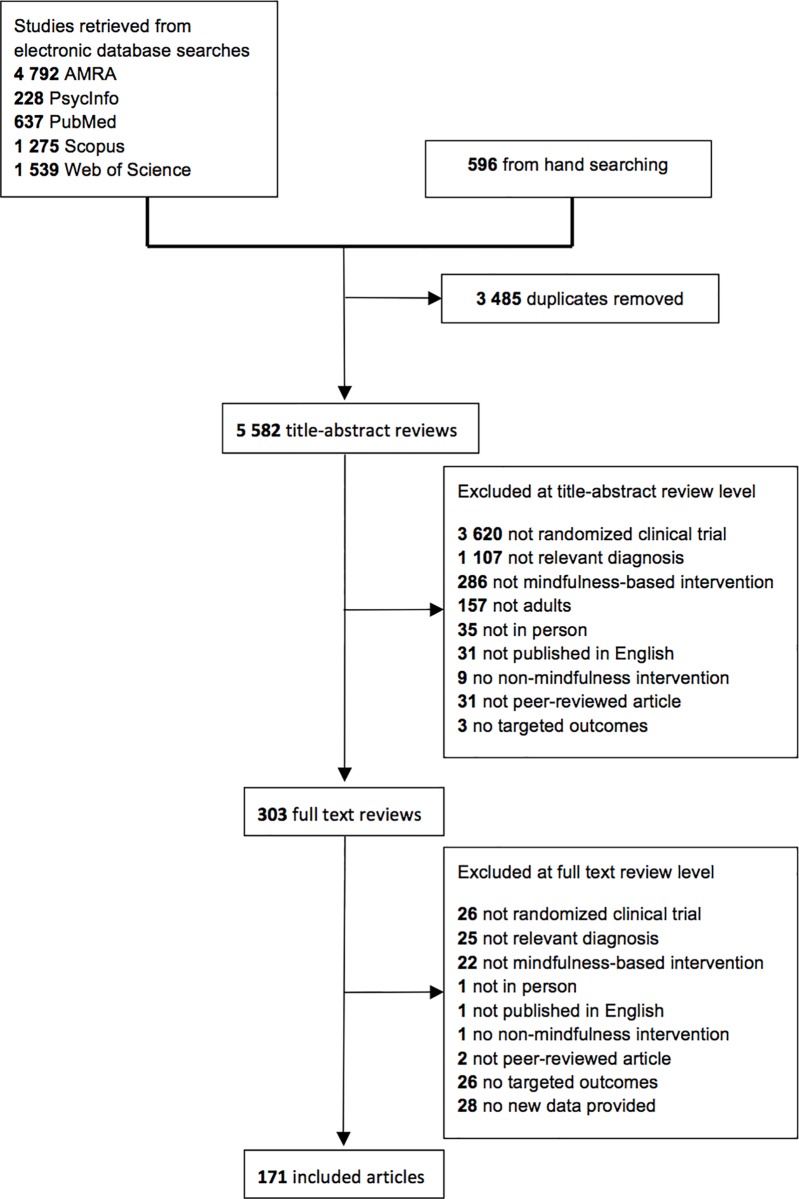
Independent raters screened 9,067 titles and abstracts, with 303 full text reviews. Of these, 171 were included, representing 142 non-overlapping samples.
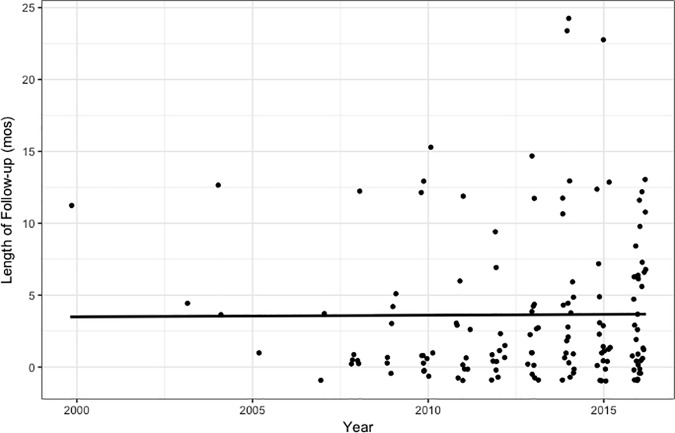
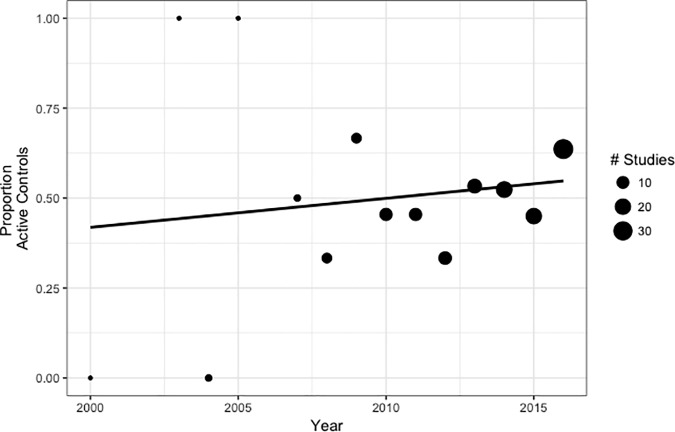
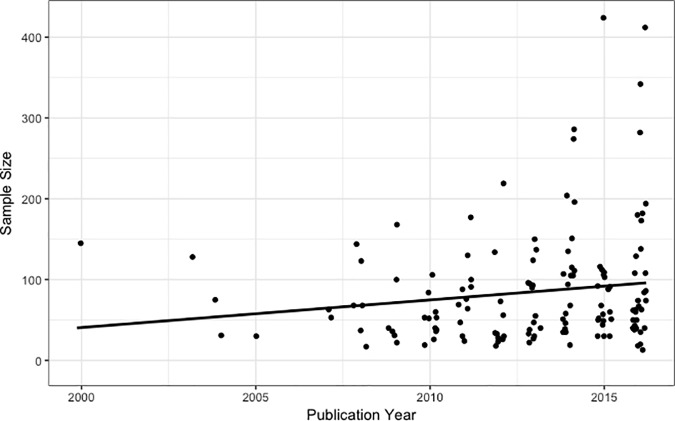
Across the 142 studies published between 2000 and 2016, there was no evidence for increases in any study quality indicator, although changes were generally in the direction of improved quality. When restricting the sample to those conducted in Europe and North America (continents with the longest history of scientific research in this area), an increase in reporting of ITT analyses was found. When excluding an early, high-quality study, improvements were seen in sample size, treatment fidelity assessment, and reporting of ITT analyses.
Taken together, the findings suggest modest adoption of the recommendations for methodological improvement voiced repeatedly in the literature. Possible explanations for this and implications for interpreting this body of research and conducting future studies are discussed.
尽管基于正念的干预措施的研究呈指数级增长,但支持这些治疗方法的科学证据因其方法学质量较差而受到批评。
当前的系统评价考察了正念研究在过去16年中在六个被强调为需要改进的方法学特征方面的严谨性提高程度。这些特征包括使用积极对照条件、更大的样本量、更长的随访评估、治疗保真度评估以及指导教师培训和意向性分析(ITT)的报告。
除了一个公开可用的正念研究库外,我们还检索了PubMed、PsychInfo、Scopus和科学网。
针对患有临床疾病或美国心理学会认可的基于循证治疗的疾病列表中列出的临床疾病症状加重的样本进行基于正念的干预措施的随机临床试验。
独立评估人员筛选了9067篇标题和摘要,进行了303篇全文综述。其中,171篇被纳入,代表142个不重叠的样本。
在2000年至2016年发表的142项研究中,没有证据表明任何研究质量指标有所提高,尽管变化总体上是朝着质量改善的方向。当将样本限制在欧洲和北美进行的研究(该领域科学研究历史最长的大陆)时,发现ITT分析的报告有所增加。当排除一项早期的高质量研究时,样本量、治疗保真度评估和ITT分析的报告有所改善。
综合来看,研究结果表明文献中反复提出的方法学改进建议的采纳程度适中。文中讨论了对此现象的可能解释以及对解释这一研究主体和开展未来研究的启示。