Shi Jiangying, Shan Shuhua, Li Hanqing, Song Guisheng, Li Zhuoyu
Institute of Biotechnology, Key Laboratory of Chemical Biology and Molecular Engineering of National Ministry of Education, Shanxi University, Taiyuan 030006, PR China.
College of Life Science, Shanxi University, Taiyuan 030006, China.
Oncotarget. 2017 Aug 12;8(43):74582-74594. doi: 10.18632/oncotarget.20216. eCollection 2017 Sep 26.
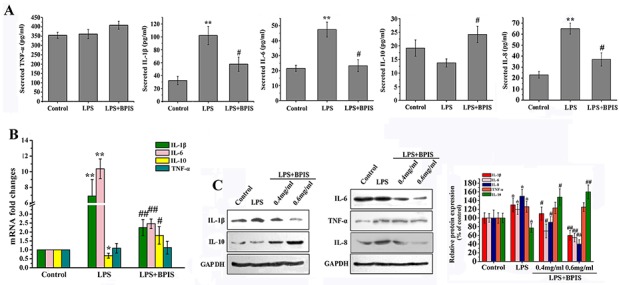
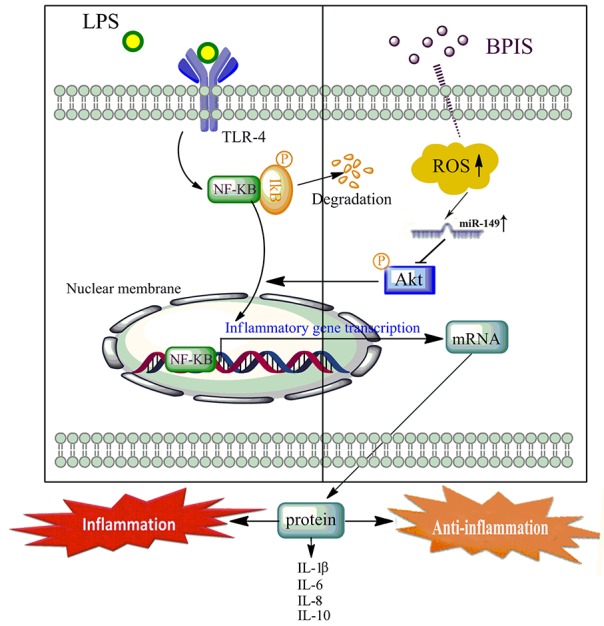
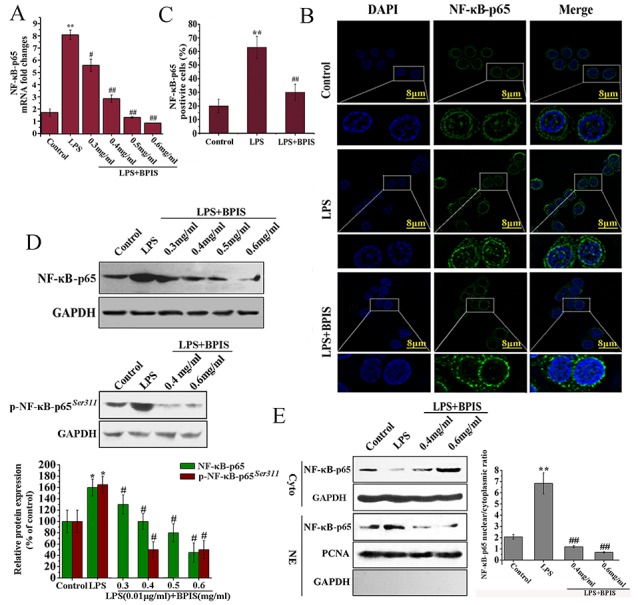
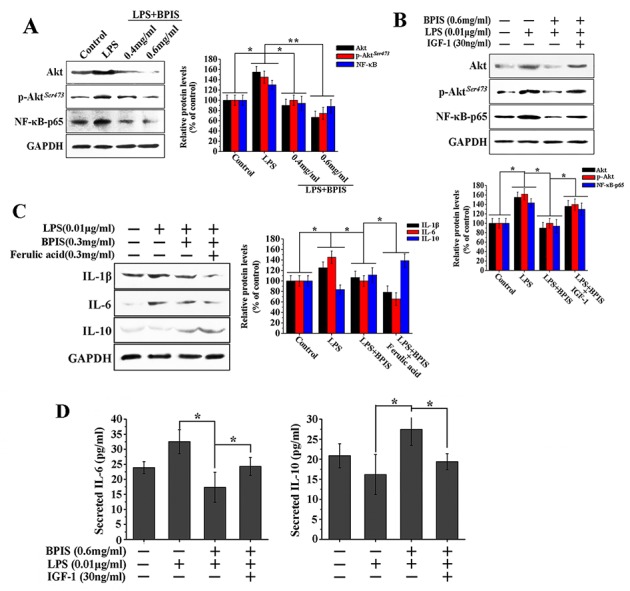
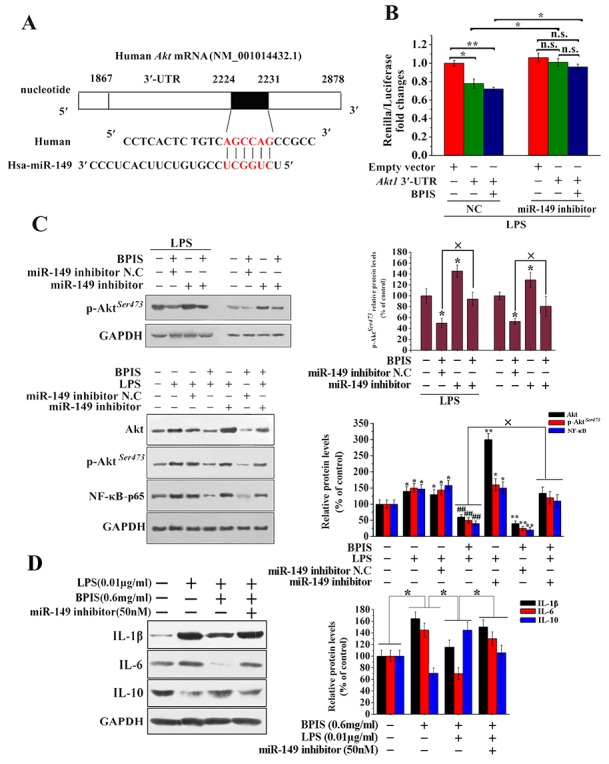
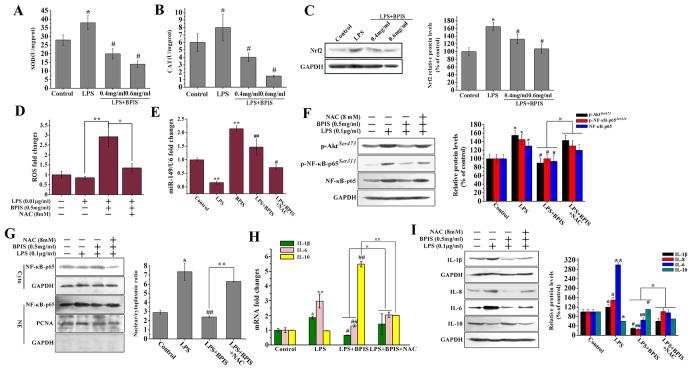
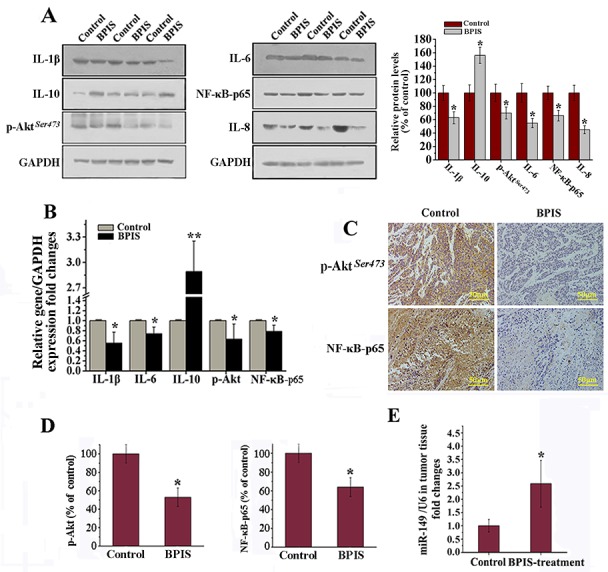
The pro-inflammatory and anti-inflammatory maladjustment has been acknowledged as one of the chief causations of inflammatory diseases and even cancers. Previous studies showed that plant-derived polyphenolic compounds were the most potent anti-oxidant and anti-inflammatory agents among all natural compounds. The present study indicates that bound polyphenols of inner shell (BPIS) from foxtail millet bran can display anti-inflammatory effects in LPS-induced HT-29 cells and in nude mice. Mechanistically, BPIS restrained the level of various pro-inflammatory cytokines (IL-1β, IL-6, IL-8), and enhanced the expression level of anti-inflammatory cytokine (IL-10) by blocking the nuclear factor-kappaB (NF-κB)-p65 nuclear translocation. Further, we found the elevated miR-149 expression by BPIS-induced ROS accumulation, directly targeted the Akt expression to block NF-κB nuclear translocation. Taken together, these novel findings provide new insights into the development of BPIS as an anti-inflammatory agent via the signaling cascade of ROS/miR-149/Akt/NF-κB axis.
促炎和抗炎失调已被认为是炎症性疾病甚至癌症的主要病因之一。先前的研究表明,植物来源的多酚化合物是所有天然化合物中最有效的抗氧化剂和抗炎剂。本研究表明,谷子麸皮内壳结合多酚(BPIS)在脂多糖诱导的HT-29细胞和裸鼠中可发挥抗炎作用。从机制上讲,BPIS通过阻断核因子-κB(NF-κB)-p65核转位来抑制各种促炎细胞因子(IL-1β、IL-6、IL-8)的水平,并提高抗炎细胞因子(IL-10)的表达水平。此外,我们发现BPIS诱导的活性氧(ROS)积累使miR-149表达升高,直接靶向Akt表达以阻断NF-κB核转位。综上所述,这些新发现为通过ROS/miR-149/Akt/NF-κB轴的信号级联将BPIS开发为抗炎剂提供了新的见解。