LISBP, Université de Toulouse, CNRS, INRA, INSA, Toulouse, France.
Inria, University of Grenoble-Alpes, Grenoble, France.
mBio. 2017 Oct 31;8(5):e01628-17. doi: 10.1128/mBio.01628-17.
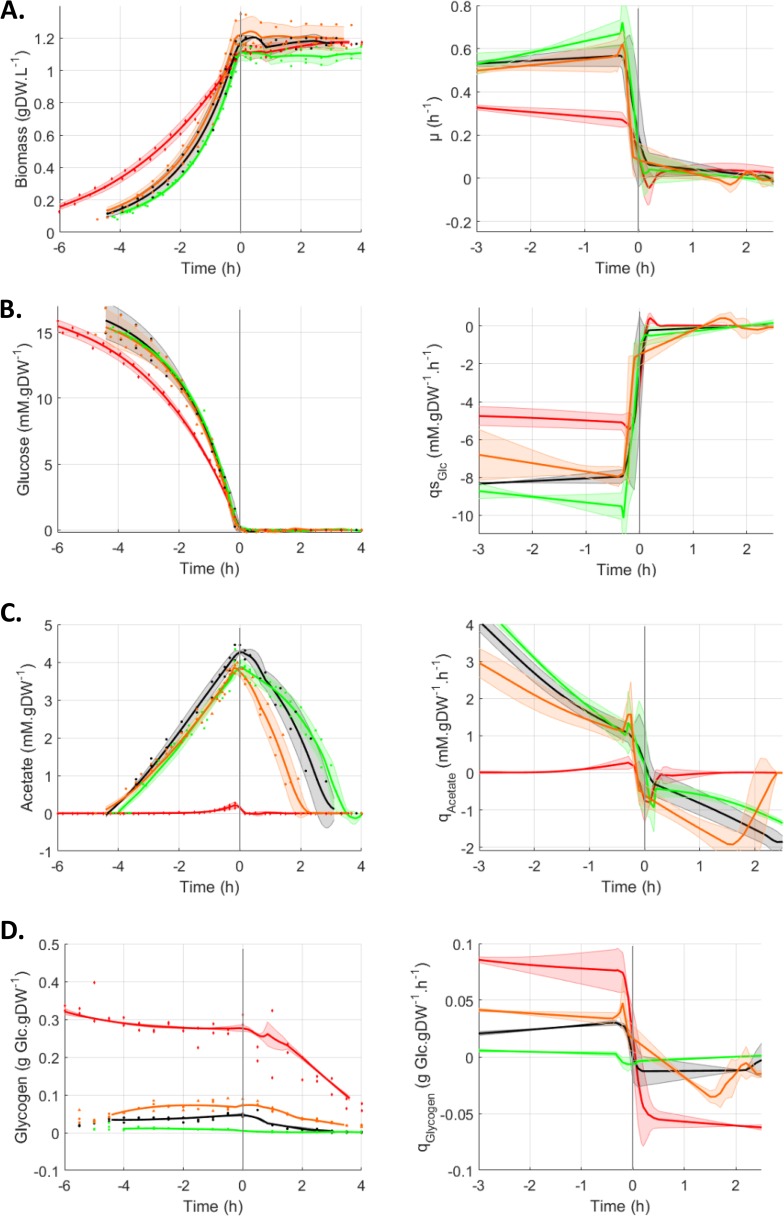
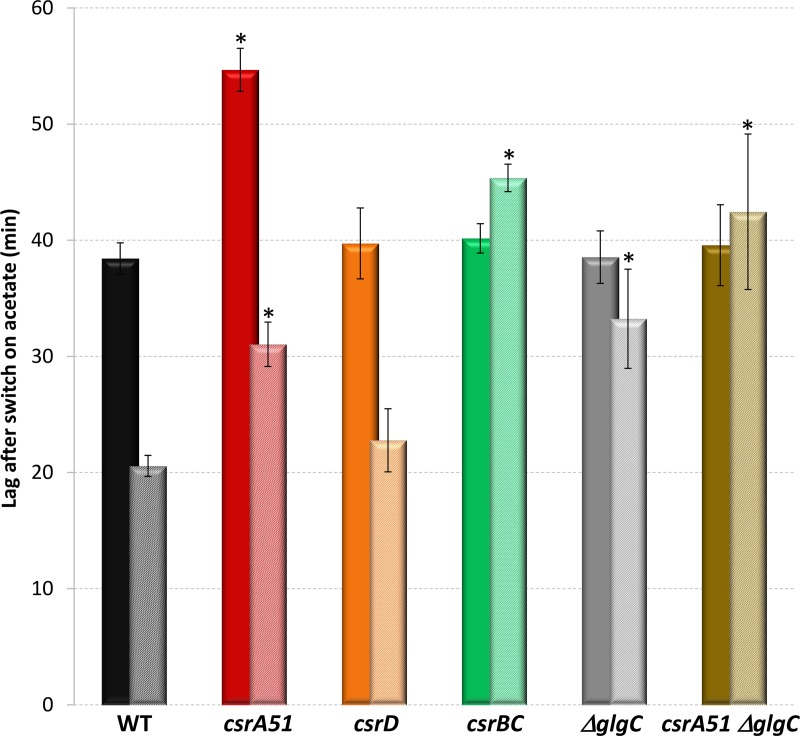
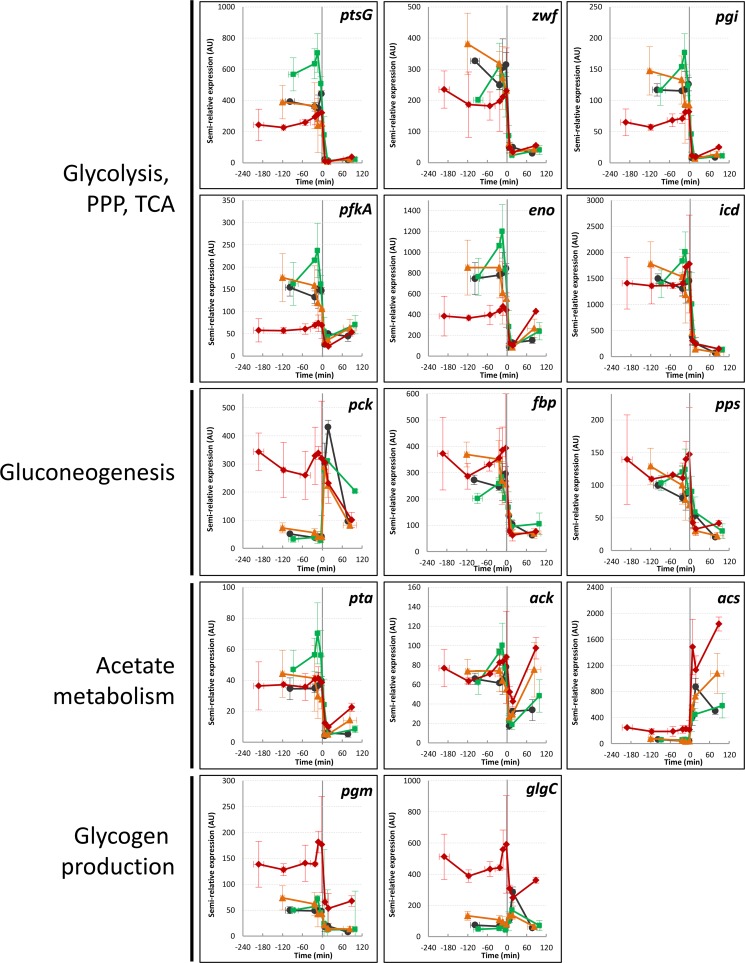
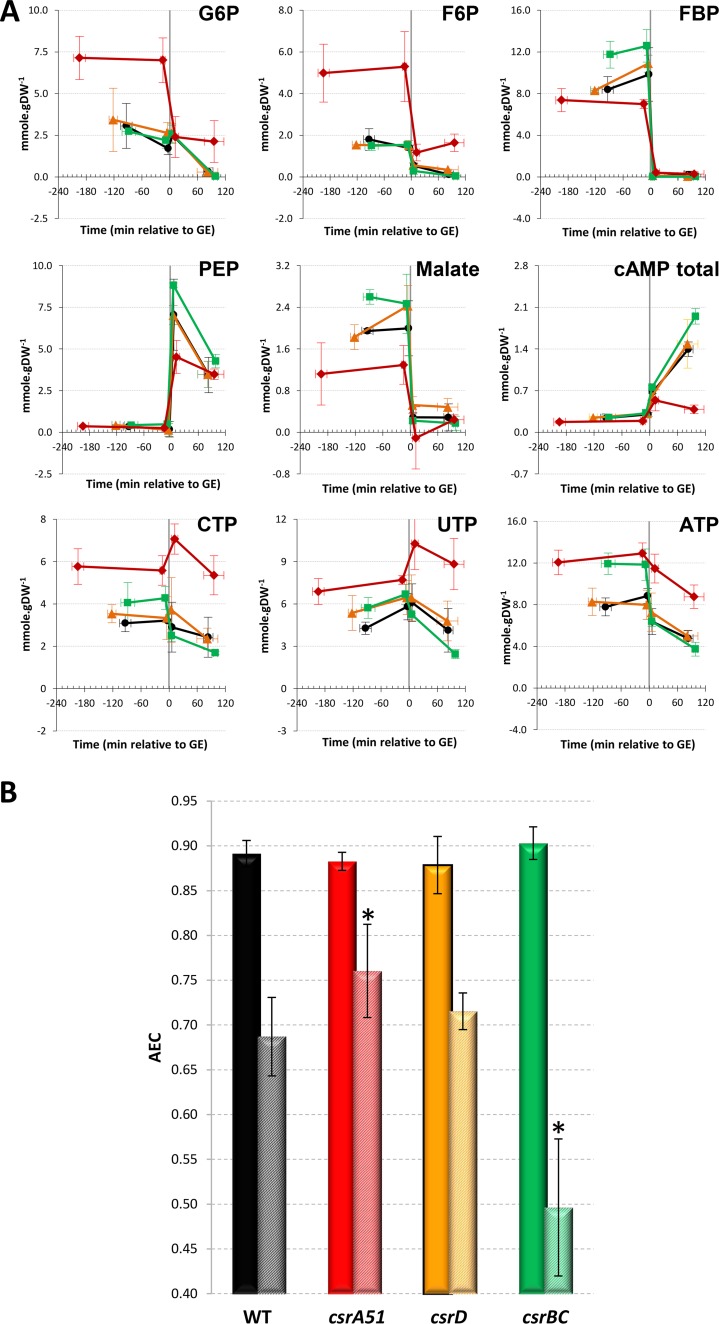
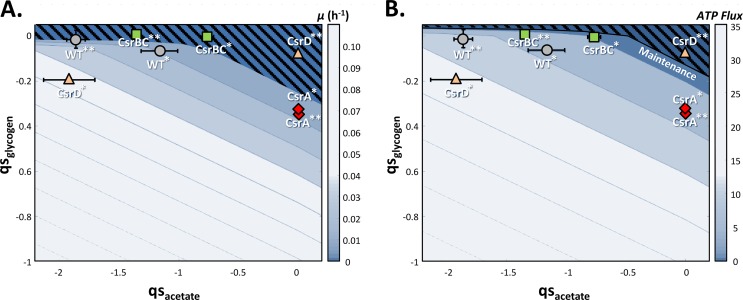
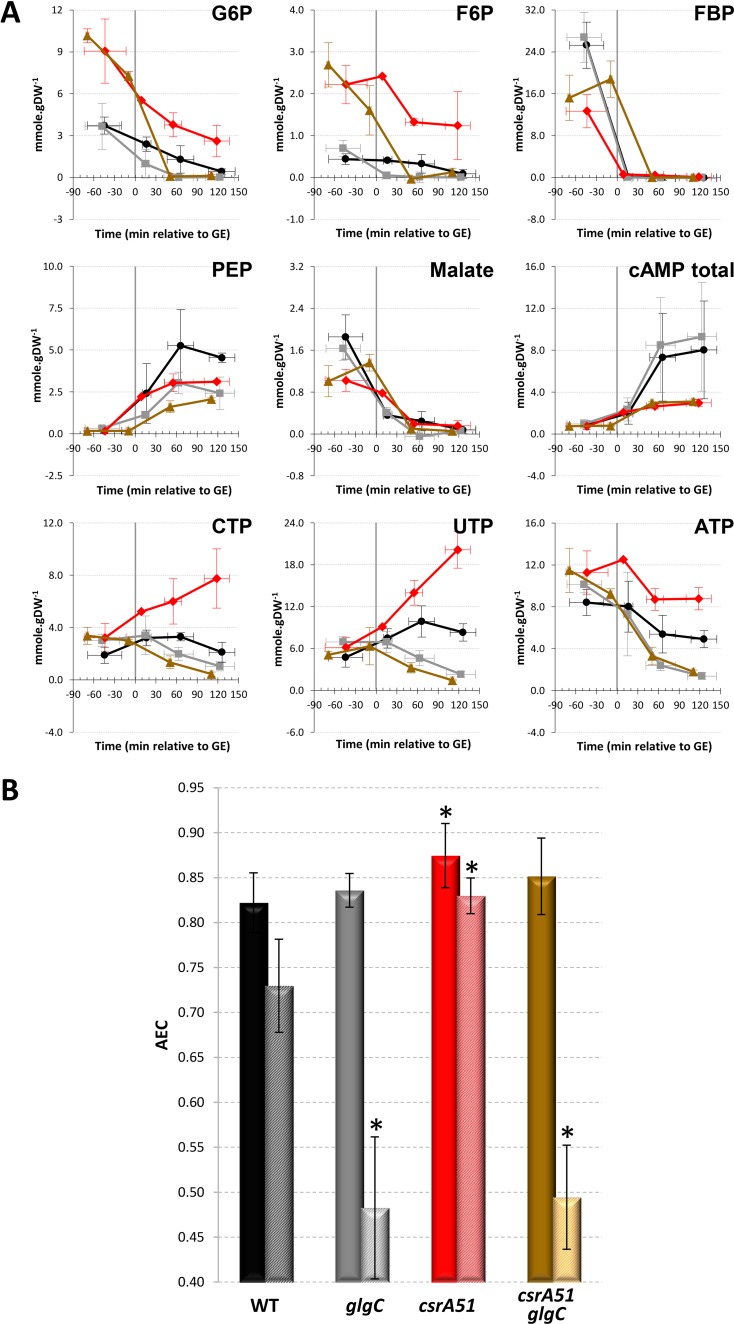
In the bacterium , the posttranscriptional regulatory system Csr was postulated to influence the transition from glycolysis to gluconeogenesis. Here, we explored the role of the Csr system in the glucose-acetate transition as a model of the glycolysis-to-gluconeogenesis switch. Mutations in the Csr system influence the reorganization of gene expression after glucose exhaustion and disturb the timing of acetate reconsumption after glucose exhaustion. Analysis of metabolite concentrations during the transition revealed that the Csr system has a major effect on the energy levels of the cells after glucose exhaustion. This influence was demonstrated to result directly from the effect of the Csr system on glycogen accumulation. Mutation in glycogen metabolism was also demonstrated to hinder metabolic adaptation after glucose exhaustion because of insufficient energy. This work explains how the Csr system influences fitness during the glycolysis-gluconeogenesis switch and demonstrates the role of glycogen in maintenance of the energy charge during metabolic adaptation. Glycogen is a polysaccharide and the main storage form of glucose from bacteria such as to yeasts and mammals. Although its function as a sugar reserve in mammals is well documented, the role of glycogen in bacteria is not as clear. By studying the role of posttranscriptional regulation during metabolic adaptation, for the first time, we demonstrate the role of sugar reserve played by glycogen in Indeed, glycogen not only makes it possible to maintain sufficient energy during metabolic transitions but is also the key component in the capacity of cells to resume growth. Since the essential posttranscriptional regulatory system Csr is a major regulator of glycogen accumulation, this work also sheds light on the central role of posttranscriptional regulation in metabolic adaptation.
在细菌中,假定转录后调控系统 Csr 会影响从糖酵解到糖异生的转变。在这里,我们以糖酵解到糖异生的转变为模型,探索了 Csr 系统在葡萄糖-乙酸盐转变中的作用。Csr 系统的突变会影响葡萄糖耗尽后基因表达的重组,并干扰葡萄糖耗尽后乙酸盐再摄取的时机。代谢物浓度的分析表明,Csr 系统在葡萄糖耗尽后对细胞的能量水平有重大影响。这种影响直接来自 Csr 系统对糖原积累的影响。糖原代谢的突变也被证明会由于能量不足而阻碍葡萄糖耗尽后的代谢适应。这项工作解释了 Csr 系统如何在糖酵解-糖异生转变过程中影响适应度,并证明了糖原在代谢适应过程中维持能量电荷的作用。糖原是一种多糖,是从细菌(如)到酵母和哺乳动物等生物体中葡萄糖的主要储存形式。尽管其在哺乳动物中作为糖储备的功能已有充分的记录,但在细菌中糖原的作用并不那么明确。通过研究代谢适应过程中的转录后调控作用,我们首次证明了糖原在 中的糖储备作用。事实上,糖原不仅使细胞在代谢转变过程中能够维持足够的能量,而且是细胞恢复生长能力的关键组成部分。由于必需的转录后调控系统 Csr 是糖原积累的主要调节因子,这项工作也揭示了转录后调控在代谢适应中的核心作用。