Duke University School of Medicine, Durham, North Carolina, USA.
Institut für Zytobiologie & Zytopathologie, Philipps-Universität, Marburg, Germany.
mBio. 2017 Oct 31;8(5):e01742-17. doi: 10.1128/mBio.01742-17.
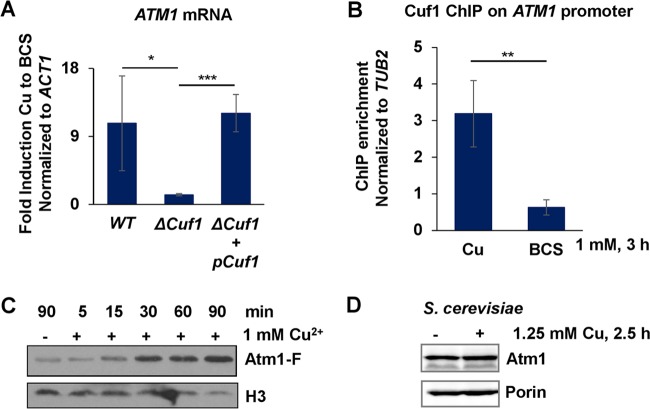
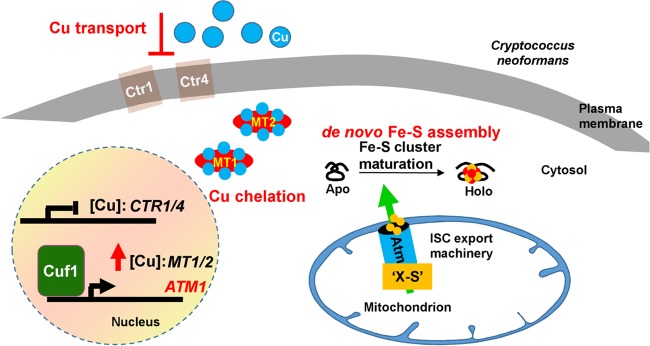
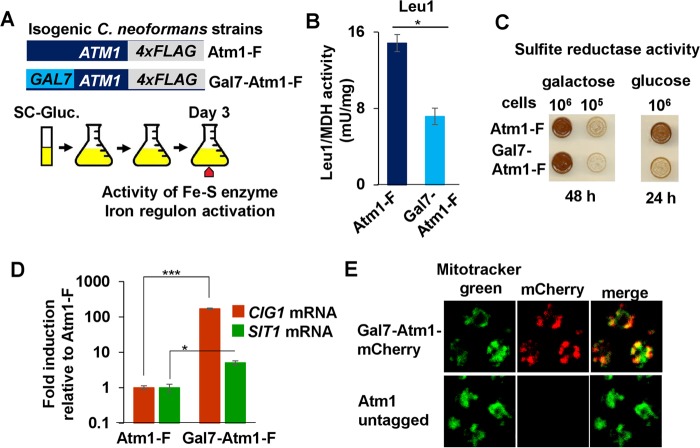
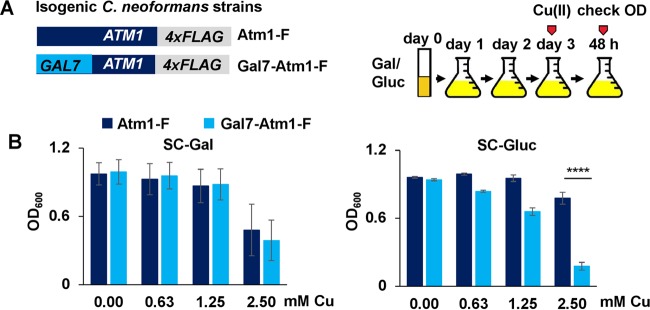
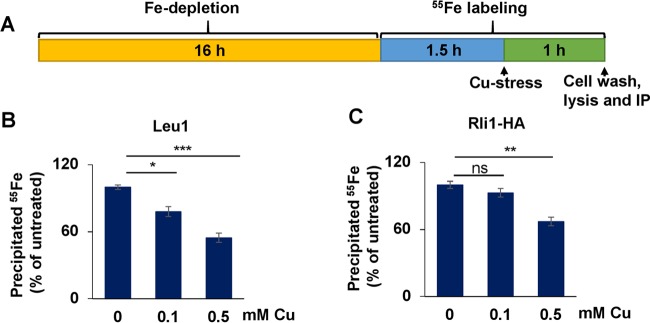
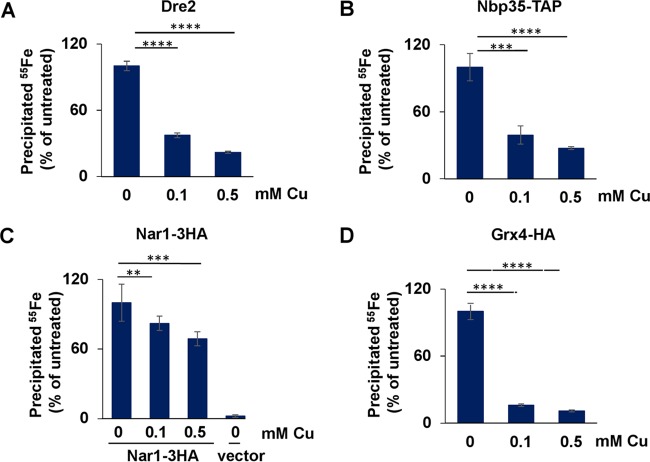
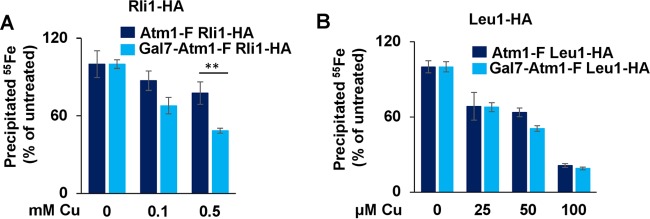
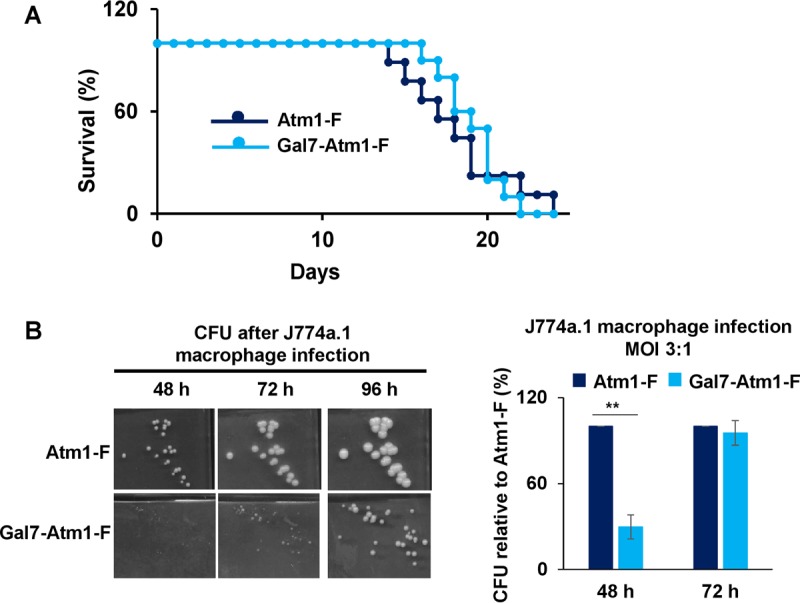
Copper (Cu) ions serve as catalytic cofactors to drive key biochemical processes, and yet Cu levels that exceed cellular homeostatic control capacity are toxic. The underlying mechanisms for Cu toxicity are poorly understood. During pulmonary infection by the fungal pathogen , host alveolar macrophages compartmentalize Cu to the phagosome, and the ability to detoxify Cu is critical for its survival and virulence. Here, we report that iron-sulfur (Fe-S) clusters are critical targets of Cu toxicity in both and in a manner that depends on the accessibility of Cu to the Fe-S cofactor. To respond to this Cu-dependent Fe-S stress, induces the transcription of mitochondrial ABC transporter Atm1, which functions in cytosolic-nuclear Fe-S protein biogenesis in response to Cu and in a manner dependent on the Cu metalloregulatory transcription factor Cuf1. As Atm1 functions in exporting an Fe-S precursor from the mitochondrial matrix to the cytosol, cells depleted for Atm1 are sensitive to Cu even while the Cu-detoxifying metallothionein proteins are highly expressed. We provide evidence for a previously unrecognized microbial defense mechanism to deal with Cu toxicity, and we highlight the importance for of having several distinct mechanisms for coping with Cu toxicity which together could contribute to the success of this microbe as an opportunistic human fungal pathogen. is an opportunistic pathogen that causes lethal meningitis in over 650,000 people annually. The severity of infections is further compounded by the use of toxic or poorly effective systemic antifungal agents as well as by the difficulty of diagnosis. Cu is a natural potent antimicrobial agent that is compartmentalized within the macrophage phagosome and used by innate immune cells to neutralize microbial pathogens. While the Cu detoxification machinery of is essential for virulence, little is known about the mechanisms by which Cu kills fungi. Here we report that Fe-S cluster-containing proteins, including members of the Fe-S protein biogenesis machinery itself, are critical targets of Cu toxicity and therefore that this biosynthetic process provides an important layer of defense against high Cu levels. Given the role of Cu ionophores as antimicrobials, understanding how Cu is toxic to microorganisms could lead to the development of effective, broad-spectrum antimicrobials. Moreover, understanding Cu toxicity could provide additional insights into the pathophysiology of human diseases of Cu overload such as Wilson's disease.
铜(Cu)离子作为催化辅因子驱动关键的生化过程,但超过细胞内稳态控制能力的 Cu 水平是有毒的。Cu 毒性的潜在机制还了解甚少。在真菌病原体引起的肺部感染过程中,宿主肺泡巨噬细胞将 Cu 分隔到吞噬体中,而解毒 Cu 的能力对于其生存和毒力至关重要。在这里,我们报告铁硫(Fe-S)簇是真菌 在一种依赖于 Cu 与 Fe-S 辅因子的可及性的方式中对 Cu 毒性的关键靶标。为了应对这种 Cu 依赖性 Fe-S 应激, 诱导线粒体 ABC 转运蛋白 Atm1 的转录,该蛋白在线粒体-细胞质 Fe-S 蛋白生物发生中起作用,响应 Cu 并依赖于 Cu 金属调节转录因子 Cuf1。由于 Atm1 的功能是将 Fe-S 前体从线粒体基质输出到细胞质中,因此 Atm1 缺失的 细胞对 Cu 敏感,即使 Cu 解毒金属硫蛋白蛋白高度表达也是如此。我们提供了一个以前未被认识到的微生物防御机制的证据,以应对 Cu 毒性,并强调了 拥有几种不同的应对 Cu 毒性的机制的重要性,这些机制共同有助于这种微生物作为机会性人类真菌病原体的成功。 是一种机会性病原体,每年导致超过 65 万人患有致命性脑膜炎。 感染的严重程度进一步因使用毒性或效果不佳的全身抗真菌药物以及诊断困难而复杂化。Cu 是一种天然有效的抗菌剂,它被分隔在巨噬细胞吞噬体中,并被先天免疫细胞用于中和微生物病原体。虽然 对 Cu 解毒机制对毒力至关重要,但对于 Cu 杀死真菌的机制知之甚少。在这里,我们报告 Fe-S 簇包含的蛋白质,包括 Fe-S 蛋白生物发生机制本身的成员,是 Cu 毒性的关键靶标,因此该生物合成过程为对抗高 Cu 水平提供了一个重要的防御层。鉴于 Cu 离子载体作为抗菌剂的作用,了解 Cu 对微生物的毒性如何可能导致开发有效的广谱抗菌剂。此外,了解 Cu 毒性可以为人类 Cu 过载相关疾病的病理生理学提供更多见解,例如威尔逊病。