Oueis E, Stevenson H, Jaspars M, Westwood N J, Naismith J H
Biomedical Science Research Complex & School of Chemistry, University of St Andrews, BSRC, North Haugh, St Andrews, KY16 9ST, UK.
Chem Commun (Camb). 2017 Nov 14;53(91):12274-12277. doi: 10.1039/c7cc06550g.
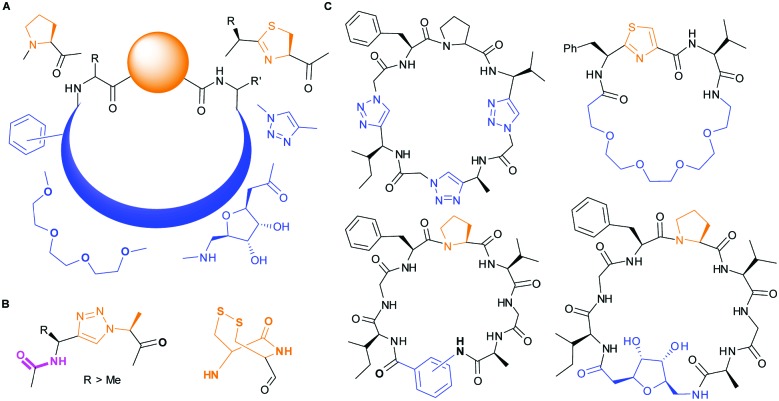
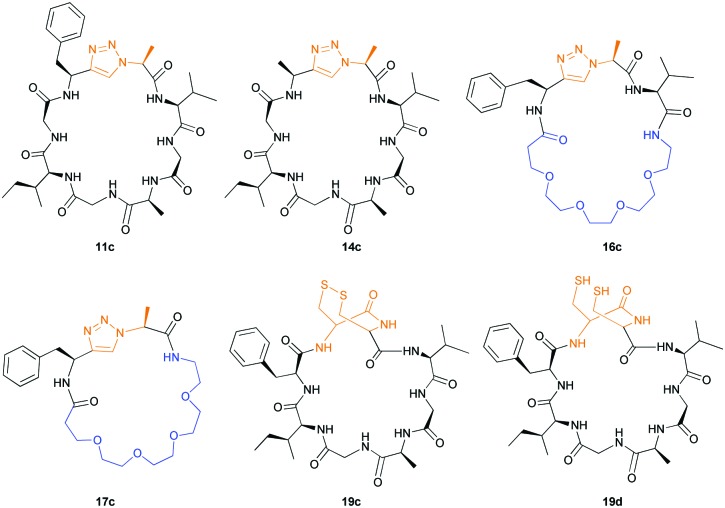
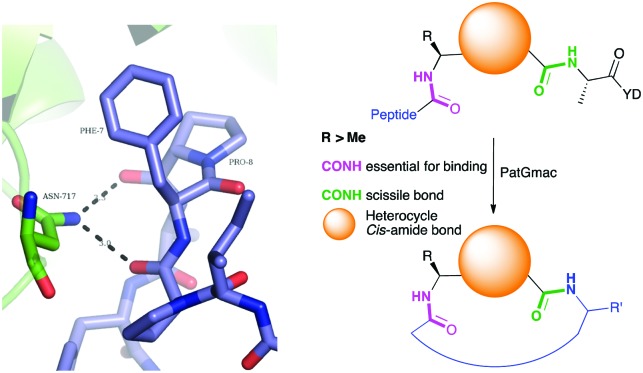
Biocatalysis is a fast developing field in which an enzyme's natural capabilities are harnessed or engineered for synthetic chemistry. The enzyme PatG is an extremely promiscuous macrocyclase enzyme tolerating both non-natural amino acids and non-amino acids within the substrate. It does, however, require a proline or thiazoline at the C-terminal position of the core peptide which means the final product must contain this group. Here, we show guided by structural insight we have identified two synthetic routes, triazole and a double cysteine, that circumvent this requirement. With the triazole, we show PatGmac can macrocyclise substrates that do not contain any amino acids in the final product.
生物催化是一个快速发展的领域,在该领域中,酶的天然能力被用于合成化学或通过工程改造来实现这一目的。酶PatG是一种极其通用的大环化酶,它能够耐受底物中的非天然氨基酸和非氨基酸。然而,它确实需要在核心肽的C端位置有一个脯氨酸或噻唑啉,这意味着最终产物必须包含该基团。在这里,我们表明,在结构洞察的指导下,我们已经确定了两条合成路线,即三唑和双半胱氨酸路线,它们可以规避这一要求。对于三唑路线,我们表明PatGmac可以使最终产物中不包含任何氨基酸的底物发生大环化。