Department of Experimental Pediatric Oncology, Children's Hospital, University of Cologne, Kerpener Strasse 62, 50937 Cologne, Germany.
Institute of Biostatistics and Clinical Research, University of Muenster, Schmeddingstrasse 56, 48149 Münster, Germany.
Neoplasia. 2017 Dec;19(12):982-990. doi: 10.1016/j.neo.2017.09.006. Epub 2017 Nov 5.
Current risk stratification systems for neuroblastoma patients consider clinical, histopathological, and genetic variables, and additional prognostic markers have been proposed in recent years. We here sought to select highly informative covariates in a multistep strategy based on consecutive Cox regression models, resulting in a risk score that integrates hazard ratios of prognostic variables.
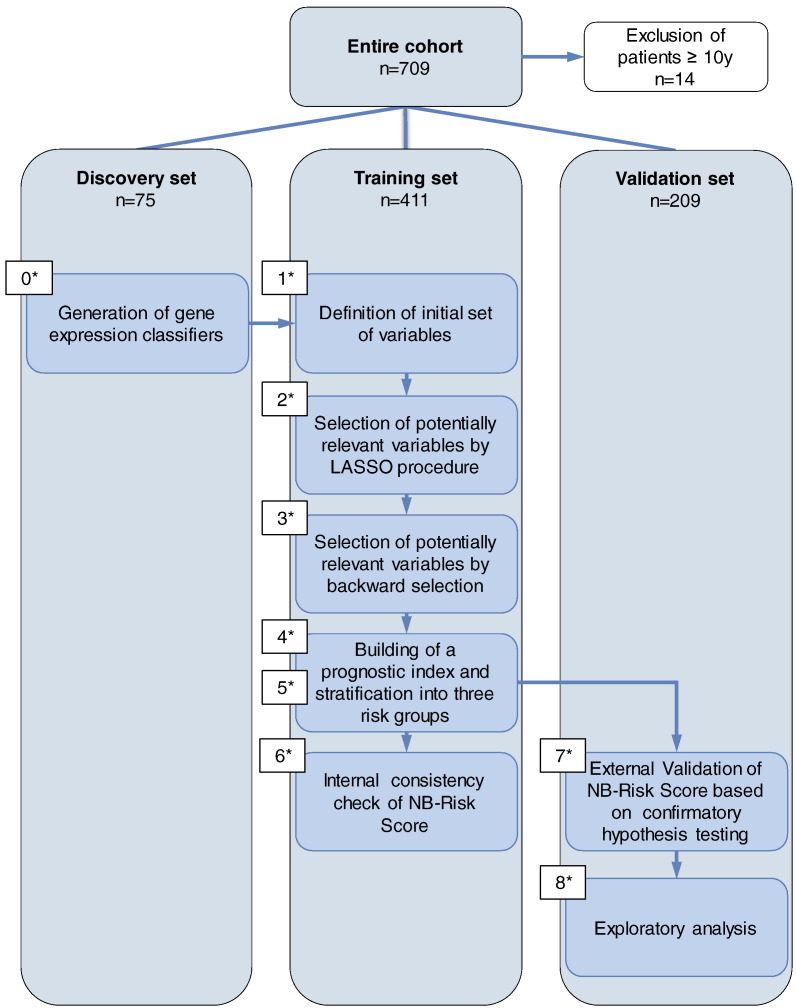
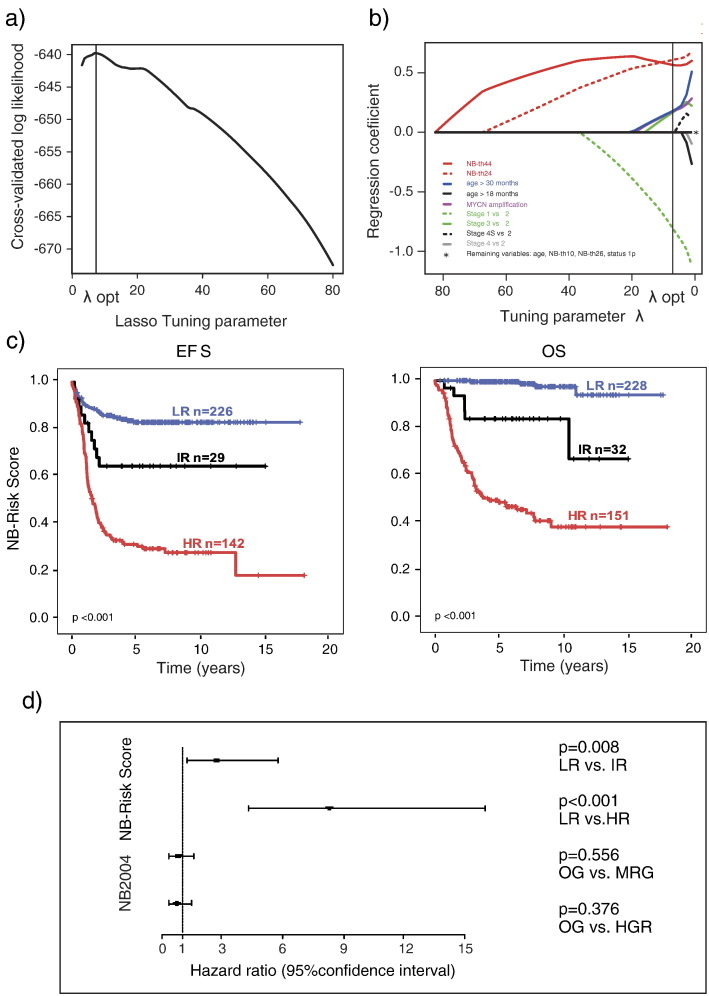
A cohort of 695 neuroblastoma patients was divided into a discovery set (n=75) for multigene predictor generation, a training set (n=411) for risk score development, and a validation set (n=209). Relevant prognostic variables were identified by stepwise multivariable L1-penalized least absolute shrinkage and selection operator (LASSO) Cox regression, followed by backward selection in multivariable Cox regression, and then integrated into a novel risk score.
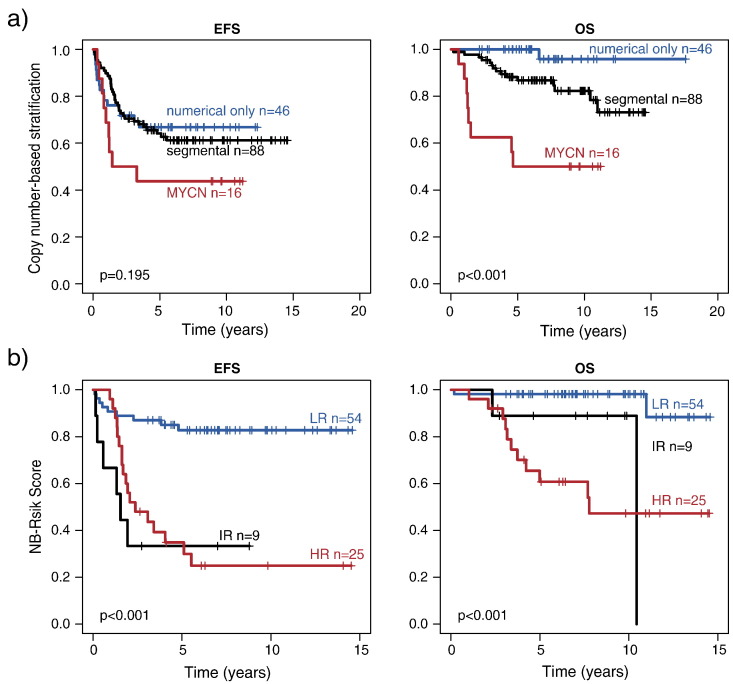
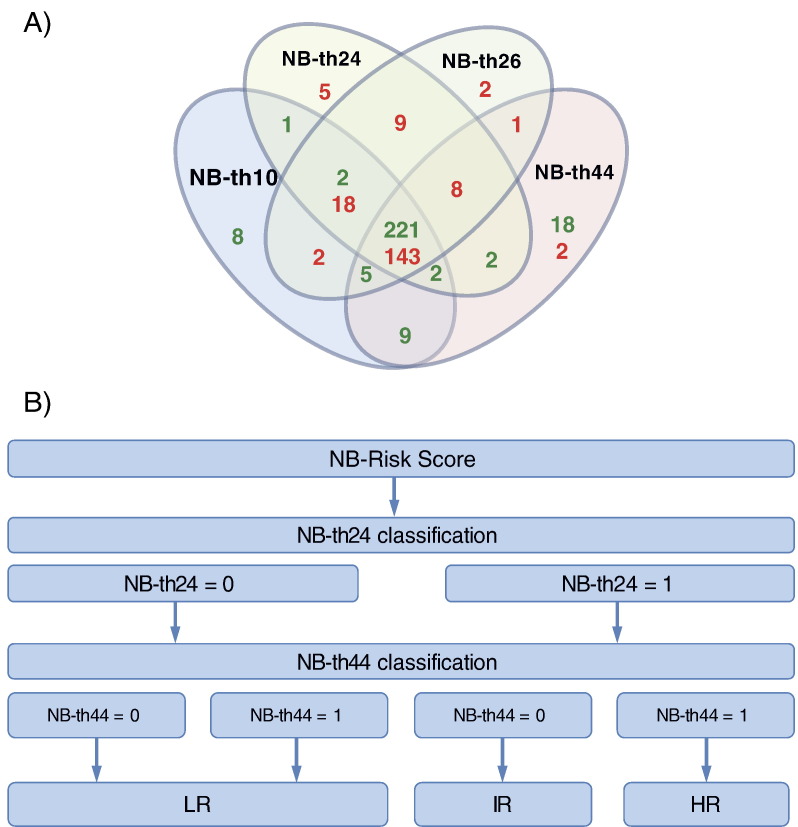
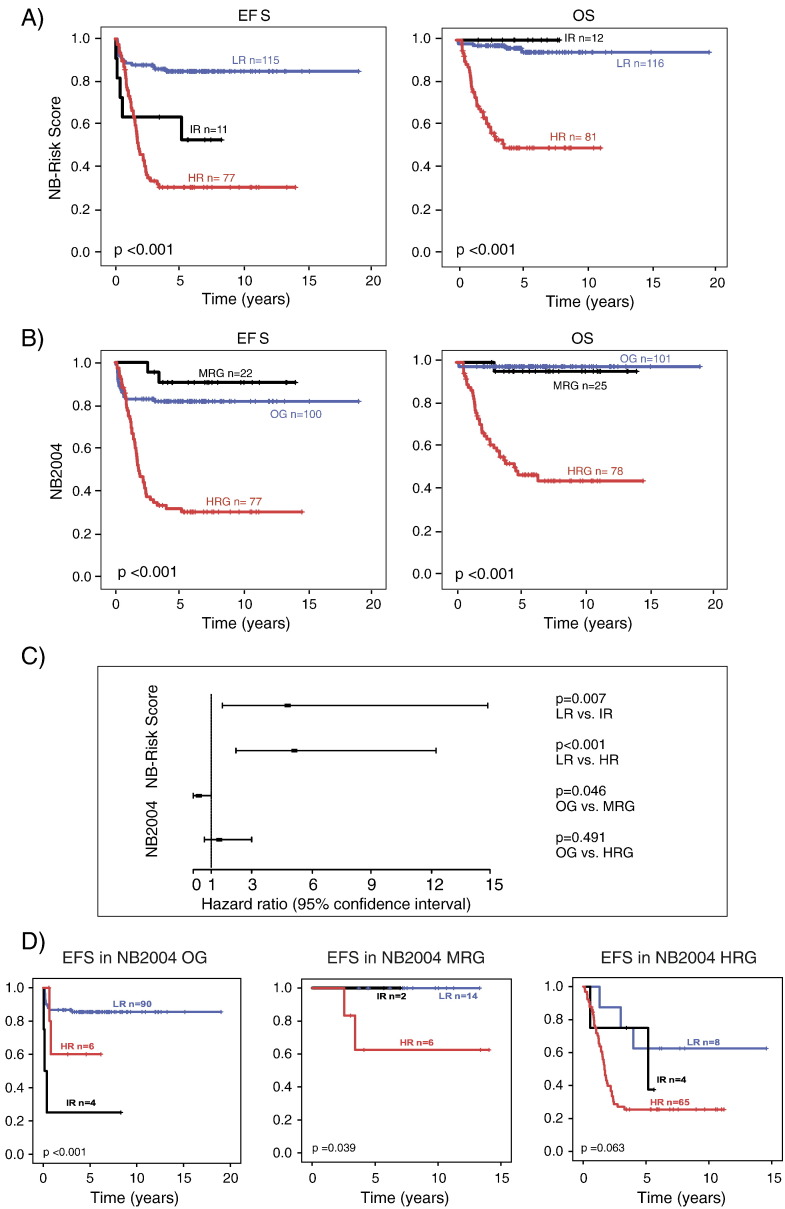
The variables stage, age, MYCN status, and two multigene predictors, NB-th24 and NB-th44, were selected as independent prognostic markers by LASSO Cox regression analysis. Following backward selection, only the multigene predictors were retained in the final model. Integration of these classifiers in a risk scoring system distinguished three patient subgroups that differed substantially in their outcome. The scoring system discriminated patients with diverging outcome in the validation cohort (5-year event-free survival, 84.9±3.4 vs 63.6±14.5 vs 31.0±5.4; P<.001), and its prognostic value was validated by multivariable analysis.
We here propose a translational strategy for developing risk assessment systems based on hazard ratios of relevant prognostic variables. Our final neuroblastoma risk score comprised two multigene predictors only, supporting the notion that molecular properties of the tumor cells strongly impact clinical courses of neuroblastoma patients.
目前的神经母细胞瘤患者风险分层系统考虑了临床、组织病理学和遗传变量,近年来还提出了其他预后标志物。我们在这里寻求基于连续 Cox 回归模型的多步策略中选择高度信息性的协变量,从而得出一个整合预后变量风险比的风险评分。
将 695 例神经母细胞瘤患者分为发现集(n=75)用于多基因预测因子生成、训练集(n=411)用于风险评分开发和验证集(n=209)。通过逐步多变量 L1 惩罚最小绝对收缩和选择算子(LASSO)Cox 回归识别相关预后变量,然后进行多变量 Cox 回归的向后选择,最后将其整合到一个新的风险评分中。
LASSO Cox 回归分析选择了阶段、年龄、MYCN 状态和两个多基因预测因子 NB-th24 和 NB-th44 作为独立的预后标志物。通过向后选择,最终模型中仅保留了多基因预测因子。将这些分类器整合到风险评分系统中,可以区分出在结局上存在显著差异的三个患者亚组。该评分系统在验证队列中区分了具有不同结局的患者(5 年无事件生存率,84.9±3.4%对 63.6±14.5%对 31.0±5.4%;P<.001),并且其预后价值通过多变量分析得到验证。
我们提出了一种基于相关预后变量风险比的风险评估系统开发的转化策略。我们最终的神经母细胞瘤风险评分仅包含两个多基因预测因子,这支持了肿瘤细胞的分子特性强烈影响神经母细胞瘤患者临床病程的观点。