Brownstein John S, Chu Shuyu, Marathe Achla, Marathe Madhav V, Nguyen Andre T, Paolotti Daniela, Perra Nicola, Perrotta Daniela, Santillana Mauricio, Swarup Samarth, Tizzoni Michele, Vespignani Alessandro, Vullikanti Anil Kumar S, Wilson Mandy L, Zhang Qian
Computational Health Informatics Program, Boston Children's Hospital, Boston, MA, United States.
Computational Epidemiology Group, Division of Emergency Medicine, Boston Children's Hospital, Boston, MA, United States.
JMIR Public Health Surveill. 2017 Nov 1;3(4):e83. doi: 10.2196/publichealth.7344.
Influenza outbreaks affect millions of people every year and its surveillance is usually carried out in developed countries through a network of sentinel doctors who report the weekly number of Influenza-like Illness cases observed among the visited patients. Monitoring and forecasting the evolution of these outbreaks supports decision makers in designing effective interventions and allocating resources to mitigate their impact.
Describe the existing participatory surveillance approaches that have been used for modeling and forecasting of the seasonal influenza epidemic, and how they can help strengthen real-time epidemic science and provide a more rigorous understanding of epidemic conditions.
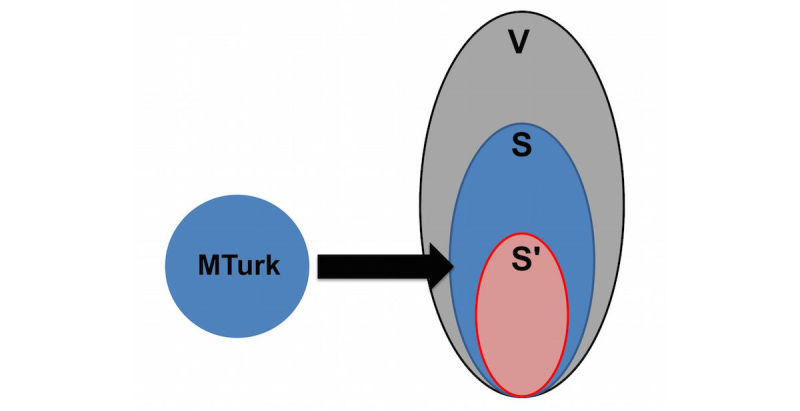
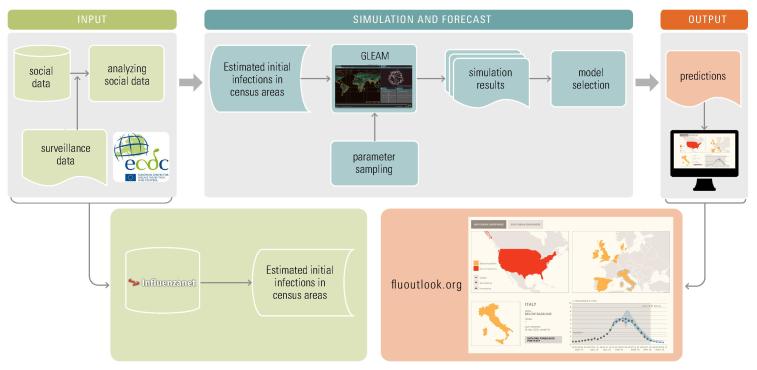
We describe three different participatory surveillance systems, WISDM (Widely Internet Sourced Distributed Monitoring), Influenzanet and Flu Near You (FNY), and show how modeling and simulation can be or has been combined with participatory disease surveillance to: i) measure the non-response bias in a participatory surveillance sample using WISDM; and ii) nowcast and forecast influenza activity in different parts of the world (using Influenzanet and Flu Near You).
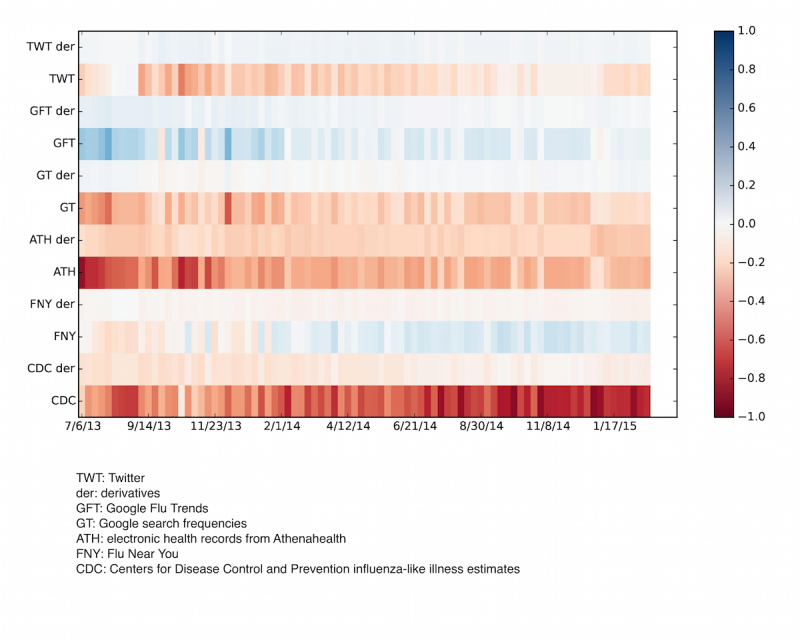
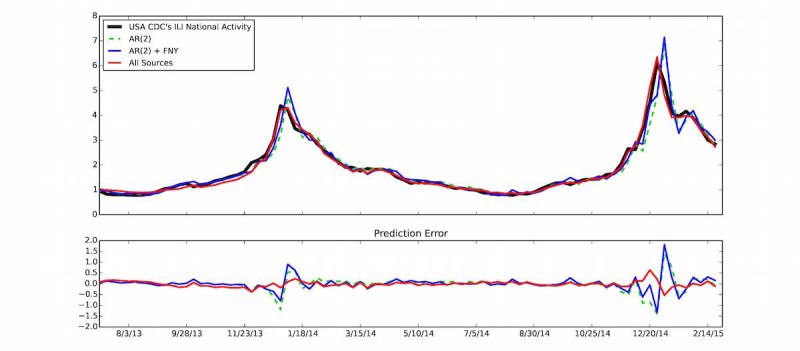
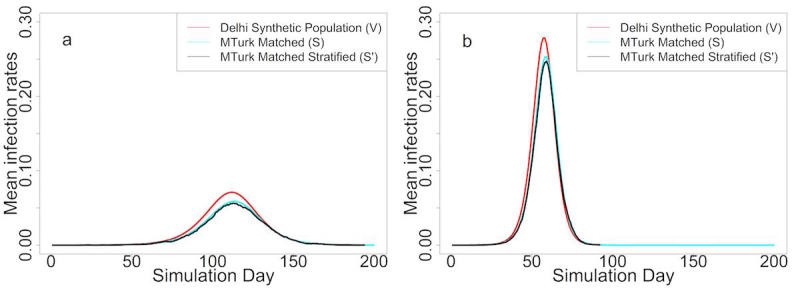
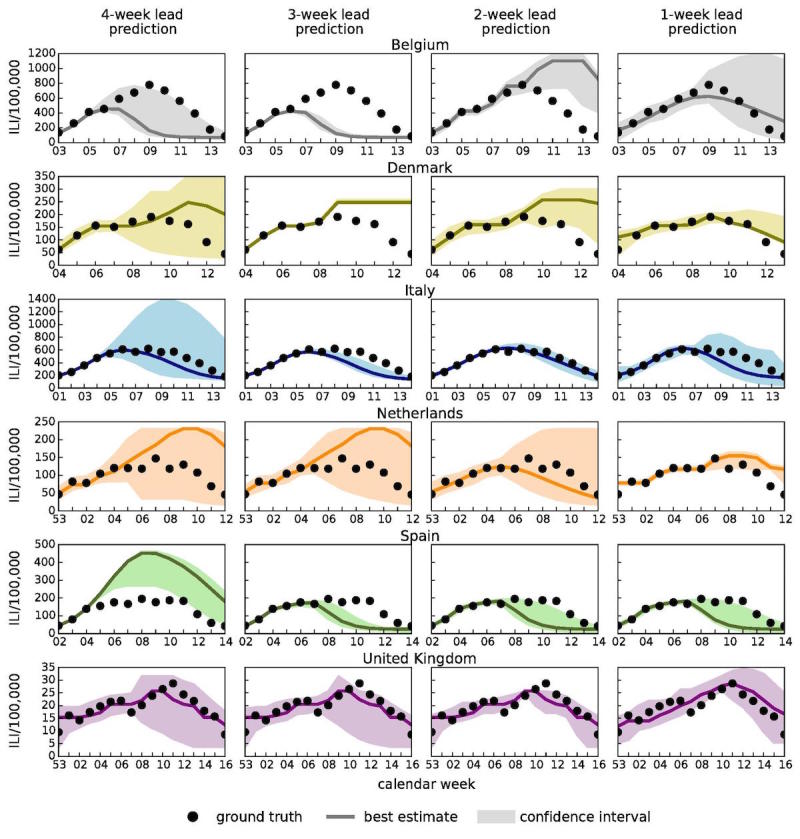
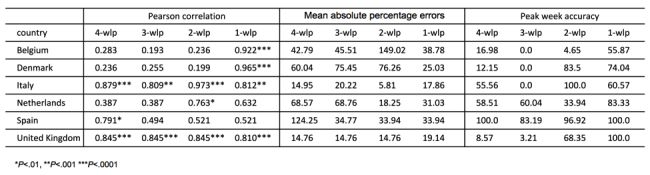
WISDM-based results measure the participatory and sample bias for three epidemic metrics i.e. attack rate, peak infection rate, and time-to-peak, and find the participatory bias to be the largest component of the total bias. The Influenzanet platform shows that digital participatory surveillance data combined with a realistic data-driven epidemiological model can provide both short-term and long-term forecasts of epidemic intensities, and the ground truth data lie within the 95 percent confidence intervals for most weeks. The statistical accuracy of the ensemble forecasts increase as the season progresses. The Flu Near You platform shows that participatory surveillance data provide accurate short-term flu activity forecasts and influenza activity predictions. The correlation of the HealthMap Flu Trends estimates with the observed CDC ILI rates is 0.99 for 2013-2015. Additional data sources lead to an error reduction of about 40% when compared to the estimates of the model that only incorporates CDC historical information.
While the advantages of participatory surveillance, compared to traditional surveillance, include its timeliness, lower costs, and broader reach, it is limited by a lack of control over the characteristics of the population sample. Modeling and simulation can help overcome this limitation as well as provide real-time and long-term forecasting of influenza activity in data-poor parts of the world.
流感疫情每年影响数百万人,其监测通常在发达国家通过一个由定点医生组成的网络进行,这些医生报告在就诊患者中观察到的流感样疾病病例的每周数量。监测和预测这些疫情的演变有助于决策者设计有效的干预措施并分配资源以减轻其影响。
描述已用于季节性流感疫情建模和预测的现有参与性监测方法,以及它们如何有助于加强实时疫情科学并更严格地理解疫情状况。
我们描述了三种不同的参与性监测系统,即WISDM(广泛互联网源分布式监测)、Influenzanet和“你身边的流感”(FNY),并展示了建模和模拟如何能够或已经与参与性疾病监测相结合,以:i)使用WISDM测量参与性监测样本中的无应答偏差;ii)对世界不同地区的流感活动进行现况预测和预测(使用Influenzanet和“你身边的流感”)。
基于WISDM的结果测量了三种疫情指标(即发病率、峰值感染率和达到峰值的时间)的参与性偏差和样本偏差,并发现参与性偏差是总偏差的最大组成部分。Influenzanet平台表明,数字参与性监测数据与基于实际数据驱动的流行病学模型相结合,可以提供疫情强度的短期和长期预测,并且在大多数周中,实际数据落在95%置信区间内。随着季节的推进,综合预测的统计准确性会提高。“你身边的流感”平台表明,参与性监测数据可提供准确的短期流感活动预测和流感活动预测。2013 - 2015年,HealthMap流感趋势估计值与美国疾病控制与预防中心(CDC)观察到的流感样疾病发病率之间的相关性为0.99。与仅纳入CDC历史信息的模型估计值相比,额外的数据来源可使误差减少约40%。
虽然与传统监测相比,参与性监测的优势包括及时性、成本较低和覆盖范围更广,但它受到对人群样本特征缺乏控制的限制。建模和模拟有助于克服这一限制,并为世界上数据匮乏地区的流感活动提供实时和长期预测。