Stakaitytė Gabrielė, Nwogu Nnenna, Dobson Samuel J, Knight Laura M, Wasson Christopher W, Salguero Francisco J, Blackbourn David J, Blair G Eric, Mankouri Jamel, Macdonald Andrew, Whitehouse Adrian
School of Molecular and Cellular Biology, Faculty of Biological Sciences, University of Leeds, Leeds, United Kingdom.
School of Veterinary Medicine, University of Surrey, Surrey, United Kingdom.
J Virol. 2018 Jan 2;92(2). doi: 10.1128/JVI.00940-17. Print 2018 Jan 15.
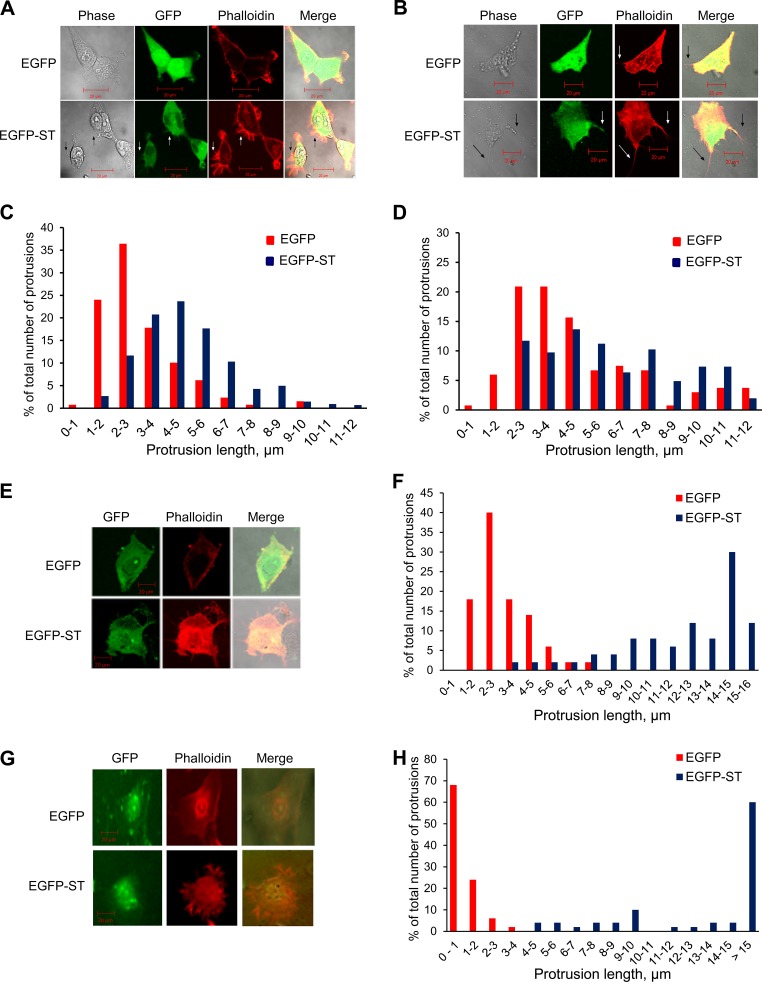
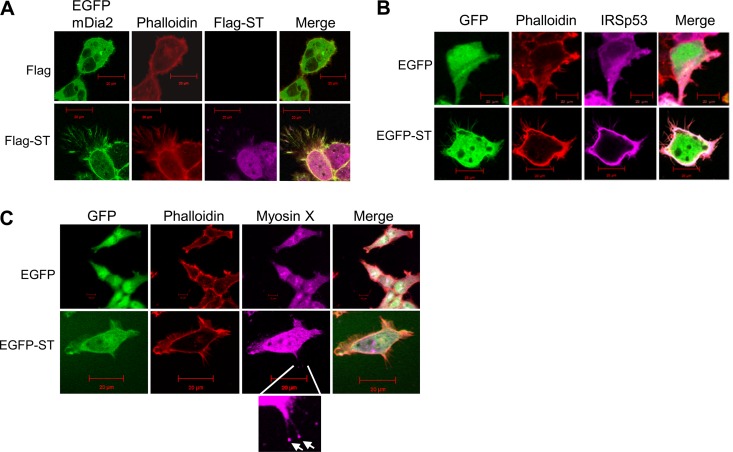
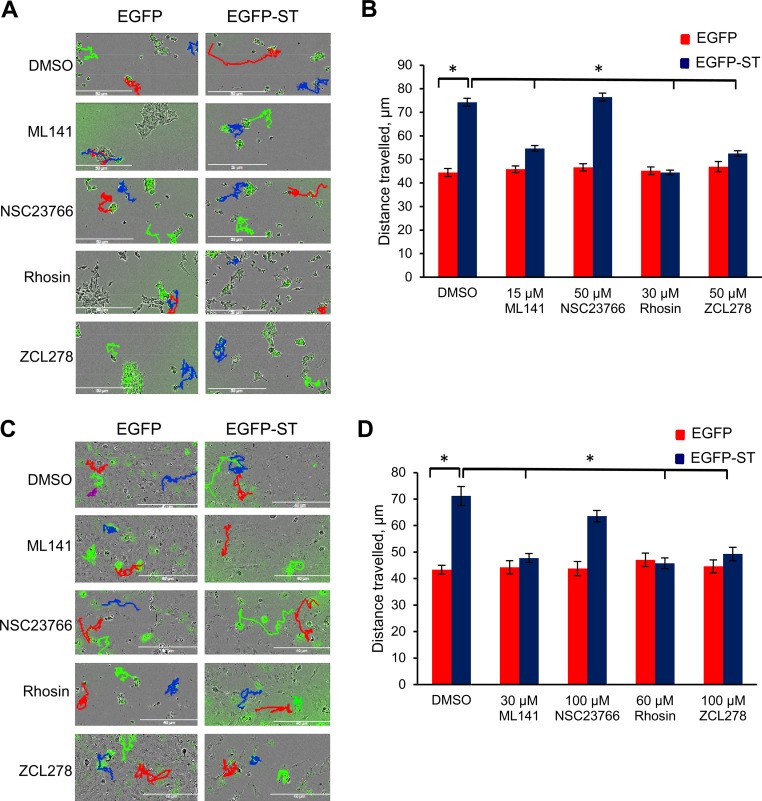
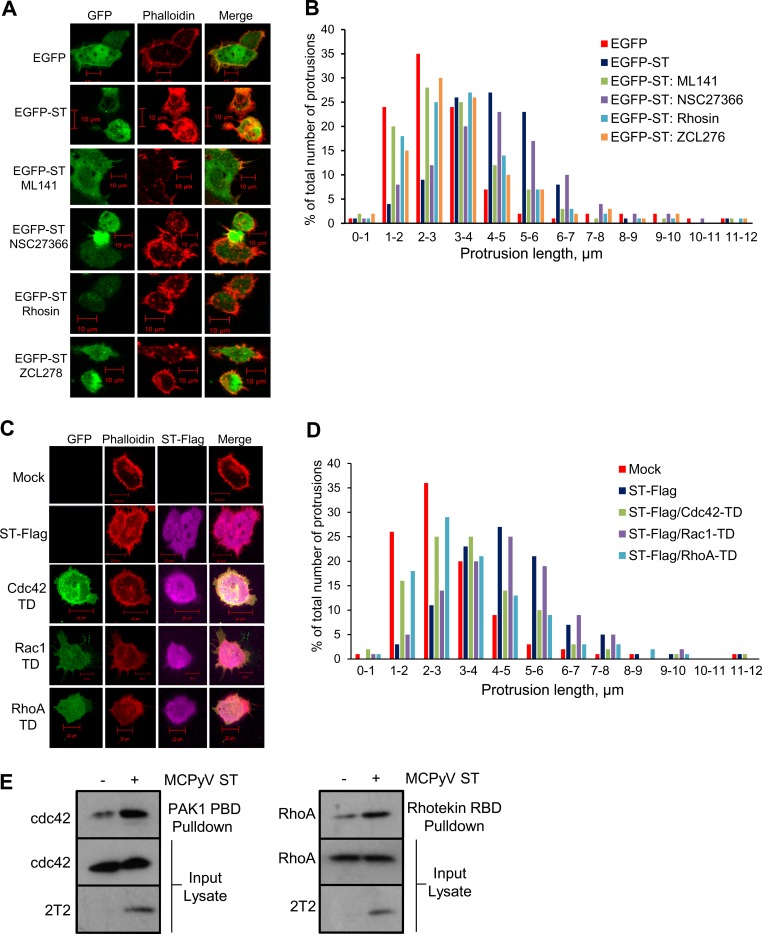
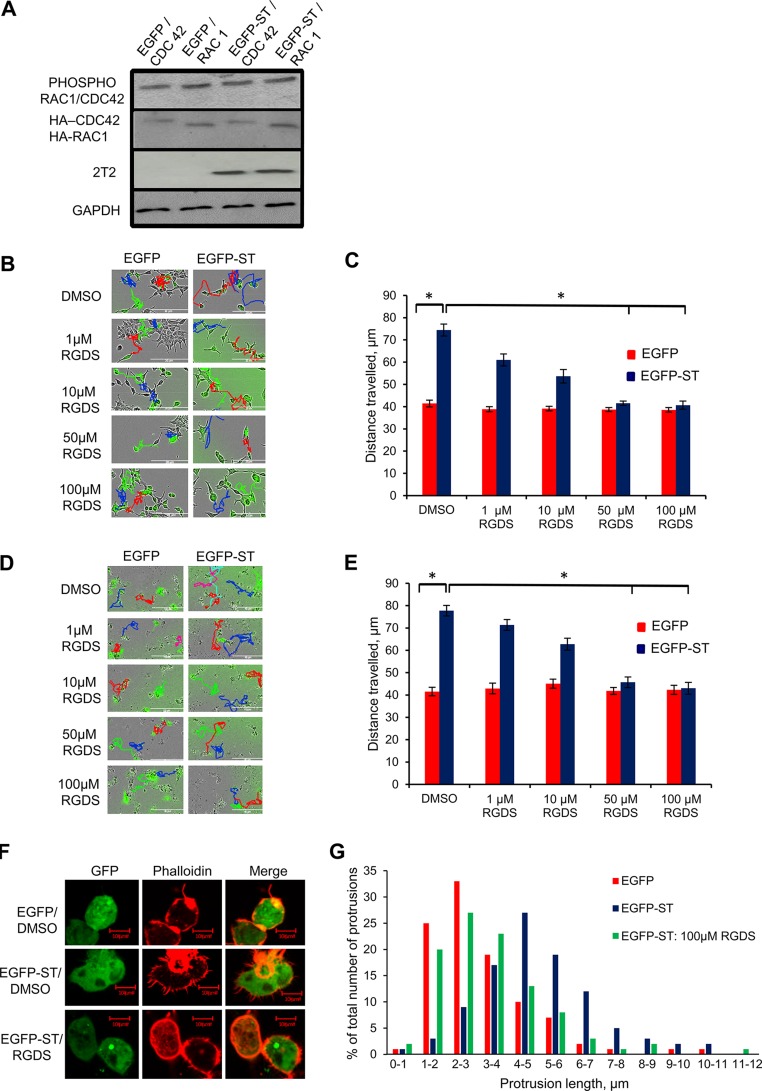
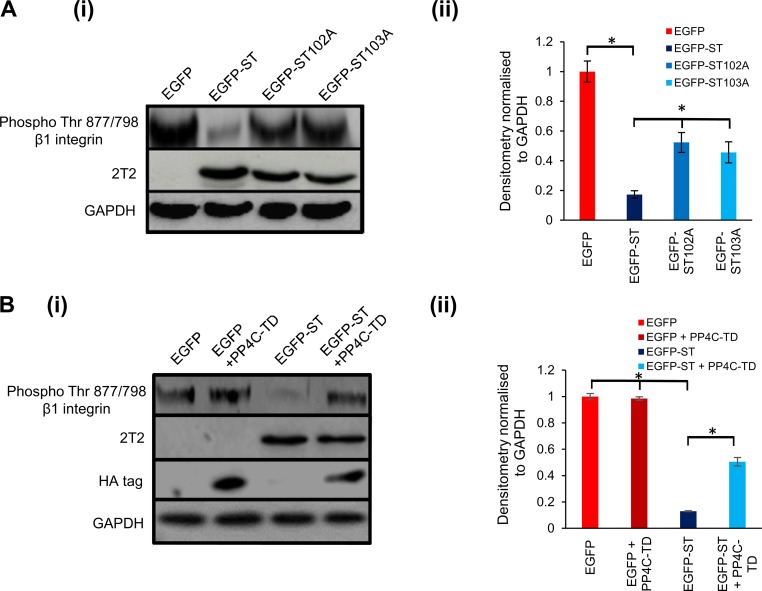
Cell motility and migration is a complex, multistep, and multicomponent process intrinsic to progression and metastasis. Motility is dependent on the activities of integrin receptors and Rho family GTPases, resulting in the remodeling of the actin cytoskeleton and formation of various motile actin-based protrusions. Merkel cell carcinoma (MCC) is an aggressive skin cancer with a high likelihood of recurrence and metastasis. Merkel cell polyomavirus (MCPyV) is associated with the majority of MCC cases, and MCPyV-induced tumorigenesis largely depends on the expression of the small tumor antigen (ST). Since the discovery of MCPyV, a number of mechanisms have been suggested to account for replication and tumorigenesis, but to date, little is known about potential links between MCPyV T antigen expression and the metastatic nature of MCC. Previously, we described the action of MCPyV ST on the microtubule network and how it impacts cell motility and migration. Here, we demonstrate that MCPyV ST affects the actin cytoskeleton to promote the formation of filopodia through a mechanism involving the catalytic subunit of protein phosphatase 4 (PP4C). We also show that MCPyV ST-induced cell motility is dependent upon the activities of the Rho family GTPases Cdc42 and RhoA. In addition, our results indicate that the MCPyV ST-PP4C interaction results in the dephosphorylation of β integrin, likely driving the cell motility pathway. These findings describe a novel mechanism by which a tumor virus induces cell motility, which may ultimately lead to cancer metastasis, and provides opportunities and strategies for targeted interventions for disseminated MCC. Merkel cell polyomavirus (MCPyV) is the most recently discovered human tumor virus. It causes the majority of cases of Merkel cell carcinoma (MCC), an aggressive skin cancer. However, the molecular mechanisms implicating MCPyV-encoded proteins in cancer development are yet to be fully elucidated. This study builds upon our previous observations, which demonstrated that the MCPyV ST antigen enhances cell motility, providing a potential link between MCPyV protein expression and the highly metastatic nature of MCC. Here, we show that MCPyV ST remodels the actin cytoskeleton, promoting the formation of filopodia, which is essential for MCPyV ST-induced cell motility, and we also implicate the activity of specific Rho family GTPases, Cdc42 and RhoA, in these processes. Moreover, we describe a novel mechanism for the activation of Rho-GTPases and the cell motility pathway due to the interaction between MCPyV ST and the cellular phosphatase catalytic subunit PP4C, which leads to the specific dephosphorylation of β1 integrin. These findings may therefore provide novel strategies for therapeutic intervention for disseminated MCC.
细胞运动和迁移是肿瘤进展和转移所固有的复杂、多步骤且多组分的过程。运动性依赖于整合素受体和Rho家族GTP酶的活性,导致肌动蛋白细胞骨架重塑并形成各种基于肌动蛋白的运动性突起。默克尔细胞癌(MCC)是一种侵袭性皮肤癌,具有高复发和转移可能性。默克尔细胞多瘤病毒(MCPyV)与大多数MCC病例相关,且MCPyV诱导的肿瘤发生很大程度上取决于小肿瘤抗原(ST)的表达。自MCPyV被发现以来,已提出多种机制来解释其复制和肿瘤发生,但迄今为止,关于MCPyV T抗原表达与MCC转移特性之间的潜在联系知之甚少。此前,我们描述了MCPyV ST对微管网络的作用及其如何影响细胞运动和迁移。在此,我们证明MCPyV ST通过涉及蛋白磷酸酶4(PP4C)催化亚基的机制影响肌动蛋白细胞骨架,以促进丝状伪足的形成。我们还表明MCPyV ST诱导的细胞运动性取决于Rho家族GTP酶Cdc42和RhoA的活性。此外,我们的结果表明MCPyV ST-PP4C相互作用导致β整合素去磷酸化,可能驱动细胞运动途径。这些发现描述了一种肿瘤病毒诱导细胞运动的新机制,这可能最终导致癌症转移,并为播散性MCC的靶向干预提供了机会和策略。默克尔细胞多瘤病毒(MCPyV)是最近发现的人类肿瘤病毒。它导致大多数默克尔细胞癌(MCC)病例,这是一种侵袭性皮肤癌。然而,MCPyV编码蛋白在癌症发展中的分子机制尚未完全阐明。本研究基于我们之前的观察结果,即MCPyV ST抗原增强细胞运动性,为MCPyV蛋白表达与MCC的高转移特性之间提供了潜在联系。在此,我们表明MCPyV ST重塑肌动蛋白细胞骨架,促进丝状伪足的形成,这对于MCPyV ST诱导的细胞运动至关重要,并在这些过程中涉及特定Rho家族GTP酶Cdc42和RhoA的活性。此外,我们描述了由于MCPyV ST与细胞磷酸酶催化亚基PP4C之间的相互作用而激活Rho-GTP酶和细胞运动途径的新机制,这导致β1整合素的特异性去磷酸化。因此,这些发现可能为播散性MCC的治疗干预提供新策略。