Department of Clinical and Experimental Sciences, University of Brescia, Brescia, Italy.
Laboratory of Clinical Integrative Physiology, University of Brescia, Brescia, Italy.
Biomed Res Int. 2017;2017:2796815. doi: 10.1155/2017/2796815. Epub 2017 Sep 28.
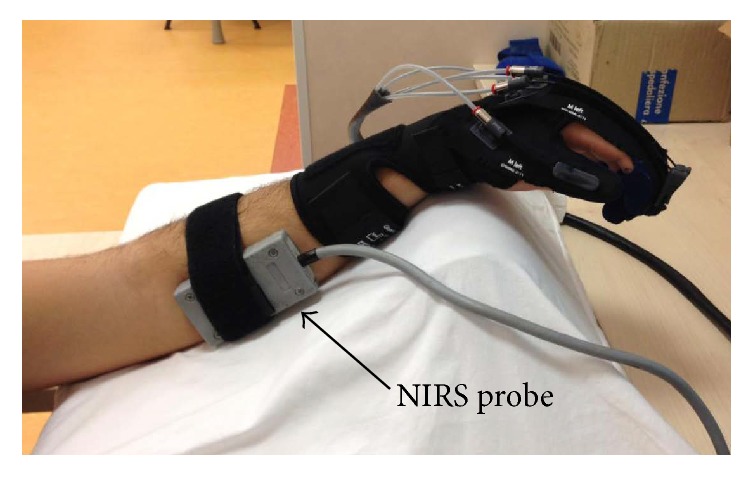
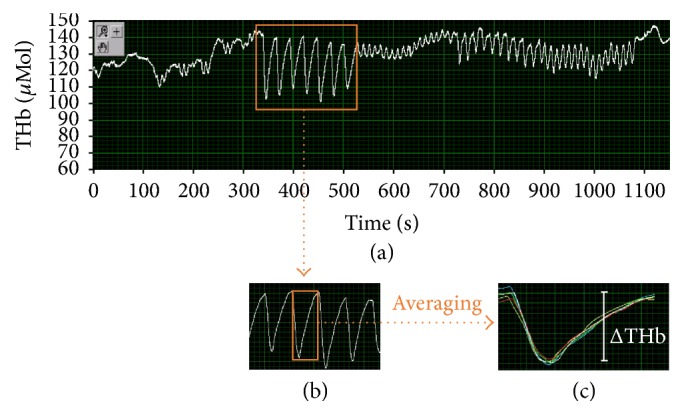
This single arm pre-post study aimed at evaluating the acute effects induced by a single session of robot-assisted passive hand mobilization on local perfusion and upper limb (UL) function in poststroke hemiparetic participants. Twenty-three patients with subacute or chronic stroke received 20 min passive mobilization of the paretic hand with robotic assistance. Near-infrared spectroscopy (NIRS) was used to detect changes in forearm tissue perfusion. Muscle tone of the paretic UL was assessed by the Modified Ashworth Scale (MAS). Symptoms concerning UL heaviness, joint stiffness, and pain were evaluated as secondary outcomes by self-reporting. Significant ( = 0.014) improvements were found in forearm perfusion when all fingers were mobilized simultaneously. After the intervention, MAS scores decreased globally, being the changes statistically significant for the wrist (from 1.6 ± 1.0 to 1.1 ± 1.0; = 0.001) and fingers (from 1.2 ± 1.1 to 0.7 ± 0.9; = 0.004). Subjects reported decreased UL heaviness and stiffness after treatment, especially for the hand, as well as diminished pain when present. This study supports novel evidence that hand robotic assistance promotes local UL circulation changes, may help in the management of spasticity, and acutely alleviates reported symptoms of heaviness, stiffness, and pain in subjects with poststroke hemiparesis. This opens new scenarios for the implications in everyday clinical practice. Clinical Trial Registration Number is NCT03243123.
本单臂前后研究旨在评估单次机器人辅助被动手部运动对脑卒中后偏瘫患者局部灌注和上肢(UL)功能的急性影响。23 名亚急性或慢性脑卒中患者接受了 20 分钟的机器人辅助患手被动运动。近红外光谱(NIRS)用于检测前臂组织灌注的变化。改良 Ashworth 量表(MAS)用于评估患侧 UL 的肌张力。通过自我报告评估 UL 沉重感、关节僵硬和疼痛等症状作为次要结果。当所有手指同时进行被动运动时,前臂灌注明显改善(=0.014)。干预后,MAS 评分总体下降,腕部(从 1.6±1.0 降至 1.1±1.0;=0.001)和手指(从 1.2±1.1 降至 0.7±0.9;=0.004)的变化具有统计学意义。治疗后,患者报告 UL 沉重感和僵硬减轻,尤其是手部,同时疼痛减轻(如果存在)。这项研究为手部机器人辅助促进局部 UL 循环变化提供了新的证据,可能有助于痉挛的管理,并在脑卒中后偏瘫患者中急性缓解沉重感、僵硬和疼痛等报告症状。这为日常临床实践中的应用开辟了新的前景。临床试验注册号为 NCT03243123。