Guangzhou Biocare Institute of Cancer, Building D, Guangzhou International Business Incubator, No. 3, Juquan Road, Guangzhou Science Park, Guangzhou, 510663, Guangdong, People's Republic of China.
The Guangdong Key Lab for Shock and Microcirculation Research, Departments of Pathophysiology, Southern Medical University, Guangzhou, 510515, People's Republic of China.
Stem Cell Res Ther. 2017 Nov 2;8(1):245. doi: 10.1186/s13287-017-0698-8.
Because the lack of an induced pluripotent stem cell (iPSC) induction system with optimal safety and efficiency limits the application of these cells, development of such a system is important.
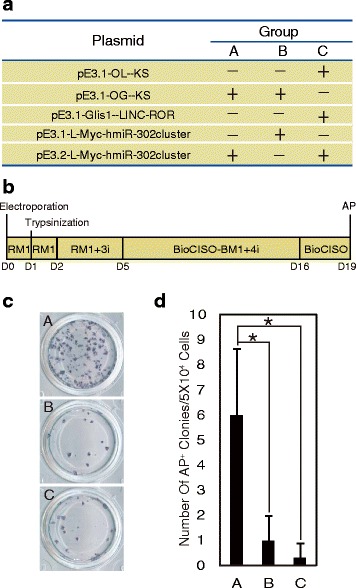
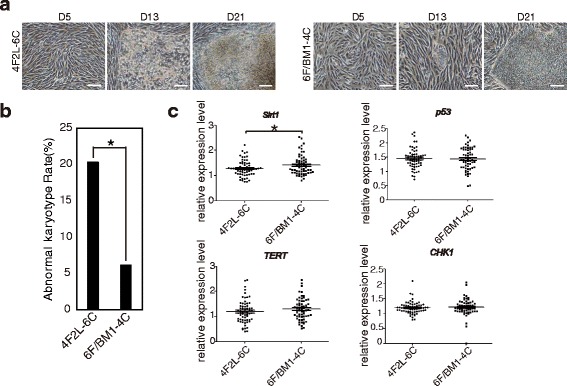
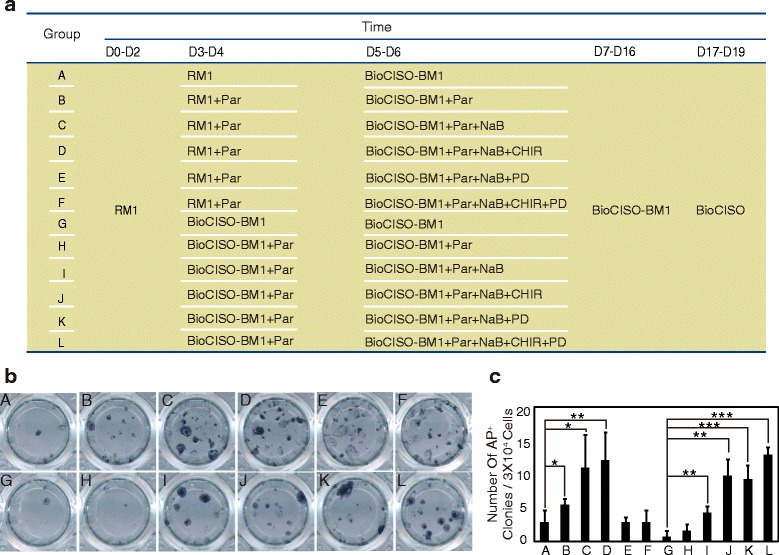
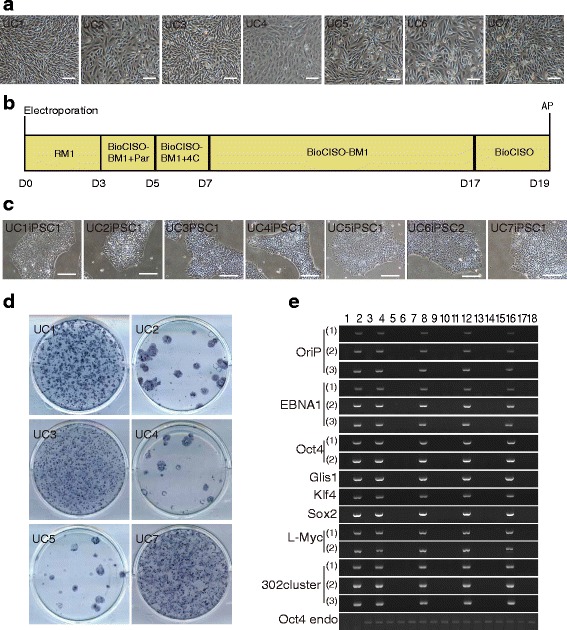
To create such an induction system, we screened a variety of reprogrammed plasmid combinations and multiple compounds and then verified the system's feasibility using urine cells from different individuals. We also compared large-scale iPSC chromosomal variations and expression of genes associated with genomic stability between this system and the traditional episomal system using karyotype and quantitative reverse transcription polymerase chain reaction analyses.
We developed a high-efficiency episomal system, the 6F/BM1-4C system, lacking tumorigenic factors for human urine-derived cell (hUC) reprogramming. This system includes six low-risk factors (6F), Oct4, Glis1, Klf4, Sox2, L-Myc, and the miR-302 cluster. Transfected hUCs were treated with four compounds (4C), inhibitor of lysine-demethylase1, methyl ethyl ketone, glycogen synthase kinase 3 beta, and histone deacetylase, within a short time period. Comparative analysis revealed significantly decreased chromosomal variation in iPSCs and significantly increased Sirt1 expression compared with iPSCs induced using the traditional episomal system.
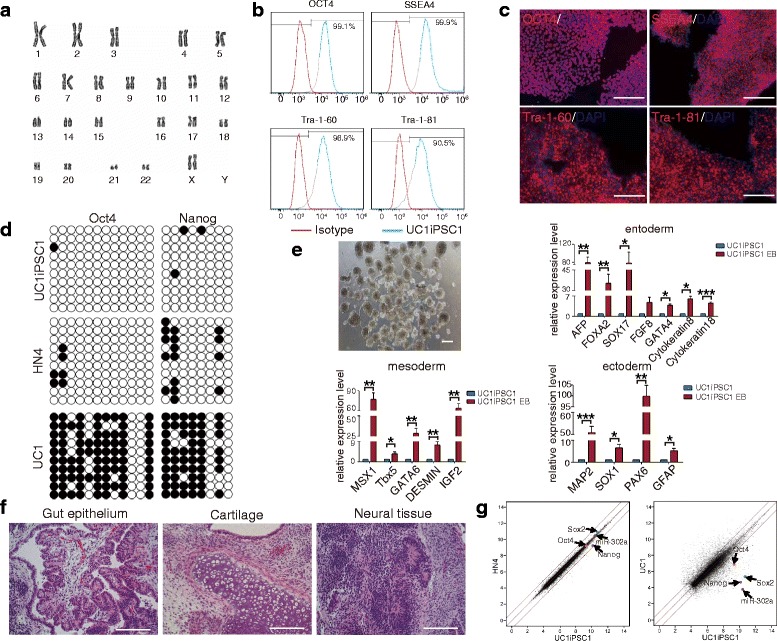
The 6F/BM1-4C system effectively induces reprogramming of urine cells in samples obtained from different individuals. iPSCs induced using the 6F/BM1-4C system are more stable at the cytogenetic level and have potential value for clinical application.
由于缺乏具有最佳安全性和效率的诱导多能干细胞(iPSC)诱导系统,限制了这些细胞的应用,因此开发这样的系统很重要。
为了创建这样的诱导系统,我们筛选了多种重编程质粒组合和多种化合物,然后使用来自不同个体的尿液细胞验证了该系统的可行性。我们还通过染色体核型分析和定量逆转录聚合酶链反应分析,比较了该系统和传统的附加型系统之间的大规模 iPSC 染色体变异和与基因组稳定性相关的基因表达。
我们开发了一种高效的附加型系统,即 6F/BM1-4C 系统,该系统缺乏用于人尿液衍生细胞(hUC)重编程的致癌因子。该系统包括六个低风险因子(6F)、Oct4、Glis1、Klf4、Sox2、L-Myc 和 miR-302 簇。转染的 hUC 用四种化合物(4C)处理,即赖氨酸去甲基酶 1 抑制剂、甲基乙基酮、糖原合酶激酶 3β和组蛋白去乙酰化酶,处理时间很短。比较分析显示,与使用传统附加型系统诱导的 iPSC 相比,iPSC 的染色体变异明显减少,Sirt1 表达明显增加。
6F/BM1-4C 系统有效地诱导了来自不同个体的尿液细胞的重编程。使用 6F/BM1-4C 系统诱导的 iPSC 在细胞遗传学水平上更稳定,具有潜在的临床应用价值。