Department of Hepatobiliary Surgery, the Second Affiliated Hospital of Third Military Medical University, Chongqing 400037, China.
World J Gastroenterol. 2017 Oct 14;23(38):6983-6994. doi: 10.3748/wjg.v23.i38.6983.
To investigate whether fecal microbiota transplantation (FMT) prevents hepatic encephalopathy (HE) in rats with carbon tetrachloride (CCl)-induced acute hepatic dysfunction.
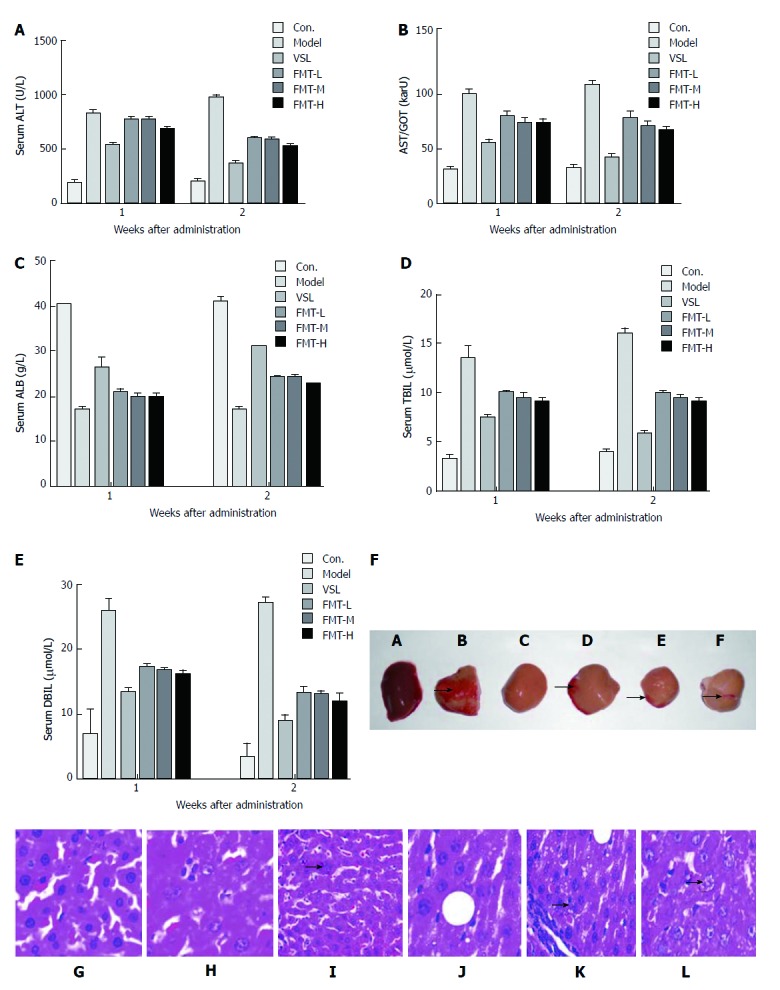
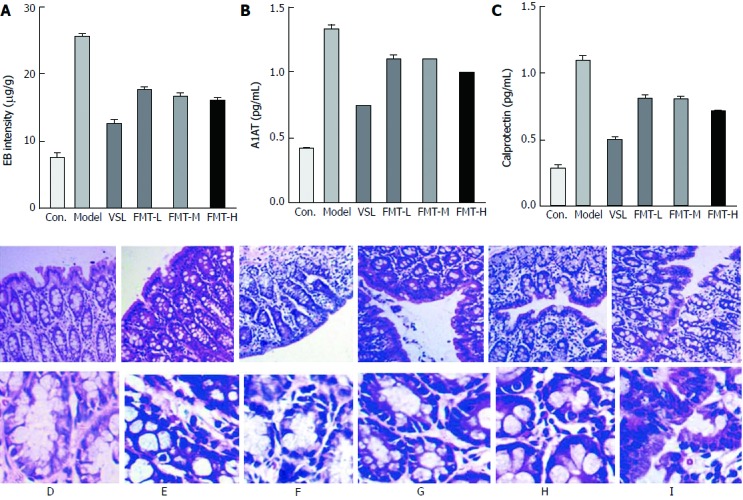
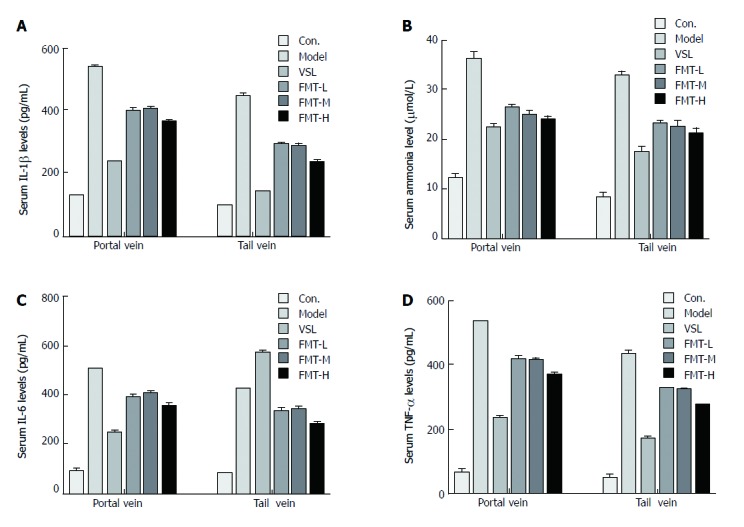
A rat model of HE was established with CCl. Rat behaviors and spatial learning capability were observed, and hepatic necrosis, intestinal mucosal barrier, serum ammonia levels and intestinal permeability were determined in HE rats receiving FMT treatment. Furthermore, the expression of tight junction proteins (Claudin-1, Claudin-6 and Occludin), Toll-like receptor (TLR) 4/TLR9, interleukin (IL)-1β, IL-6 and tumor necrosis factor (TNF)-α was examined.
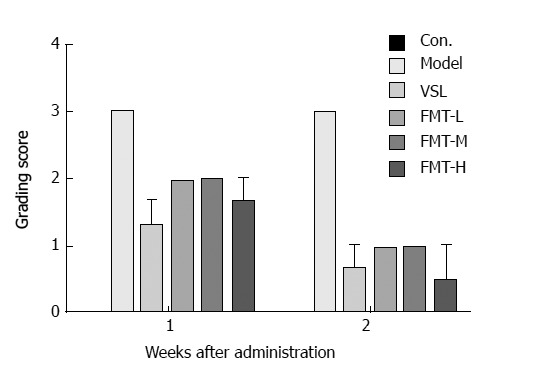
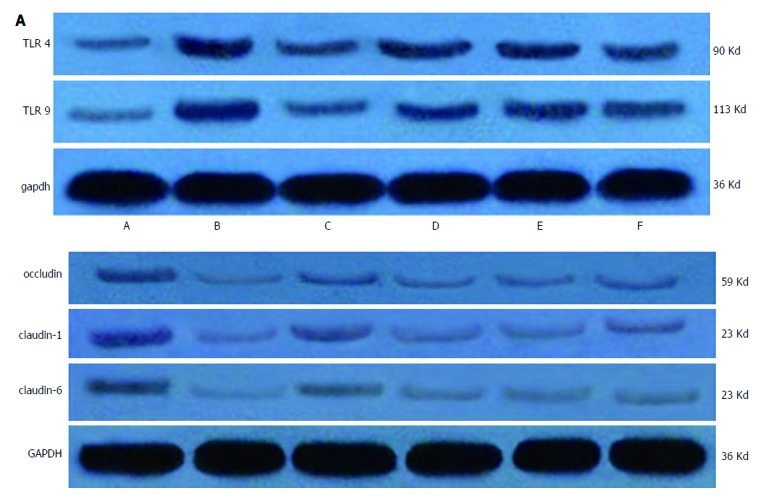
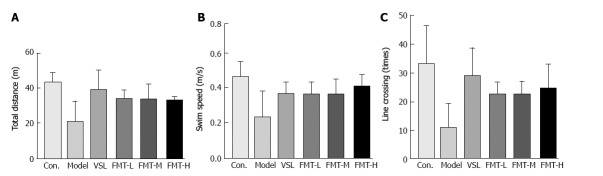
FMT improved rat behaviors, HE grade and spatial learning capability. Moreover, FMT prevented hepatic necrosis and intestinal mucosal barrier damage, leading to hepatic clearance of serum ammonia levels and reduced intestinal permeability. The expression of TLR4 and TLR9, two potent mediators of inflammatory response, was significantly downregulated in the liver of rats treated with FMT. Consistently, circulating pro-inflammatory factors such as interleukin (IL)-1β, IL-6 and tumor necrosis factor-α were remarkably decreased, indicating that FMT is able to limit systemic inflammation by decreasing the expression of TLR4 and TLR9. Importantly, HE-induced loss of tight junction proteins (Claudin-1, Claudin-6 and Occludin) was restored in intestinal tissues of rats receiving FMT treatment.
FMT enables protective effects in HE rats, and it improves the cognitive function and reduces the liver function indexes. FMT may cure HE by altering the intestinal permeability and improving the TLR response of the liver.
研究粪便微生物群移植(FMT)是否可预防四氯化碳(CCl)诱导的急性肝功能障碍大鼠肝性脑病(HE)。
用 CCl 建立大鼠 HE 模型。观察 HE 大鼠接受 FMT 治疗后的行为和空间学习能力,测定肝坏死、肠黏膜屏障、血清氨水平和肠通透性。此外,还检测了紧密连接蛋白(Claudin-1、Claudin-6 和 Occludin)、Toll 样受体(TLR)4/TLR9、白细胞介素(IL)-1β、IL-6 和肿瘤坏死因子(TNF)-α的表达。
FMT 改善了大鼠的行为、HE 分级和空间学习能力。此外,FMT 可预防肝坏死和肠黏膜屏障损伤,从而使血清氨水平和肠通透性得到肝清除。FMT 治疗的大鼠肝中 TLR4 和 TLR9 的表达显著下调,TLR4 和 TLR9 是炎症反应的两个强有力的介质。同样,循环中促炎因子如白细胞介素(IL)-1β、IL-6 和肿瘤坏死因子-α显著减少,表明 FMT 通过降低 TLR4 和 TLR9 的表达来限制全身炎症。重要的是,FMT 治疗可恢复 HE 大鼠肠组织中紧密连接蛋白(Claudin-1、Claudin-6 和 Occludin)的丢失。
FMT 对 HE 大鼠具有保护作用,可改善认知功能并降低肝功能指标。FMT 可能通过改变肠通透性和改善肝脏 TLR 反应来治疗 HE。