Mohamed Yusoff Abdul Aziz, Mohd Nasir Khairol Naaim, Haris Khalilah, Mohd Khair Siti Zulaikha Nashwa, Abdul Ghani Abdul Rahman Izaini, Idris Zamzuri, Abdullah Jafri Malin
Department of Neurosciences, School of Medical Sciences, Universiti Sains Malaysia, Health Campus, Kubang Kerian, Kelantan 16150, Malaysia.
Center for Neuroscience Services and Research, Universiti Sains Malaysia, Health Campus, Kubang Kerian, Kelantan 16150, Malaysia.
Oncol Lett. 2017 Nov;14(5):5179-5188. doi: 10.3892/ol.2017.6851. Epub 2017 Aug 28.
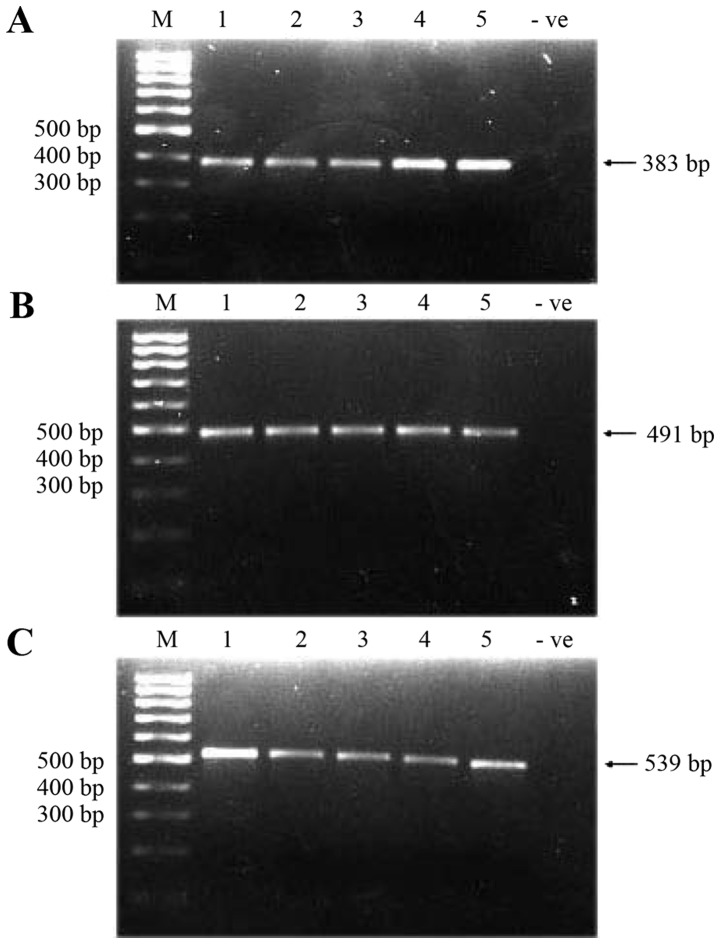
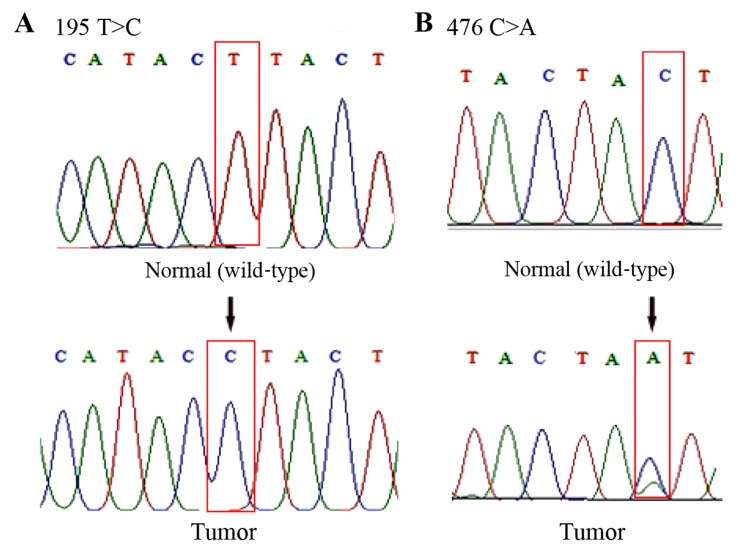
Although the role of nuclear-encoded gene alterations has been well documented in brain tumor development, the involvement of the mitochondrial genome in brain tumorigenesis has not yet been fully elucidated and remains controversial. The present study aimed to identify mutations in the mitochondrial DNA (mtDNA) control region D-loop in patients with brain tumors in Malaysia. A mutation analysis was performed in which DNA was extracted from paired tumor tissue and blood samples obtained from 49 patients with brain tumors. The D-loop region DNA was amplified using the PCR technique, and genetic data from DNA sequencing analyses were compared with the published revised Cambridge sequence to identify somatic mutations. Among the 49 brain tumor tissue samples evaluated, 25 cases (51%) had somatic mutations of the mtDNA D-loop, with a total of 48 mutations. Novel mutations that had not previously been identified in the D-loop region (176 A-deletion, 476 C>A, 566 C>A and 16405 A-deletion) were also classified. No significant associations between the D-loop mutation status and the clinicopathological parameters were observed. To the best of our knowledge, the current study presents the first evidence of alterations in the mtDNA D-loop regions in the brain tumors of Malaysian patients. These results may provide an overview and data regarding the incidence of mitochondrial genome alterations in Malaysian patients with brain tumors. In addition to nuclear genome aberrations, these specific mitochondrial genome alterations may also be considered as potential cancer biomarkers for the diagnosis and staging of brain cancers.
尽管核编码基因改变在脑肿瘤发生中的作用已得到充分记录,但线粒体基因组在脑肿瘤发生中的参与尚未完全阐明,仍存在争议。本研究旨在鉴定马来西亚脑肿瘤患者线粒体DNA(mtDNA)控制区D环中的突变。进行了一项突变分析,从49例脑肿瘤患者的配对肿瘤组织和血液样本中提取DNA。使用PCR技术扩增D环区域DNA,并将DNA测序分析的遗传数据与已发表的修订剑桥序列进行比较,以鉴定体细胞突变。在评估的49个脑肿瘤组织样本中,25例(51%)存在mtDNA D环的体细胞突变,共有48个突变。还对D环区域以前未发现的新突变(176A缺失、476C>A、566C>A和16405A缺失)进行了分类。未观察到D环突变状态与临床病理参数之间的显著关联。据我们所知,本研究首次提供了马来西亚患者脑肿瘤中mtDNA D环区域改变的证据。这些结果可能提供有关马来西亚脑肿瘤患者线粒体基因组改变发生率的概述和数据。除了核基因组畸变外,这些特定的线粒体基因组改变也可被视为脑癌诊断和分期的潜在癌症生物标志物。