Department of Neurology, Beijing Haidian Hospital, Beijing 100080, China.
Division of Engineering in Medicine, Brigham and Women's Hospital, Harvard Medical School, Cambridge, MA 02139, USA.
Biomed Res Int. 2017;2017:8945310. doi: 10.1155/2017/8945310. Epub 2017 Oct 1.
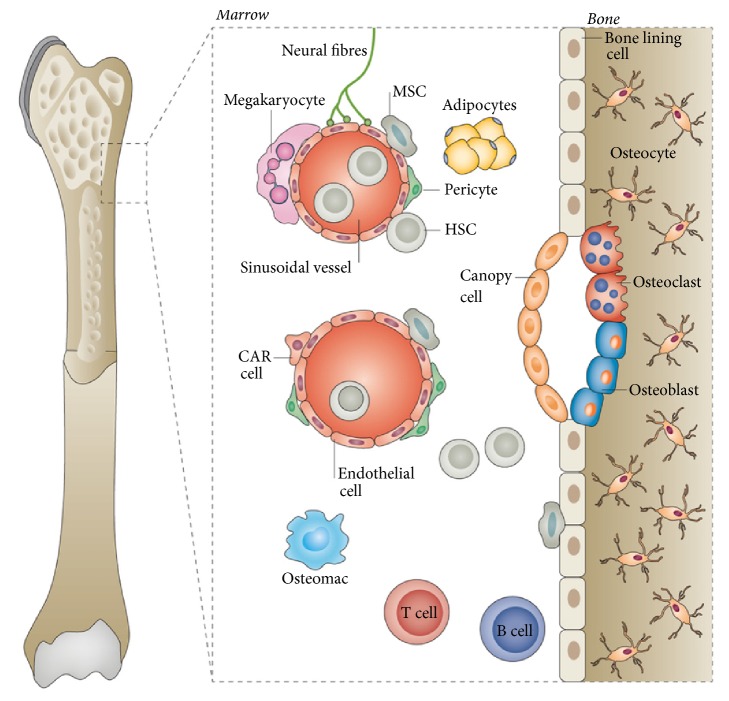
Diabetic neuropathy is one of the most common and serious complications of diabetes mellitus and metabolic syndrome. The current therapy strategies, including glucose control and pain management, are not effective for most patients. Growing evidence suggests that infiltration of inflammation factors and deficiency of local neurotrophic and angiogenic factors contribute significantly to the pathologies of diabetic neuropathy. Experimental and clinical studies have shown that bone marrow-derived stem cells (BMCs) therapy represents a novel and promising strategy for tissue repair through paracrine secretion of multiple cytokines, which has a potential to inhibit inflammation and promote angiogenesis and neurotrophy in diabetic neuropathy. In this review, we discuss the clinical practice in diabetic neuropathy and the therapeutic effect of BMC. We subsequently illustrate the functional impairment of autologous BMCs due to the interrupted bone marrow niche in diabetic neuropathy. We anticipate that the functional restoration of BMCs could improve their therapeutic effect and enable their wide applications in diabetic neuropathy.
糖尿病神经病变是糖尿病和代谢综合征最常见和最严重的并发症之一。目前的治疗策略,包括血糖控制和疼痛管理,对大多数患者并不有效。越来越多的证据表明,炎症因子的浸润和局部神经营养和血管生成因子的缺乏对糖尿病神经病变的病理过程有重要贡献。实验和临床研究表明,骨髓来源的干细胞(BMCs)治疗通过多种细胞因子的旁分泌作用代表了一种新的有前途的组织修复策略,有可能抑制糖尿病神经病变中的炎症,促进血管生成和神经营养。在这篇综述中,我们讨论了糖尿病神经病变的临床实践和 BMC 的治疗效果。随后,我们说明了由于糖尿病神经病变中断骨髓龛,自体 BMC 的功能受损。我们预计,BMC 功能的恢复可以提高其治疗效果,并使其在糖尿病神经病变中的广泛应用成为可能。