School of Pharmacy, Kaohsiung Medical University, Kaohsiung 80708, Taiwan.
Chinese Medicine Department, Ditmanson Medical Foundation, Chiayi Christian Hospital, Chiayi City 60002, Taiwan.
Molecules. 2017 Nov 3;22(11):1894. doi: 10.3390/molecules22111894.
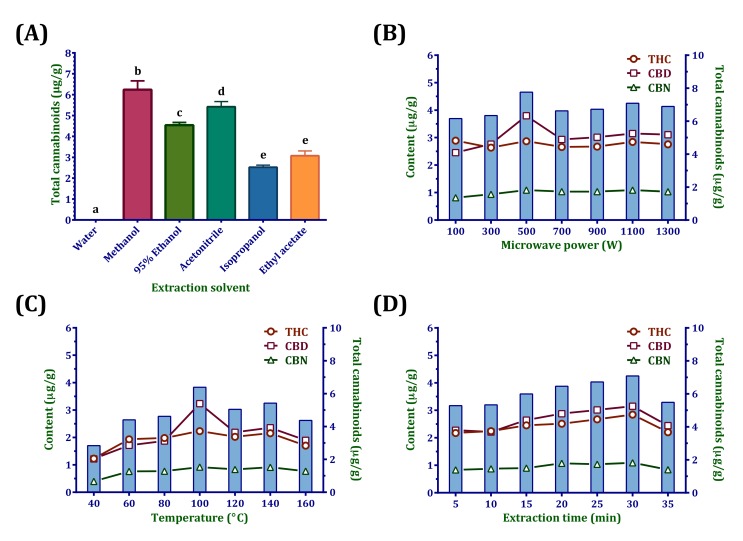
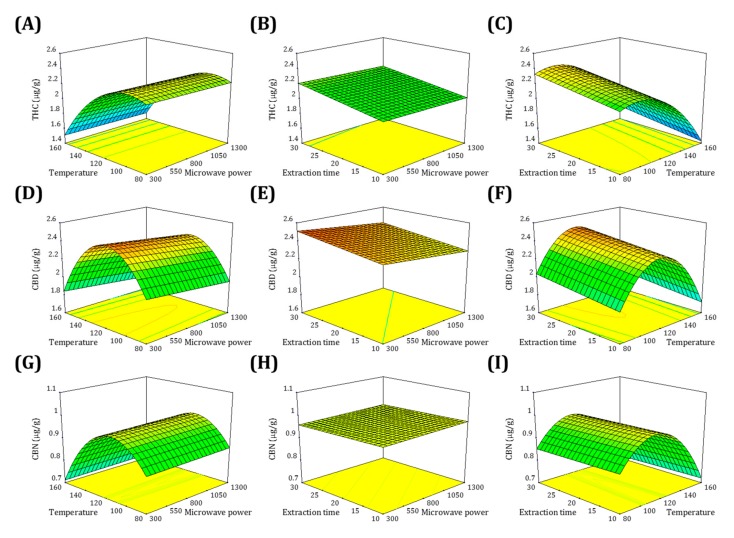
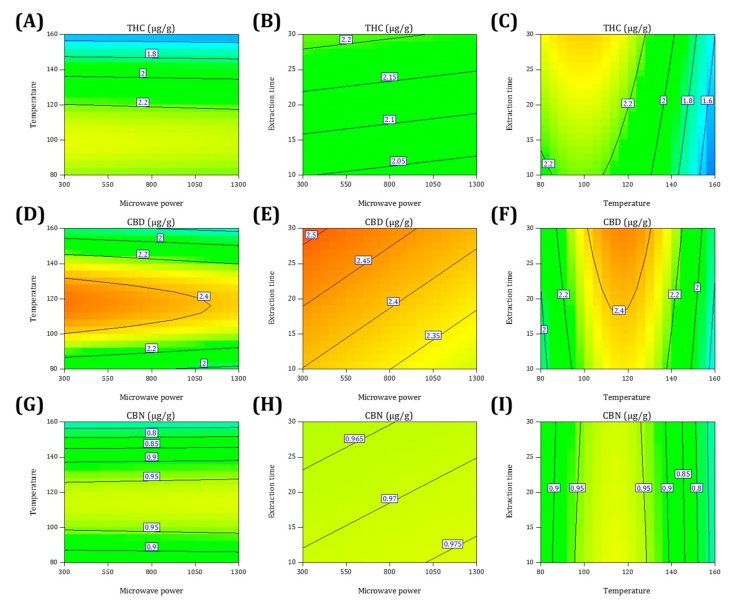
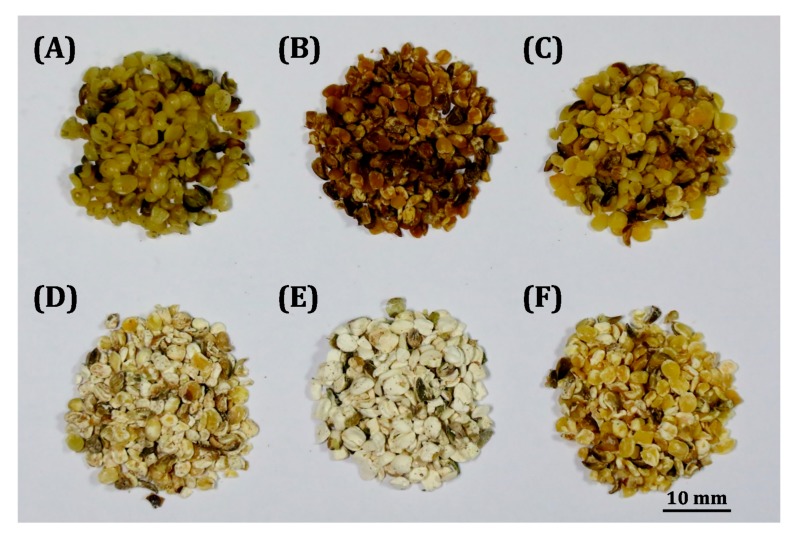
Hemp nut is commonly incorporated into several food preparations; however, most countries set regulations for hemp products according to their cannabinoid content. In this study, we have developed an efficient microwave-assisted extraction (MAE) method for cannabinoids (i.e., Δ9-tetrahydrocannabinol, cannabidiol, and cannabinol) in hemp nut. Optimization of the MAE procedure was conducted through single factor experiments and response surface methodology (RSM). A comparative study was also conducted to determine the differences in the extraction yields and morphology of hemp nut between MAE and reference extraction methods, namely heat reflux extraction (HRE), Soxhlet extraction (SE), supercritical fluid extraction (SFE), and ultrasound-assisted extraction (UAE). Among the independent variables in RSM, the temperature was the most significant parameter. The optimal conditions of MAE were as follows: extraction solvent of methanol, microwave power of 375 W, temperature of 109 °C, and extraction time of 30 min. Compared with reference extraction methods, MAE achieved the highest extraction yields of total cannabinoids in hemp nut (6.09 μg/g for MAE; 4.15 μg/g for HRE; 5.81 μg/g for SE; 3.61 μg/g for SFE; 3.73 μg/g for UAE) with the least solvent consumption and shortest time. Morphological observations showed that substantial cell rupturing occurred in the microstructure of hemp nut after MAE, indicating enhanced dissolution of the target compounds during the extraction process. The MAE method is thus a rapid, economic, and environmentally friendly extraction method that is both effective and practical for industrial applications.
麻籽常被应用于多种食品加工中;然而,大多数国家会根据其大麻素的含量来制定麻类产品的法规。在这项研究中,我们开发了一种高效的微波辅助提取(MAE)方法,用于提取麻籽中的大麻素(即 Δ9-四氢大麻酚、大麻二酚和大麻醇)。通过单因素实验和响应面法(RSM)对 MAE 工艺进行了优化。还进行了比较研究,以确定 MAE 与参考提取方法(即热回流提取(HRE)、索氏提取(SE)、超临界流体提取(SFE)和超声辅助提取(UAE))在麻籽提取率和形态上的差异。在 RSM 的独立变量中,温度是最重要的参数。MAE 的最佳条件如下:甲醇提取溶剂、微波功率 375 W、温度 109°C 和提取时间 30 分钟。与参考提取方法相比,MAE 实现了麻籽中总大麻素的最高提取率(MAE 为 6.09 μg/g;HRE 为 4.15 μg/g;SE 为 5.81 μg/g;SFE 为 3.61 μg/g;UAE 为 3.73 μg/g),同时溶剂消耗最少,提取时间最短。形态观察表明,MAE 后麻籽的微观结构发生了明显的细胞破裂,表明目标化合物在提取过程中溶解增强。因此,MAE 方法是一种快速、经济、环保的提取方法,在工业应用中既有效又实用。