Deutsche Forschungsgemeinschaft (DFG) Center for Advanced Studies: "Words, Bones, Genes, Tools," University of Tübingen, 72070 Tübingen, Germany;
Paleoanthropology, Senckenberg Center for Human Evolution and Paleoenvironment, University of Tübingen, 72070 Tübingen, Germany.
Proc Natl Acad Sci U S A. 2017 Dec 12;114(50):13164-13169. doi: 10.1073/pnas.1716317114. Epub 2017 Nov 6.
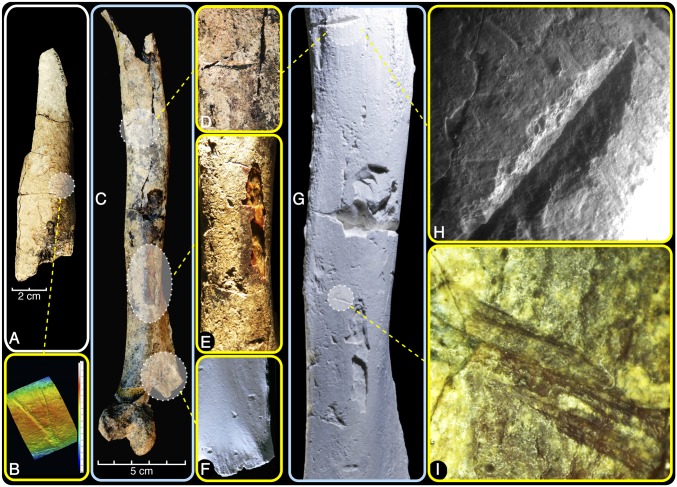
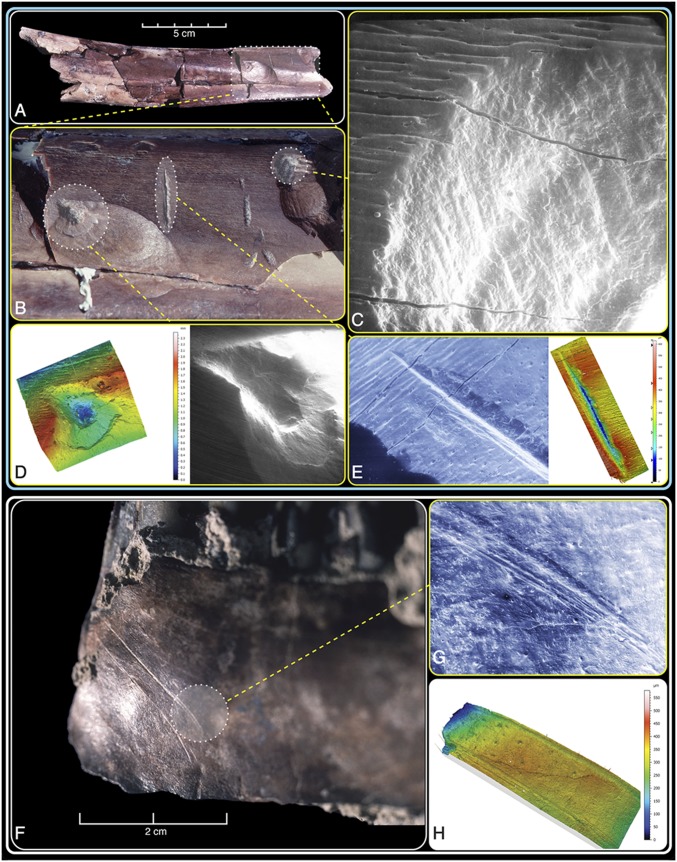
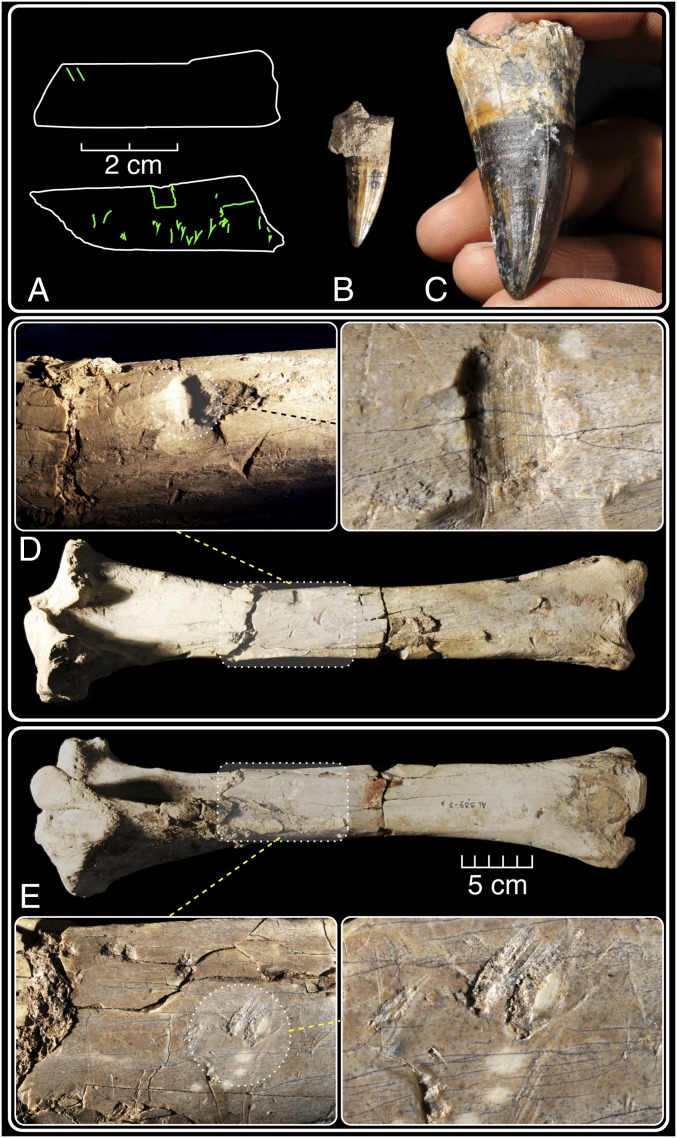
Zooarchaeologists have long relied on linear traces and pits found on the surfaces of ancient bones to infer ancient hominid behaviors such as slicing, chopping, and percussive actions during butchery of mammal carcasses. However, such claims about Plio-Pleistocene hominids rely mostly on very small assemblages of bony remains. Furthermore, recent experiments on trampling animals and biting crocodiles have shown each to be capable of producing mimics of such marks. This equifinality-the creation of similar products by different processes-makes deciphering early archaeological bone assemblages difficult. Bone modifications among Ethiopian Plio-Pleistocene hominid and faunal remains at Asa Issie, Maka, Hadar, and Bouri were reassessed in light of these findings. The results show that crocodiles were important modifiers of these bone assemblages. The relative roles of hominids, mammalian carnivores, and crocodiles in the formation of Oldowan zooarchaeological assemblages will only be accurately revealed by better bounding equifinality. Critical analysis within a consilience-based approach is identified as the pathway forward. More experimental studies and increased archaeological fieldwork aimed at generating adequate samples are now required.
古动物学家长期以来一直依赖于在古代骨骼表面发现的线性痕迹和凹痕,来推断古代人类在屠宰哺乳动物尸体时的切割、砍砸和敲击等行为。然而,有关上新世至更新世人类的这些说法主要依赖于非常小的骨骼遗骸组合。此外,最近对踩踏动物和咬噬鳄鱼的实验表明,这两种动物都能够产生类似的痕迹。这种等效性——即不同过程产生相似的产物——使得解读早期考古骨骼组合变得困难。鉴于这些发现,对埃塞俄比亚上新世至更新世古人类和马卡、哈达尔和布里动物群的骨骼遗迹进行了重新评估。结果表明,鳄鱼是这些骨骼组合的重要改造者。只有通过更好地限制等效性,才能准确揭示人类、哺乳动物食肉动物和鳄鱼在形成旧石器时代古动物考古组合中的相对作用。基于一致性的批判性分析被确定为前进的途径。现在需要更多的实验研究和增加考古实地工作,以产生足够的样本。