Institute of Evolution in Africa (IDEA), University of Alcalá de Henares, Covarrubias 36, 28010, Madrid, Spain.
Department of Prehistory, Complutense University, 28040, Madrid, Spain.
Sci Rep. 2018 Apr 10;8(1):5786. doi: 10.1038/s41598-018-24071-1.
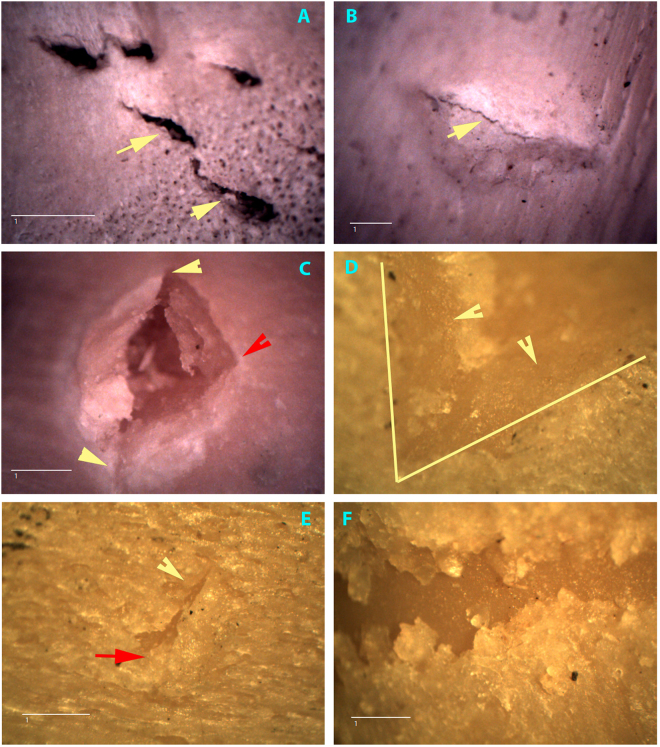
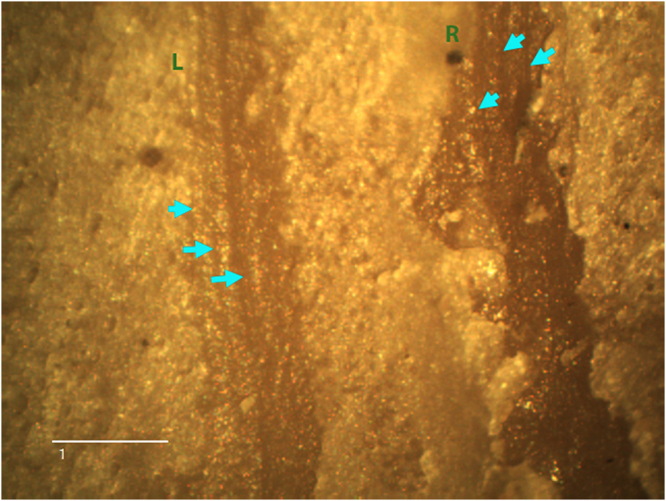
All models of evolution of human behaviour depend on the correct identification and interpretation of bone surface modifications (BSM) on archaeofaunal assemblages. Crucial evolutionary features, such as the origin of stone tool use, meat-eating, food-sharing, cooperation and sociality can only be addressed through confident identification and interpretation of BSM, and more specifically, cut marks. Recently, it has been argued that linear marks with the same properties as cut marks can be created by crocodiles, thereby questioning whether secure cut mark identifications can be made in the Early Pleistocene fossil record. Powerful classification methods based on multivariate statistics and machine learning (ML) algorithms have previously successfully discriminated cut marks from most other potentially confounding BSM. However, crocodile-made marks were marginal to or played no role in these comparative analyses. Here, for the first time, we apply state-of-the-art ML methods on crocodile linear BSM and experimental butchery cut marks, showing that the combination of multivariate taphonomy and ML methods provides accurate identification of BSM, including cut and crocodile bite marks. This enables empirically-supported hominin behavioural modelling, provided that these methods are applied to fossil assemblages.
所有人类行为进化模型都依赖于正确识别和解释考古动物群中骨面修饰(BSM)。只有通过对 BSM 的自信识别和解释,特别是切口痕迹,才能解决关键的进化特征,如石器使用、肉食、食物分享、合作和社会性的起源。最近,有人认为具有与切口痕迹相同特性的线性痕迹可以由鳄鱼产生,从而质疑在早更新世化石记录中是否可以做出可靠的切口痕迹识别。以前,基于多元统计和机器学习(ML)算法的强大分类方法已经成功地将切口痕迹与大多数其他潜在的混淆 BSM 区分开来。然而,在这些比较分析中,鳄鱼产生的痕迹是次要的,或者没有起到作用。在这里,我们首次将最先进的 ML 方法应用于鳄鱼线性 BSM 和实验性屠宰切口痕迹,表明多元埋藏学和 ML 方法的结合提供了 BSM 的准确识别,包括切口和鳄鱼咬痕。只要这些方法应用于化石组合,就可以实现对人类行为进行有经验支持的建模。