Department of Respiratory Medicine, Zhongnan Hospital of Wuhan University, Donghu Road 169, Wuhan, 430071, People's Republic of China.
Center for Evidence-based and Translational Medicine, Zhongnan Hospital of Wuhan University, Donghu Road 169, Wuhan, 430071, People's Republic of China.
Respir Res. 2017 Nov 6;18(1):186. doi: 10.1186/s12931-017-0666-y.
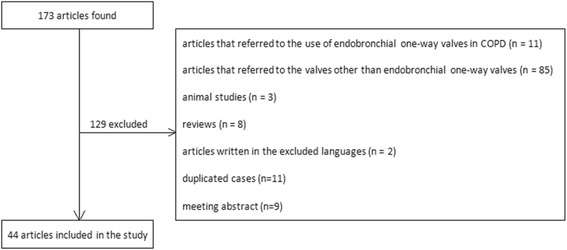
Persistent air leak (PAL) is associated with significant morbidity and mortality, prolonged hospitalization and increased health-care costs. It can arise from a number of conditions, including pneumothorax, necrotizing infection, trauma, malignancies, procedural interventions and complications after thoracic surgery. Numerous therapeutic options, including noninvasive and invasive techniques, are available to treat PALs. Recently, endobronchial one-way valves have been used to treat PAL. We conducted a systematic review based on studies retrieved from PubMed, EMbase and Cochrane library. We also did a hand-search in the bibliographies of relevant articles for additional studies. 34 case reports and 10 case series comprising 208 patients were included in our review. Only 4 patients were children, most of the patients were males. The most common underlying disease was COPD, emphysema and cancer. The most remarkable cause was pneumothorax. The upper lobes were the most frequent locations of air leaks. Complete resolution was gained within less than 24 h in majority of patients. Complications were migration or expectoration of valves, moderate oxygen desaturation and infection of related lung. No death related to endobronchial one-way valves implantation has been found. The use of endobronchial one-way valve adds to the armamentarium for non-invasive treatments of challenging PAL, especially those with difficulties of anesthesia, poor condition and high morbidity. Nevertheless, prospective randomized control trials with large sample should be needed to further evaluate the effects and safety of endobronchial one-way valve implantation in the treatment of PAL.
持续性肺漏气(PAL)与较高的发病率和死亡率、较长的住院时间和增加的医疗保健费用相关。它可由多种情况引起,包括气胸、坏死性感染、外伤、恶性肿瘤、操作干预以及胸外科手术后的并发症。有许多治疗选择,包括非侵入性和侵入性技术,可用于治疗 PAL。最近,支气管内单向活瓣已被用于治疗 PAL。我们基于从 PubMed、EMbase 和 Cochrane 图书馆检索到的研究进行了系统评价。我们还在手检了相关文章的参考文献,以获取额外的研究。我们的综述纳入了 34 例病例报告和 10 例病例系列,共包括 208 例患者。仅有 4 例患者为儿童,大多数患者为男性。最常见的潜在疾病是 COPD、肺气肿和癌症。最常见的原因是气胸。肺漏气最常发生在上叶。大多数患者在 24 小时内完全缓解。并发症包括阀门迁移或咳出、中度氧饱和度下降和相关肺部感染。未发现与支气管内单向活瓣植入相关的死亡。支气管内单向活瓣的使用增加了非侵入性治疗挑战性 PAL 的手段,特别是那些有麻醉困难、病情差和高发病率的患者。然而,需要进行前瞻性随机对照试验,以大样本量进一步评估支气管内单向活瓣植入治疗 PAL 的效果和安全性。