Department of Industrial and Physical Pharmacy, Purdue University, 575 Stadium Mall Drive, West Lafayette, IN 47907, USA; Lilly Research Laboratories, Lilly Corporate Center, Eli Lilly and Company, Indianapolis, IN 46285, USA.
Department of Industrial and Physical Pharmacy, Purdue University, 575 Stadium Mall Drive, West Lafayette, IN 47907, USA.
J Control Release. 2017 Dec 28;268:407-415. doi: 10.1016/j.jconrel.2017.10.037. Epub 2017 Oct 27.
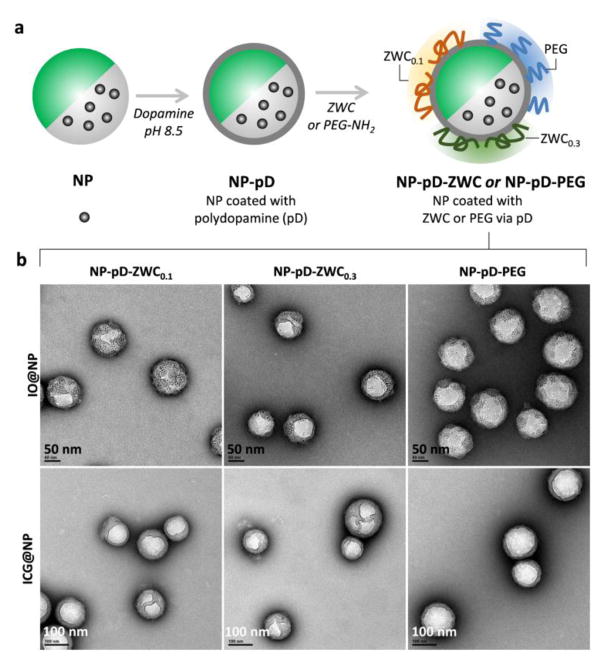
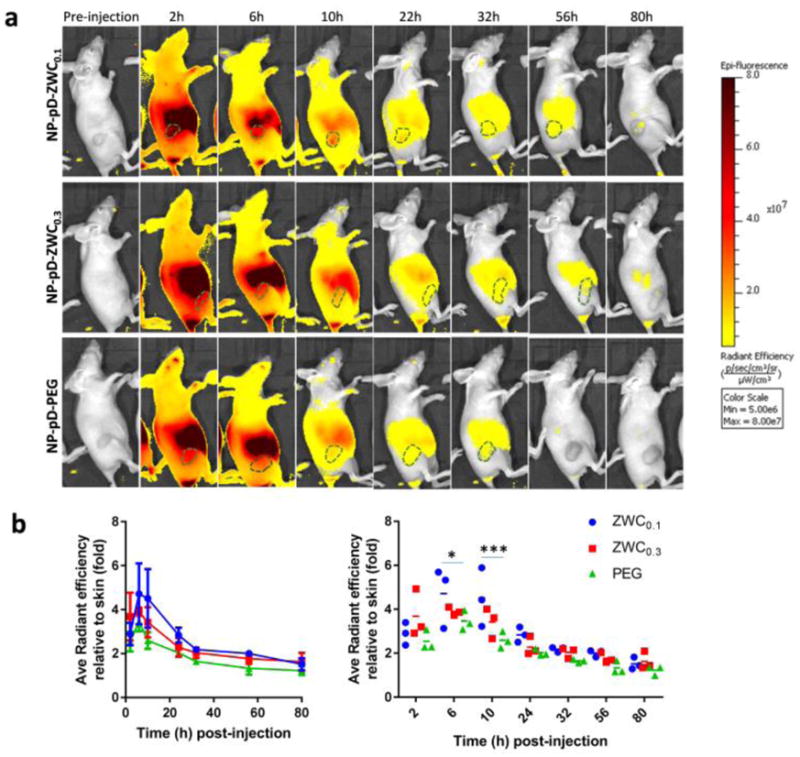
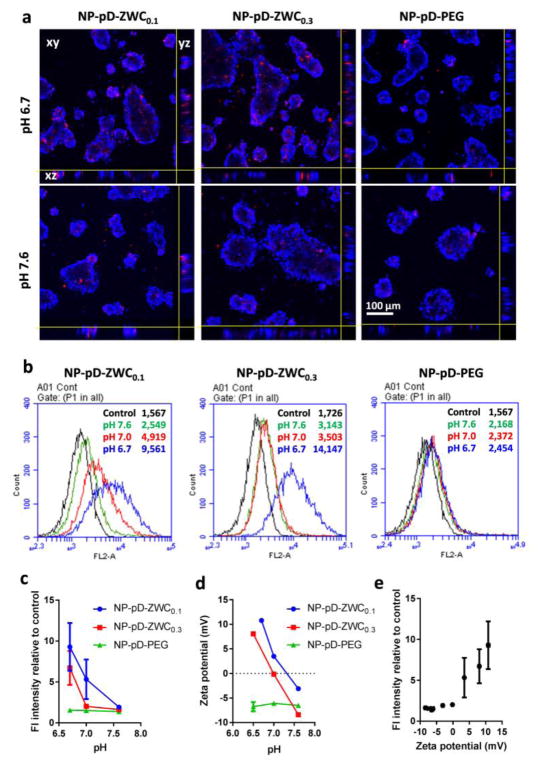
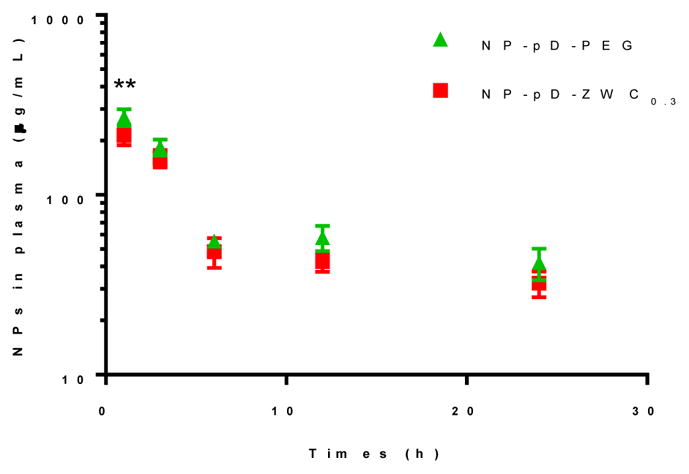
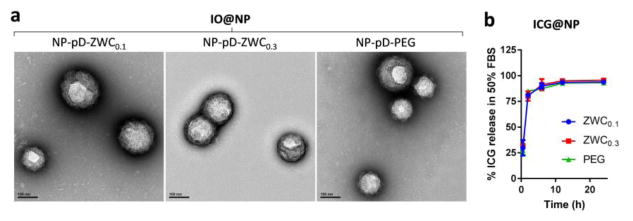
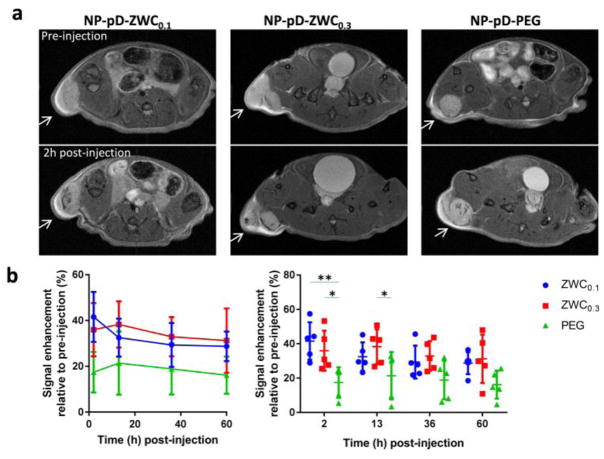
For polymeric nanoparticles (NPs) to deliver more drugs to tumors than free drug solution, it is critical that the NPs establish interactions with tumor cells and avoid removal from the tumors. Since traditional polyethylene glycol (PEG) surface layer interferes with the cell-NP interaction in tumors, we used a water-soluble and blood-compatible chitosan derivative called zwitterionic chitosan (ZWC) as an alternative surface coating for poly(lactic-co-glycolic acid) (PLGA) NPs. The ZWC-coated PLGA NPs showed pH-dependent surface charge profiles and differential cellular interactions according to the pH of the medium. The in vivo delivery of ZWC-coated NPs was evaluated in mice bearing LS174T-xenografts using magnetic resonance (MR) imaging and fluorescence whole body imaging, which respectively tracked iron oxide particles and indocyanine green (ICG) encapsulated in the NPs as tracers. MR imaging showed that ZWC-coated NPs were more persistent in tumors than PEG-coated NPs, in agreement with the in vitro results. However, the fluorescence imaging indicated that the increased NP retention in tumors by the ZWC coating did not significantly affect the ICG distribution in tumors due to the rapid release of the dye. This study shows that stable drug retention in NPs during circulation is a critical prerequisite to successful translation of the potential benefits of surface-engineered NPs.
为了使聚合物纳米粒子(NPs)向肿瘤输送比游离药物溶液更多的药物,关键是 NPs 与肿瘤细胞建立相互作用并避免从肿瘤中清除。由于传统的聚乙二醇(PEG)表面层会干扰肿瘤中的细胞-NP 相互作用,因此我们使用了一种水溶性和血液相容的壳聚糖衍生物,称为两性离子壳聚糖(ZWC),作为聚(乳酸-共-乙醇酸)(PLGA)NPs 的替代表面涂层。ZWC 涂层的 PLGA NPs 表现出 pH 依赖性表面电荷分布,并根据介质的 pH 值表现出不同的细胞相互作用。通过磁共振(MR)成像和荧光全身成像在携带 LS174T-异种移植物的小鼠中评估了 ZWC 涂层 NPs 的体内递药,分别跟踪氧化铁颗粒和包封在 NPs 中的吲哚菁绿(ICG)作为示踪剂。MR 成像表明,ZWC 涂层的 NPs 在肿瘤中的持久性比 PEG 涂层的 NPs 更长,这与体外结果一致。然而,荧光成像表明,由于染料的快速释放,ZWC 涂层增加 NP 在肿瘤中的保留并没有显著影响 ICG 在肿瘤中的分布。这项研究表明,在循环过程中稳定的药物保留是成功转化表面工程 NPs 的潜在益处的关键前提。