Park Choon-Sang, Jung Eun Young, Kim Dong Ha, Kim Do Yeob, Lee Hyung-Kun, Shin Bhum Jae, Lee Dong Ho, Tae Heung-Sik
School of Electronics Engineering, College of IT Engineering, Kyungpook National University, Daegu 41566, Korea.
ICT Materials and Components Research Laboratory, Electronics and Telecommunications Research Institute (ETRI), Daejeon 34129, Korea.
Materials (Basel). 2017 Nov 6;10(11):1272. doi: 10.3390/ma10111272.
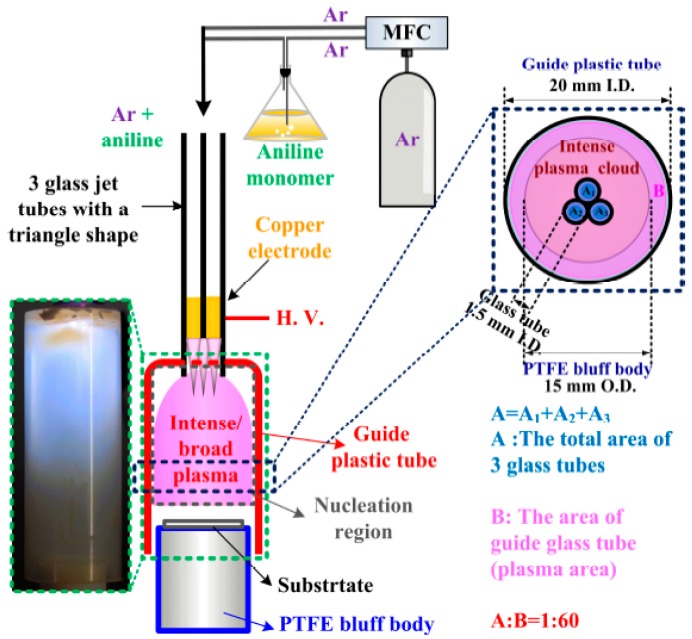
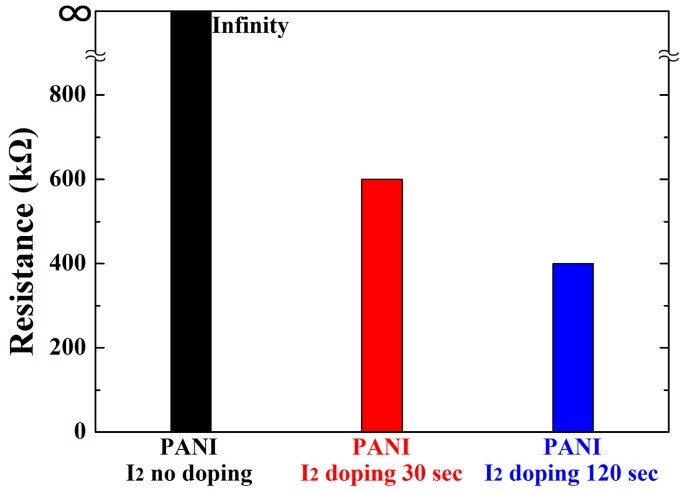
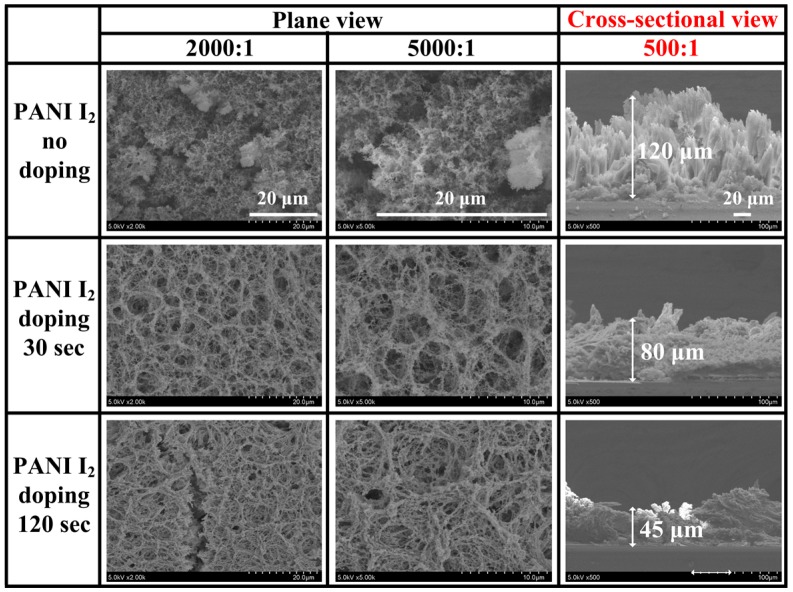
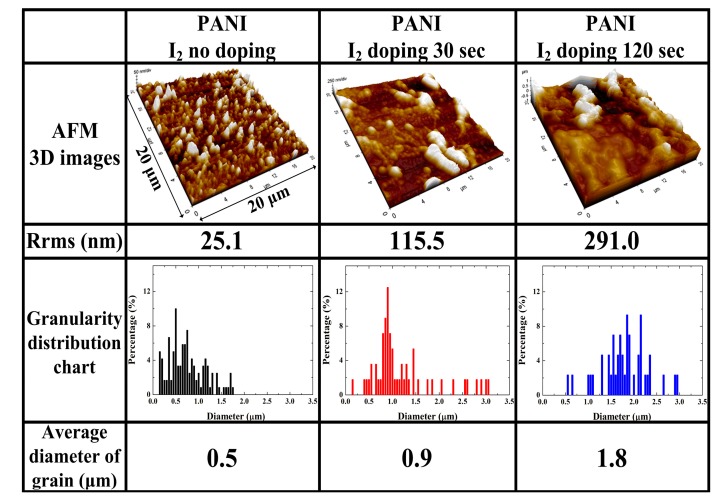
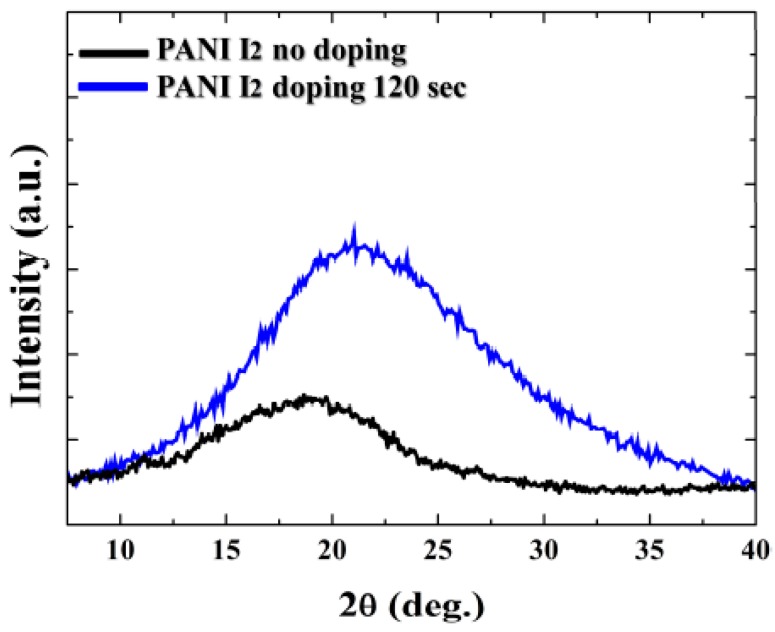
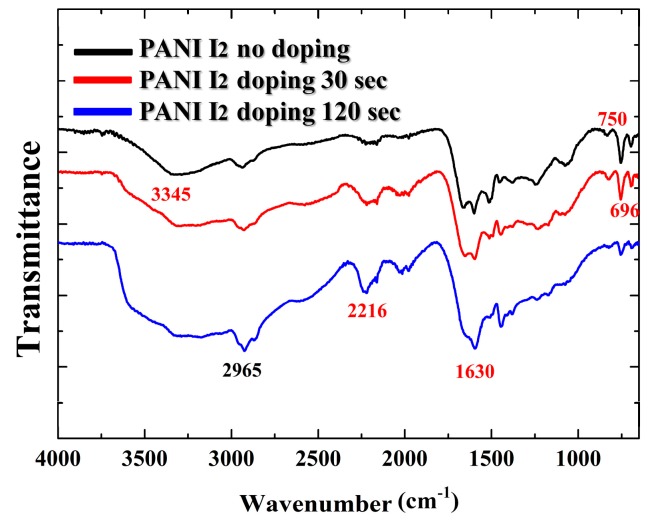
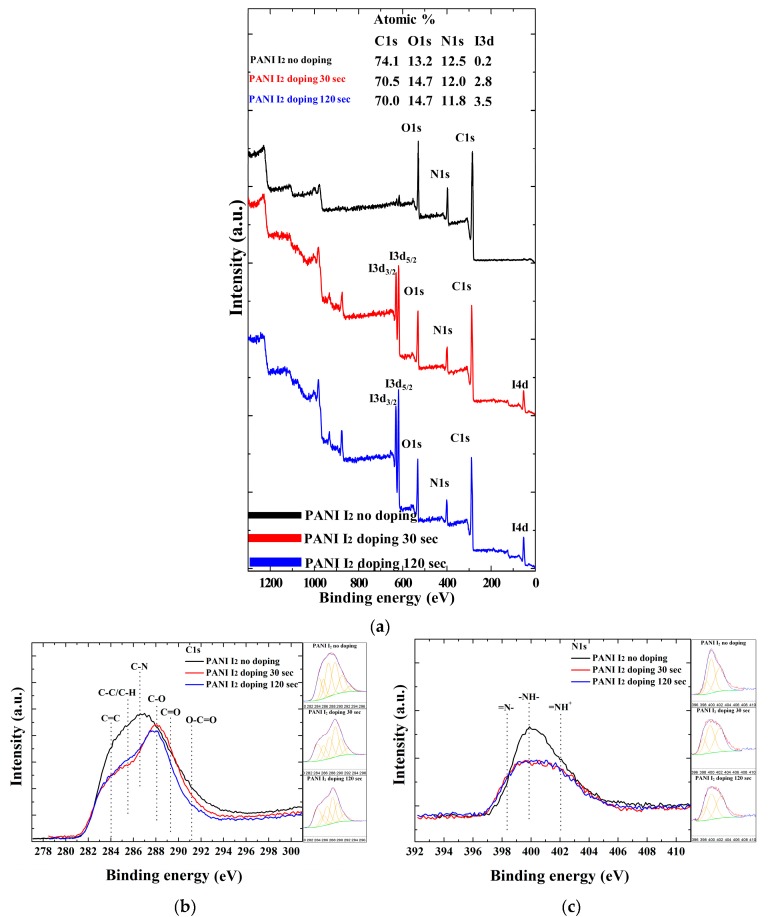
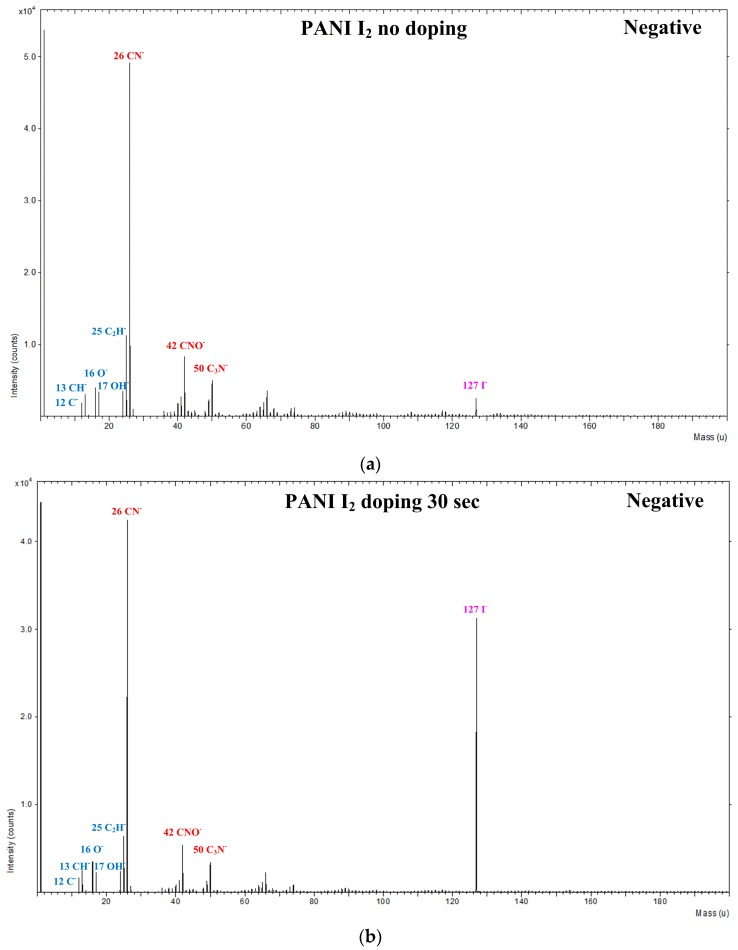
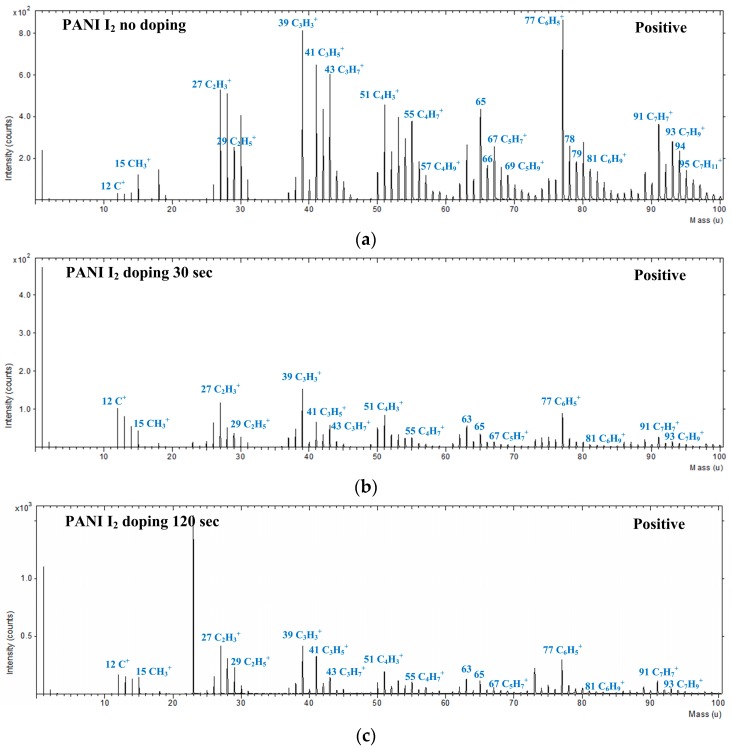
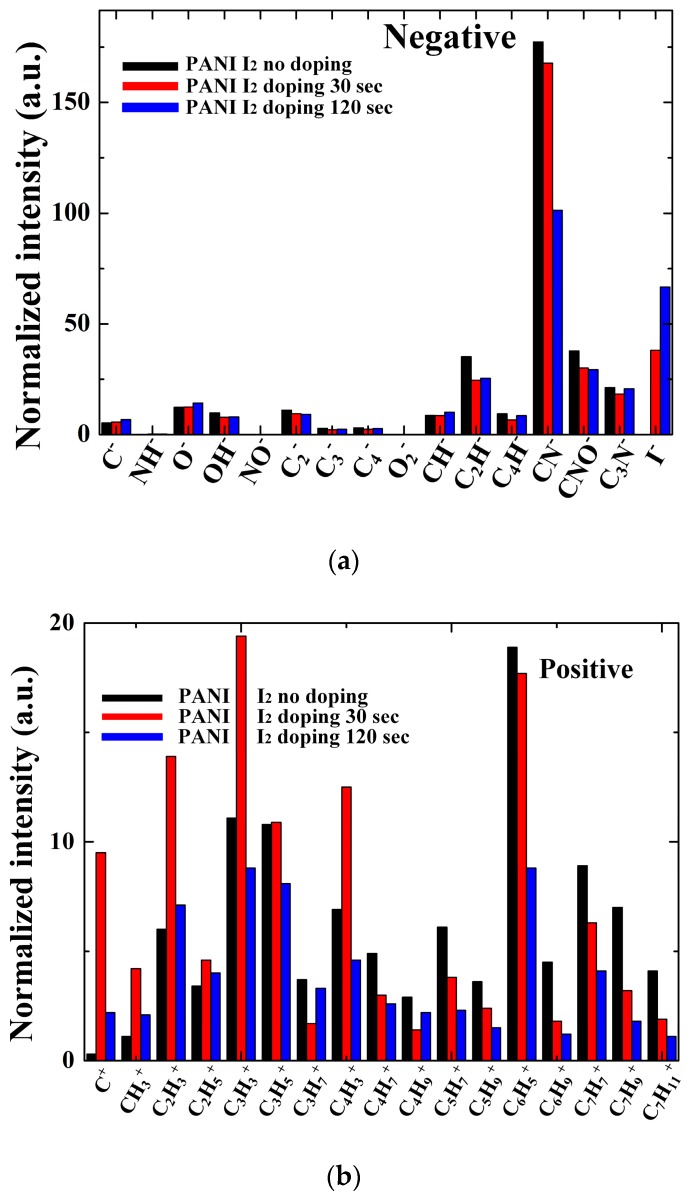
Although polymerized aniline (polyaniline, PANI) with and without iodine (I₂) doping has already been extensively studied, little work has been done on the synthesis of PANI films using atmospheric pressure plasma (APP) deposition. Therefore, this study characterized pure and I₂-doped PANI films synthesized using an advanced APP polymerization system. The I₂ doping was conducted ex-situ and using an I₂ chamber method following the APP deposition. The pure and I₂-doped PANI films were structurally analyzed using field emission scanning electron microscope (FE-SEM), atomic force microscope (AFM), X-ray Diffraction (XRD), Fourier transform infrared spectroscopy (FT-IR), X-ray photoelectron spectroscopy (XPS), and time of flight secondary ion mass spectrometry (ToF-SIMS) studies. When increasing the I₂ doping time, the plane and cross-sectional SEM images showed a decrease in the width and thickness of the PANI nanofibers, while the AFM results showed an increase in the roughness and grain size of the PANI films. Moreover, the FT-IR, XPS, and ToF-SIMS results showed an increase in the content of oxygen-containing functional groups and C=C double bonds, yet decrease in the C-N and C-H bonds when increasing the I₂ doping time due to the reduction of hydrogen in the PANI films via the I₂. To check the suitability of the conductive layer for polymer display applications, the resistance variations of the PANI films grown on the interdigitated electrode substrates were also examined according to the I₂ doping time.
尽管有无碘(I₂)掺杂的聚合苯胺(聚苯胺,PANI)已经得到了广泛研究,但利用大气压等离子体(APP)沉积法合成聚苯胺薄膜的工作却很少。因此,本研究对使用先进的APP聚合系统合成的纯聚苯胺薄膜和I₂掺杂聚苯胺薄膜进行了表征。I₂掺杂是在APP沉积之后采用非原位法并通过I₂腔室法进行的。利用场发射扫描电子显微镜(FE-SEM)、原子力显微镜(AFM)、X射线衍射(XRD)、傅里叶变换红外光谱(FT-IR)、X射线光电子能谱(XPS)以及飞行时间二次离子质谱(ToF-SIMS)研究对纯聚苯胺薄膜和I₂掺杂聚苯胺薄膜进行了结构分析。当增加I₂掺杂时间时,平面和横截面扫描电子显微镜图像显示聚苯胺纳米纤维的宽度和厚度减小,而原子力显微镜结果显示聚苯胺薄膜的粗糙度和晶粒尺寸增加。此外,傅里叶变换红外光谱、X射线光电子能谱和飞行时间二次离子质谱结果表明,由于I₂使聚苯胺薄膜中的氢减少,增加I₂掺杂时间时含氧官能团和C=C双键的含量增加,而C-N键和C-H键的含量减少。为了检验导电层在聚合物显示应用中的适用性,还根据I₂掺杂时间研究了在叉指电极基板上生长的聚苯胺薄膜的电阻变化。