Louw Jakobus M, Marcus Tessa S, Hugo Johannes F M
Department of Family Medicine, School of Medicine, Faculty of Health Sciences, University of Pretoria.
Afr J Prim Health Care Fam Med. 2017 Oct 19;9(1):e1-e7. doi: 10.4102/phcfm.v9i1.1455.
Person-centred practice in medicine may provide solutions to several pressing problems in health care, including the cost of services, poor outcomes in chronic care and the rise in litigation. It is also an ethical imperative in itself. However, patient- or person-centred care is not well researched partly because of a lack of conceptual and definitional clarity.
The aim of this review was to analyse essential elements, ethical principles, logic and the practical application of person-centred practice described in clinician- and researcher-defined conceptual frameworks, terms and practices.
A search of review articles on patient- and person-centred care or medicine was conducted using Medline and Google Scholar. Secondary searches were conducted using references and citations from selected articles.
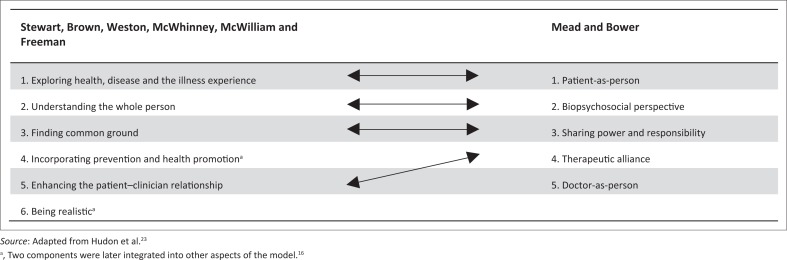
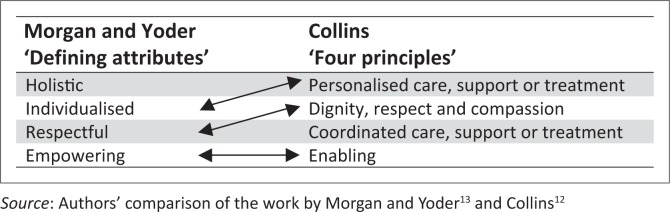
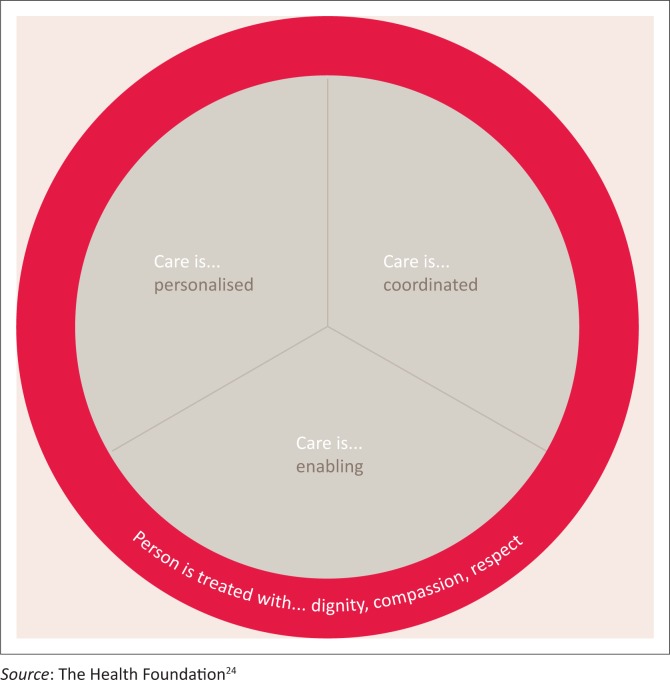
Five conceptual frameworks were identified in terms of their practical application of the ethical principles of beneficence, autonomy and justice. They converge around a few central ideas such as having a holistic perspective of patients and their illness experience, a therapeutic alliance between the patient and clinician as well as respectful, enabling collaboration with the patient.
Terminological differences appear to owe more to disciplinary origins than to substantive meaning. Beneficence needs to be balanced by and practised through respect for patient autonomy. Core ideas in existing conceptual frameworks of patient or person centredness can guide teaching and research. Considering the value and ethical imperative of person-centred practice, training institutions should train health care students and practitioners in its precepts.
医学中的以人为本的实践可能为医疗保健中的几个紧迫问题提供解决方案,包括服务成本、慢性病护理的不良结果以及诉讼的增加。这本身也是一项道德要求。然而,以患者或人为中心的护理研究并不充分,部分原因是缺乏概念和定义的清晰度。
本综述的目的是分析临床医生和研究人员定义的概念框架、术语和实践中所描述的以人为本实践的基本要素、伦理原则、逻辑和实际应用。
使用Medline和谷歌学术搜索关于以患者和人为中心的护理或医学的综述文章。利用所选文章的参考文献和引用进行二次搜索。
根据其对行善、自主和公正等伦理原则的实际应用,确定了五个概念框架。它们围绕一些核心观点汇聚,例如对患者及其疾病经历有整体视角、患者与临床医生之间的治疗联盟以及尊重患者、促进与患者的合作。
术语差异似乎更多地归因于学科起源而非实质意义。行善需要通过尊重患者自主权来平衡并付诸实践。现有的以患者或人为中心概念框架中的核心观点可以指导教学和研究。考虑到以人为本实践的价值和伦理要求,培训机构应培训医护专业学生和从业者遵循其原则。