Scott Colleen, Clarke Kristie E N, Grevendonk Jan, Dolan Samantha B, Ahmed Hussein Osman, Kamau Peter, Ademba Peter Aswani, Osadebe Lynda, Bonsu George, Opare Joseph, Diamenu Stanley, Amenuvegbe Gregory, Quaye Pamela, Osei-Sarpong Fred, Abotsi Francis, Ankrah Joseph Dwomor, MacNeil Adam
MMWR Morb Mortal Wkly Rep. 2017 Nov 10;66(44):1226-1229. doi: 10.15585/mmwr.mm6644a5.
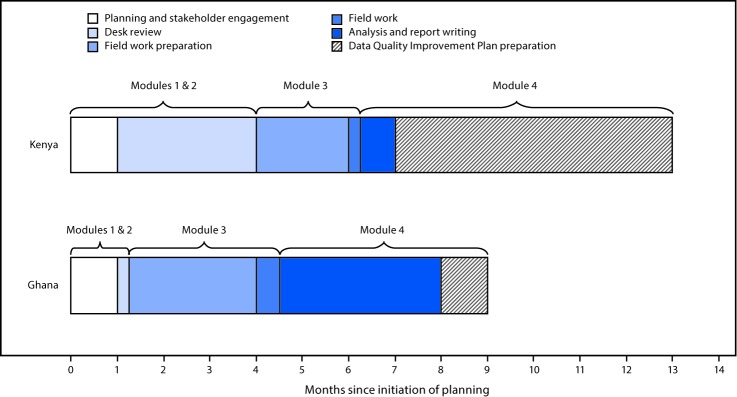
The collection, analysis, and use of data to measure and improve immunization program performance are priorities for the World Health Organization (WHO), global partners, and national immunization programs (NIPs). High quality data are essential for evidence-based decision-making to support successful NIPs. Consistent recording and reporting practices, optimal access to and use of health information systems, and rigorous interpretation and use of data for decision-making are characteristics of high-quality immunization information systems. In 2015 and 2016, immunization information system assessments (IISAs) were conducted in Kenya and Ghana using a new WHO and CDC assessment methodology designed to identify root causes of immunization data quality problems and facilitate development of plans for improvement. Data quality challenges common to both countries included low confidence in facility-level target population data (Kenya = 50%, Ghana = 53%) and poor data concordance between child registers and facility tally sheets (Kenya = 0%, Ghana = 3%). In Kenya, systemic challenges included limited supportive supervision and lack of resources to access electronic reporting systems; in Ghana, challenges included a poorly defined subdistrict administrative level. Data quality improvement plans (DQIPs) based on assessment findings are being implemented in both countries. IISAs can help countries identify and address root causes of poor immunization data to provide a stronger evidence base for future investments in immunization programs.
收集、分析和使用数据以衡量和改进免疫规划绩效,是世界卫生组织(WHO)、全球合作伙伴以及国家免疫规划(NIPs)的工作重点。高质量数据对于基于证据的决策至关重要,有助于支持国家免疫规划取得成功。一致的记录和报告做法、优化获取和使用卫生信息系统,以及严谨解读和运用数据进行决策,都是高质量免疫信息系统的特征。2015年和2016年,肯尼亚和加纳采用了世界卫生组织和美国疾病控制与预防中心设计的新评估方法开展免疫信息系统评估(IISAs),旨在找出免疫数据质量问题的根本原因,并推动制定改进计划。两国共有的数据质量挑战包括对机构层面目标人群数据的信心不足(肯尼亚为50%,加纳为53%),以及儿童登记册与机构计数表之间的数据一致性较差(肯尼亚为0%,加纳为3%)。在肯尼亚,系统性挑战包括支持性监督有限以及缺乏使用电子报告系统的资源;在加纳,挑战包括对分区行政级别定义不清。两国都在根据评估结果实施数据质量改进计划(DQIPs)。免疫信息系统评估有助于各国找出并解决免疫数据质量差的根本原因,为未来免疫规划投资提供更有力的证据基础。