Khodaverdian Varandt Y, Hanscom Terrence, Yu Amy Marie, Yu Taylor L, Mak Victoria, Brown Alexander J, Roberts Steven A, McVey Mitch
Department of Biology, Tufts University, 200 Boston Avenue, Suite 4700, Medford, MA 02155, USA.
School of Molecular Biosciences, Washington State University, P100 Dairy Road, Pullman, WA 99164, USA.
Nucleic Acids Res. 2017 Dec 15;45(22):12848-12861. doi: 10.1093/nar/gkx1056.
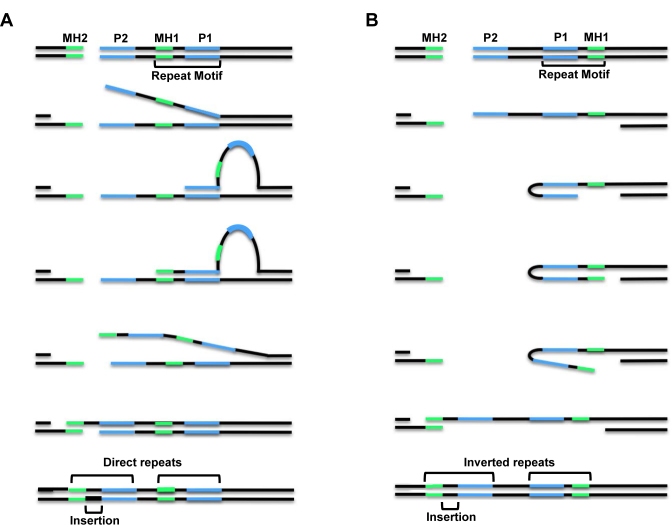
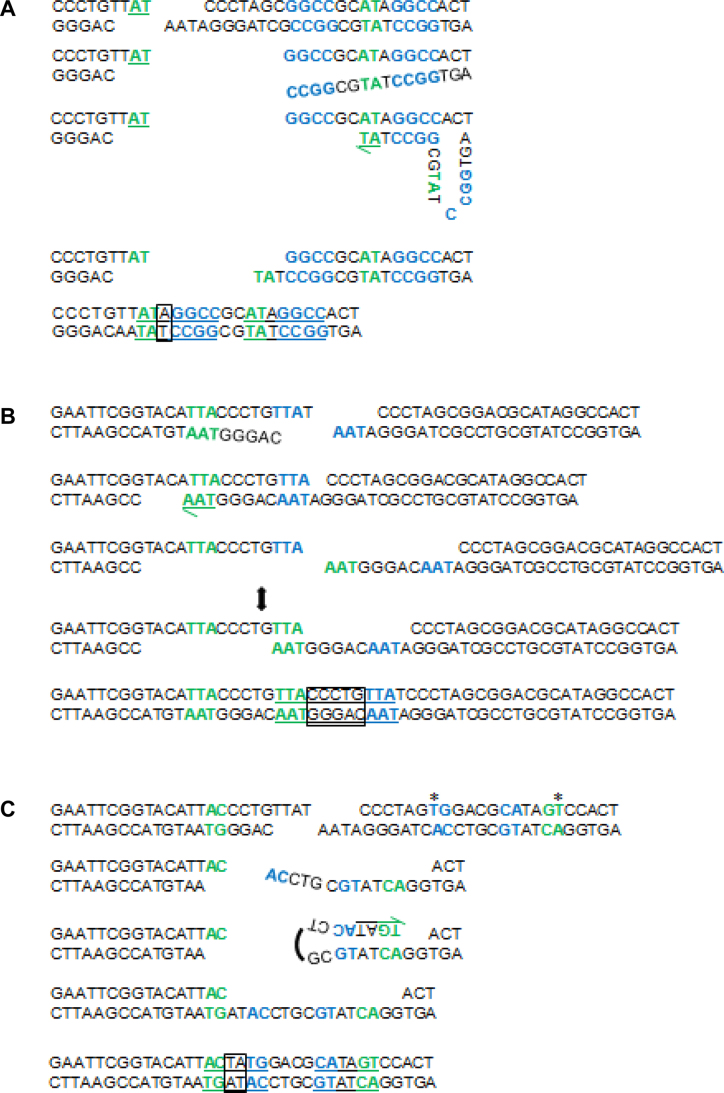
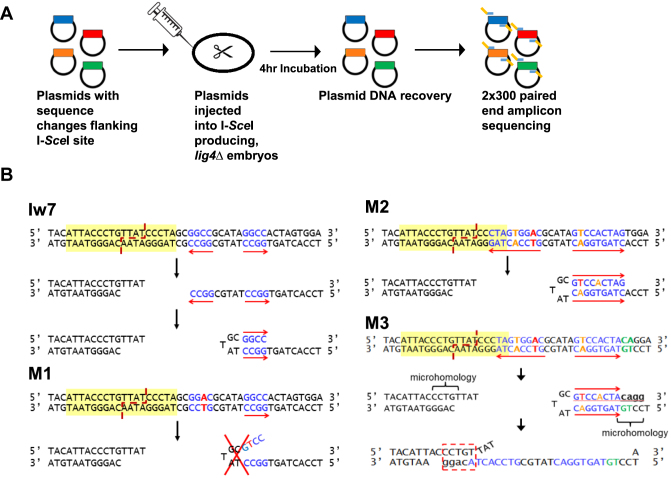
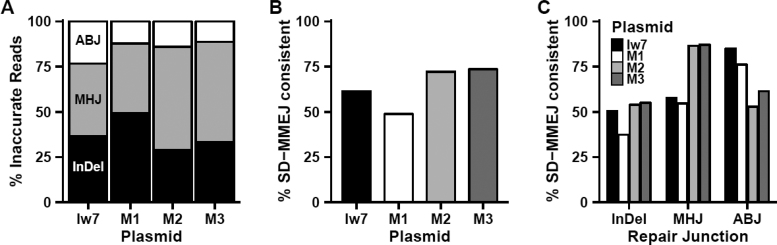
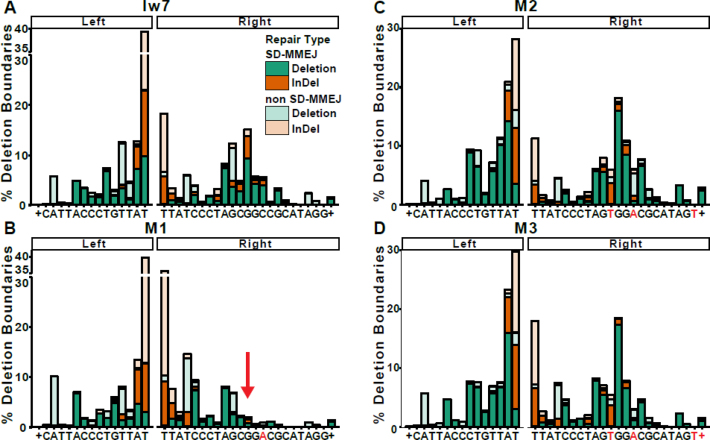
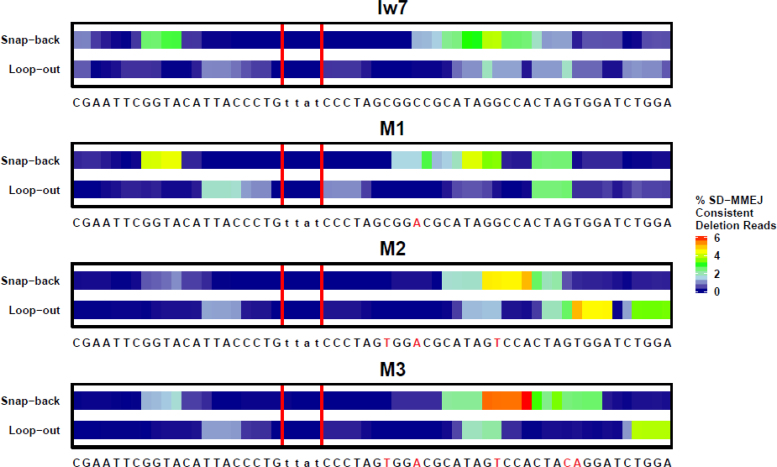
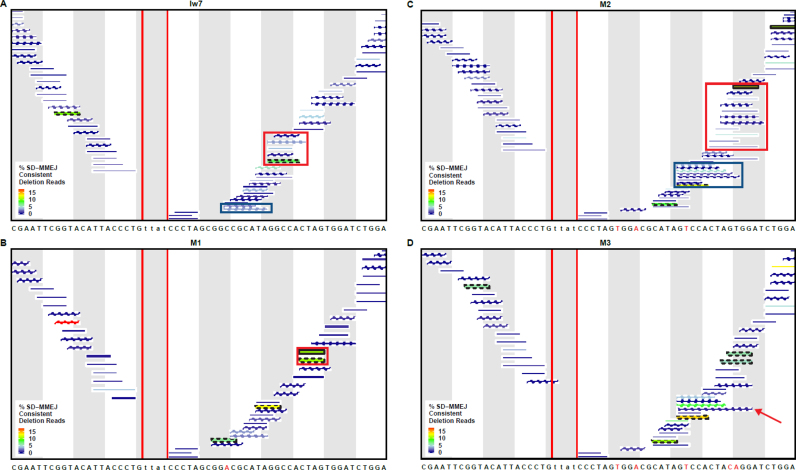
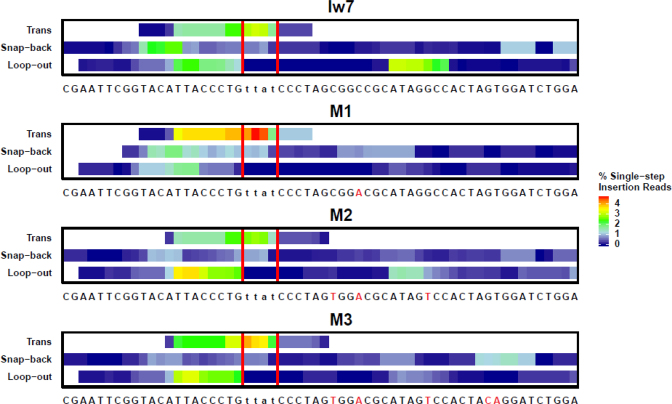
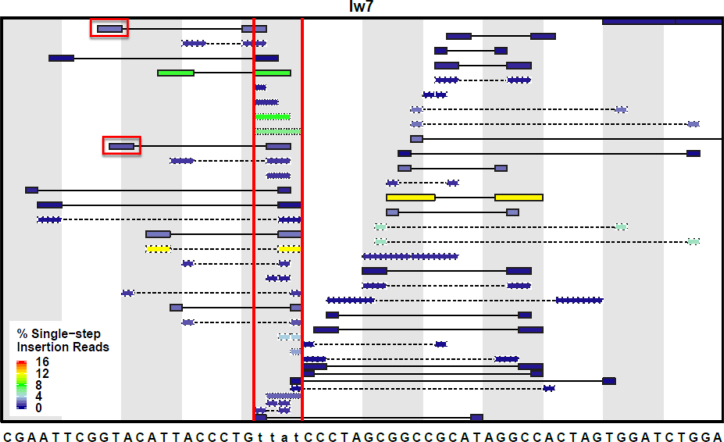
Alternative end-joining (alt-EJ) repair of DNA double-strand breaks is associated with deletions, chromosome translocations, and genome instability. Alt-EJ frequently uses annealing of microhomologous sequences to tether broken ends. When accessible pre-existing microhomologies do not exist, we have postulated that new microhomologies can be created via limited DNA synthesis at secondary-structure forming sequences. This model, called synthesis-dependent microhomology-mediated end joining (SD-MMEJ), predicts that differences between DNA sequences near double-strand breaks should alter repair outcomes in predictable ways. To test this hypothesis, we injected plasmids with sequence variations flanking an I-SceI endonuclease recognition site into I-SceI expressing Drosophila embryos and used Illumina amplicon sequencing to compare repair junctions. As predicted by the model, we found that small changes in sequences near the I-SceI site had major impacts on the spectrum of repair junctions. Bioinformatic analyses suggest that these repair differences arise from transiently forming loops and hairpins within 30 nucleotides of the break. We also obtained evidence for 'trans SD-MMEJ,' involving at least two consecutive rounds of microhomology annealing and synthesis across the break site. These results highlight the importance of sequence context for alt-EJ repair and have important implications for genome editing and genome evolution.
DNA双链断裂的替代末端连接(alt-EJ)修复与缺失、染色体易位和基因组不稳定有关。Alt-EJ经常利用微同源序列的退火来连接断裂末端。当不存在可及的预先存在的微同源性时,我们推测可以通过在形成二级结构的序列处进行有限的DNA合成来产生新的微同源性。这个模型称为合成依赖性微同源性介导的末端连接(SD-MMEJ),预测双链断裂附近的DNA序列差异应该以可预测的方式改变修复结果。为了验证这一假设,我们将在I-SceI内切酶识别位点两侧带有序列变异的质粒注射到表达I-SceI的果蝇胚胎中,并使用Illumina扩增子测序来比较修复连接点。正如该模型所预测的,我们发现I-SceI位点附近序列的微小变化对修复连接点的谱有重大影响。生物信息学分析表明,这些修复差异源于断裂点30个核苷酸内短暂形成的环和发夹结构。我们还获得了“跨断裂点SD-MMEJ”的证据,涉及至少两轮跨断裂位点的微同源性退火和合成。这些结果突出了序列背景对alt-EJ修复的重要性,对基因组编辑和基因组进化具有重要意义。