Gresham Gillian, Schrack Jennifer, Gresham Louise M, Shinde Arvind M, Hendifar Andrew E, Tuli Richard, Rimel B J, Figlin Robert, Meinert Curtis L, Piantadosi Steven
Johns Hopkins Bloomberg School of Public Health, Department of Epidemiology, United States; Cedars-Sinai Medical Center, Samuel Oschin Comprehensive Cancer Institute, United States.
Johns Hopkins Bloomberg School of Public Health, Department of Epidemiology, United States.
Contemp Clin Trials. 2018 Jan;64:13-21. doi: 10.1016/j.cct.2017.11.002. Epub 2017 Nov 9.
Physical activity is an important outcome in oncology trials. Physical activity is commonly assessed using self-reported questionnaires, which are limited by recall and response biases. Recent advancements in wearable technology have provided oncologists with new opportunities to obtain real-time, objective physical activity data. The purpose of this review was to describe current uses of wearable activity monitors in oncology trials.
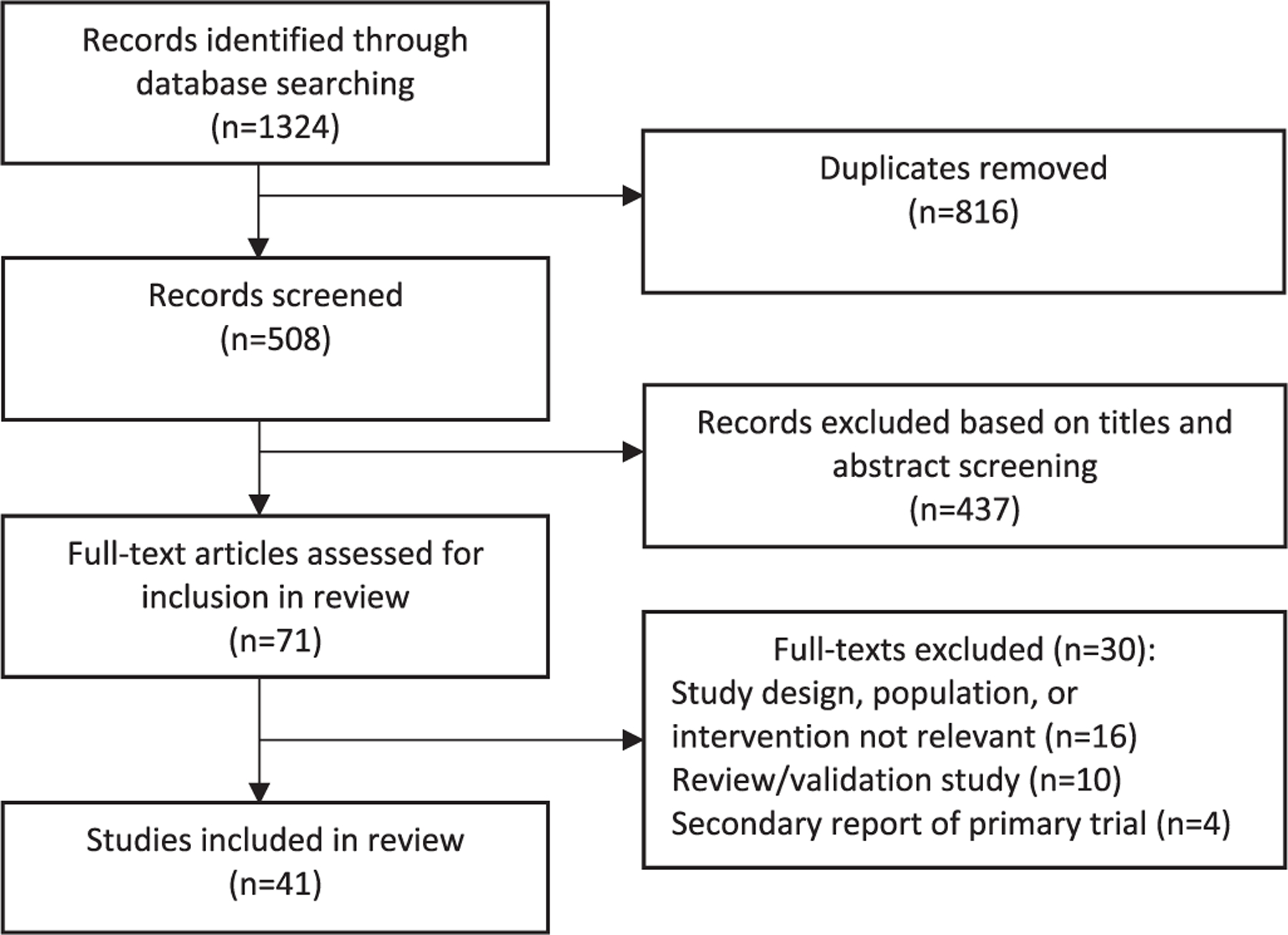
We searched Pubmed, Embase, and the Cochrane Central Register of Controlled Trials for oncology trials involving wearable activity monitors published between 2005 and 2016. We extracted details on study design, types of activity monitors used, and purpose for their use. We summarized activity monitor metrics including step counts, sleep and sedentary time, and time spent in moderate-to-vigorous activity.
We identified 41 trials of which 26 (63%) involved cancer survivors (post-treatment) and 15 trials (37%) involved patients with active cancer. Most trials (65%) involved breast cancer patients. Wearable activity monitors were commonly used in exercise (54%) or behavioral (29%) trials. Cancer survivors take between 4660 and 11,000 steps/day and those undergoing treatment take 2885 to 8300steps/day.
Wearable activity monitors are increasingly being used to obtain objective measures of physical activity in oncology trials. There is potential for their use to expand to evaluate and predict clinical outcomes such as survival, quality of life, and treatment tolerance in future studies. Currently, there remains a lack of standardization in the types of monitors being used and how their data are being collected, analyzed, and interpreted.
Recent advancements in wearable activity monitor technology have provided oncologists with new opportunities to monitor their patients' daily activity in real-world settings. The integration of wearable activity monitors into cancer care will help increase our understanding of the associations between physical activity and the prevention and management of the disease, in addition to other important cancer outcomes.
身体活动是肿瘤学试验的一项重要结果。身体活动通常通过自我报告问卷进行评估,而这种方法受到回忆偏倚和应答偏倚的限制。可穿戴技术的最新进展为肿瘤学家提供了获取实时、客观身体活动数据的新机会。本综述的目的是描述可穿戴活动监测器在肿瘤学试验中的当前应用。
我们在PubMed、Embase和Cochrane对照试验中央注册库中检索了2005年至2016年间发表的涉及可穿戴活动监测器的肿瘤学试验。我们提取了关于研究设计、所使用的活动监测器类型及其使用目的的详细信息。我们总结了活动监测器指标,包括步数、睡眠和久坐时间,以及中度至剧烈活动所花费的时间。
我们确定了41项试验,其中26项(63%)涉及癌症幸存者(治疗后),15项试验(37%)涉及正在接受癌症治疗的患者。大多数试验(65%)涉及乳腺癌患者。可穿戴活动监测器常用于运动(54%)或行为(29%)试验。癌症幸存者每天走4660至11000步,正在接受治疗的患者每天走2885至8300步。
可穿戴活动监测器越来越多地用于在肿瘤学试验中获取身体活动的客观测量值。在未来的研究中,它们有可能用于扩展评估和预测生存、生活质量和治疗耐受性等临床结果。目前,所使用的监测器类型以及如何收集、分析和解释其数据仍缺乏标准化。
可穿戴活动监测器技术的最新进展为肿瘤学家提供了在现实环境中监测患者日常活动的新机会。将可穿戴活动监测器整合到癌症护理中,除了其他重要的癌症结果外,将有助于增进我们对身体活动与疾病预防和管理之间关联的理解。