Wellman Center for Photomedicine, Massachusetts General Hospital, Boston, MA.
Department of Dermatology, Harvard Medical School, Boston, MA.
J Neurosci Res. 2018 Apr;96(4):731-743. doi: 10.1002/jnr.24190. Epub 2017 Nov 13.
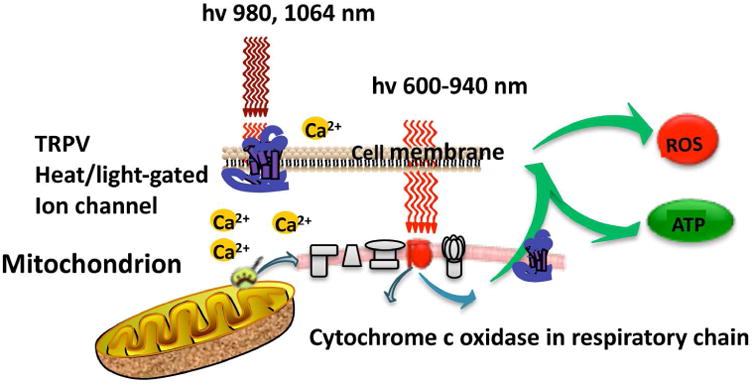
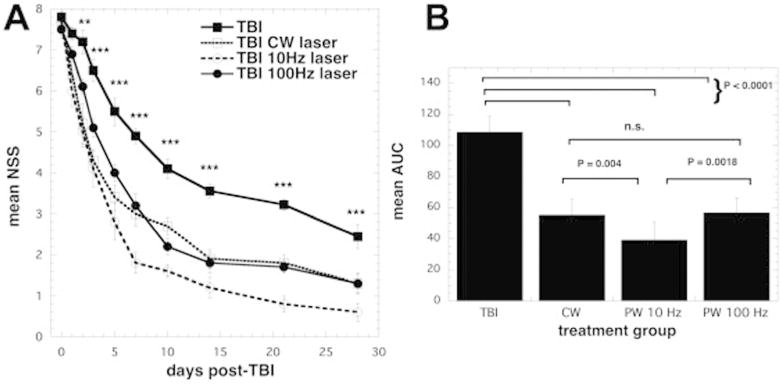
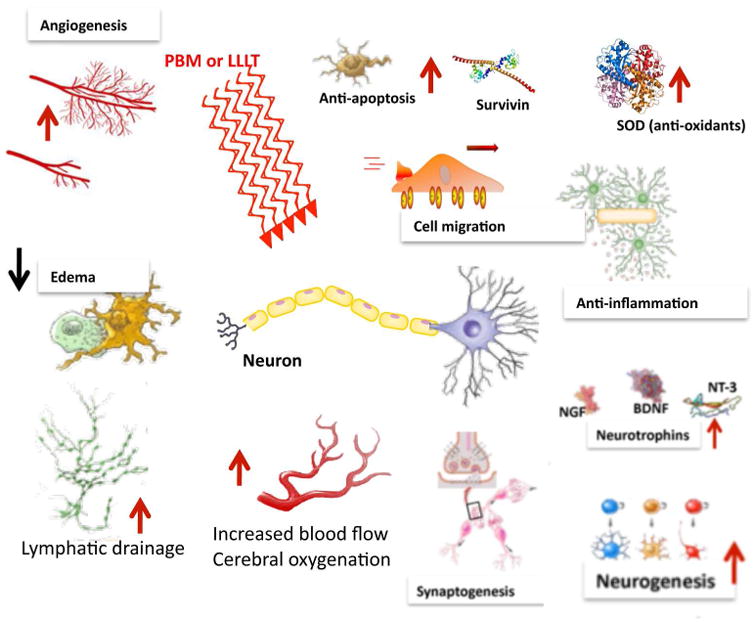
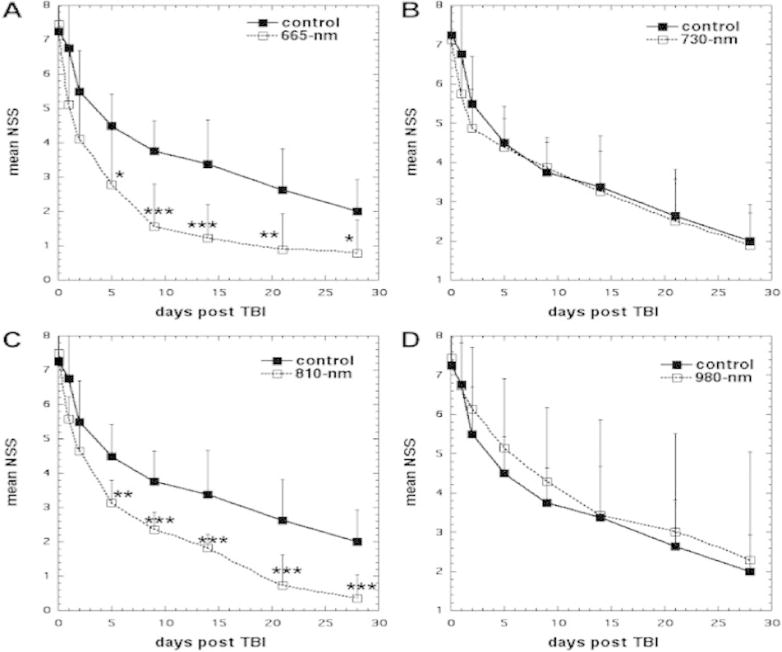
There is a notable lack of therapeutic alternatives for what is fast becoming a global epidemic of traumatic brain injury (TBI). Photobiomodulation (PBM) employs red or near-infrared (NIR) light (600-1100nm) to stimulate healing, protect tissue from dying, increase mitochondrial function, improve blood flow, and tissue oxygenation. PBM can also act to reduce swelling, increase antioxidants, decrease inflammation, protect against apoptosis, and modulate microglial activation state. All these mechanisms of action strongly suggest that PBM delivered to the head should be beneficial in cases of both acute and chronic TBI. Most reports have used NIR light either from lasers or from light-emitting diodes (LEDs). Many studies in small animal models of acute TBI have found positive effects on neurological function, learning and memory, and reduced inflammation and cell death in the brain. There is evidence that PBM can help the brain repair itself by stimulating neurogenesis, upregulating BDNF synthesis, and encouraging synaptogenesis. In healthy human volunteers (including students and healthy elderly women), PBM has been shown to increase regional cerebral blood flow, tissue oxygenation, and improve memory, mood, and cognitive function. Clinical studies have been conducted in patients suffering from the chronic effects of TBI. There have been reports showing improvement in executive function, working memory, and sleep. Functional magnetic resonance imaging has shown modulation of activation in intrinsic brain networks likely to be damaged in TBI (default mode network and salience network).
对于创伤性脑损伤(TBI)这种迅速成为全球性流行病的疾病,目前缺乏明显的治疗选择。光生物调节(PBM)采用红色或近红外(NIR)光(600-1100nm)刺激愈合、保护组织免于死亡、增加线粒体功能、改善血液流动和组织氧合。PBM 还可以减少肿胀、增加抗氧化剂、减少炎症、防止细胞凋亡和调节小胶质细胞激活状态。所有这些作用机制都强烈表明,对头部进行 PBM 治疗应该对急性和慢性 TBI 都有益。大多数报告都使用来自激光或发光二极管(LED)的 NIR 光。许多急性 TBI 小动物模型的研究发现,PBM 在神经功能、学习和记忆方面具有积极影响,并减少了大脑中的炎症和细胞死亡。有证据表明,PBM 通过刺激神经发生、上调 BDNF 合成和促进突触发生来帮助大脑自我修复。在健康的人类志愿者(包括学生和健康的老年女性)中,PBM 已被证明可以增加局部脑血流、组织氧合,并改善记忆、情绪和认知功能。已经对患有 TBI 慢性影响的患者进行了临床研究。有报告显示,执行功能、工作记忆和睡眠得到了改善。功能磁共振成像显示,TBI 中可能受损的内在脑网络(默认模式网络和突显网络)的激活得到了调节。