Third Institute of Physics-Biophysics, Department of Physics, University of Göttingen , 37077 Göttingen, Germany.
School of Molecular Sciences, Arizona State University , Tempe 85287, United States.
Anal Chem. 2017 Dec 19;89(24):13235-13244. doi: 10.1021/acs.analchem.7b03105. Epub 2017 Nov 30.
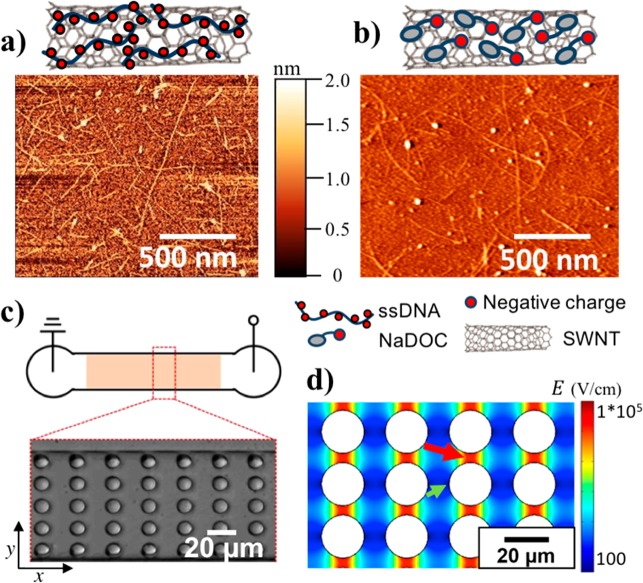
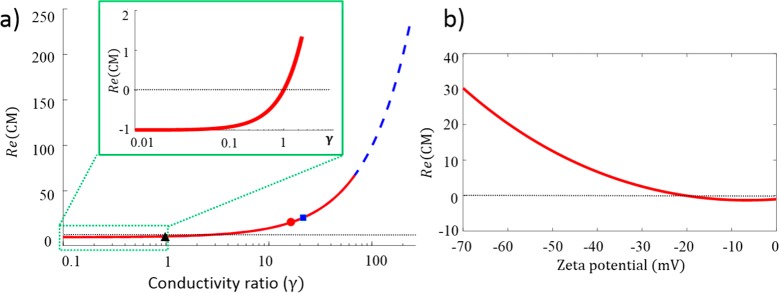
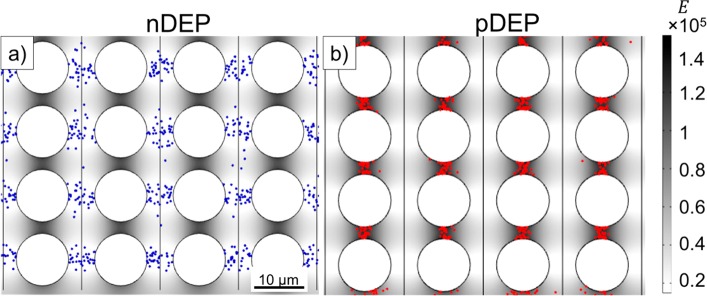
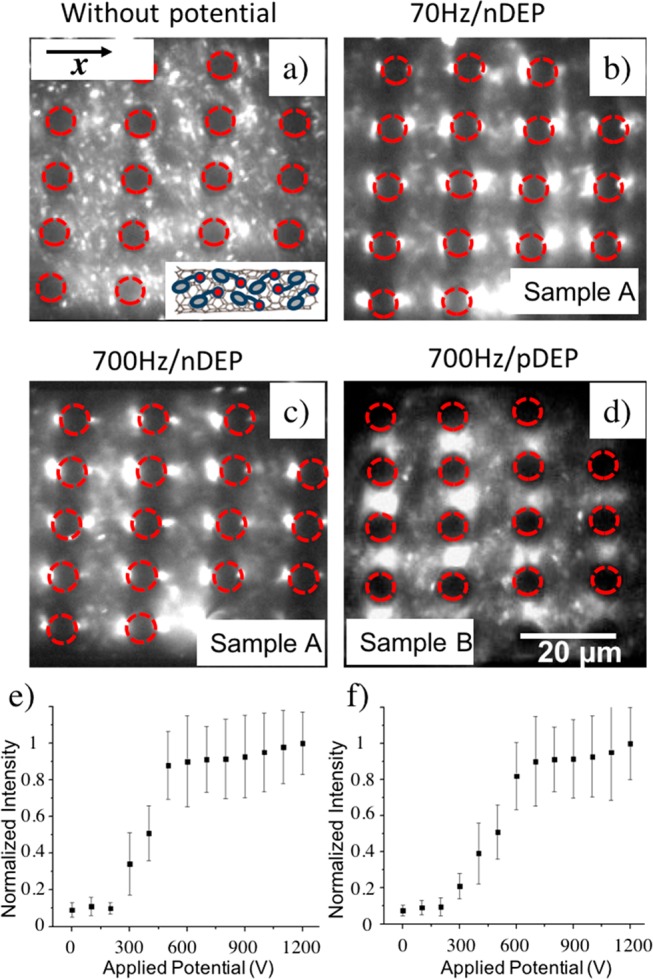
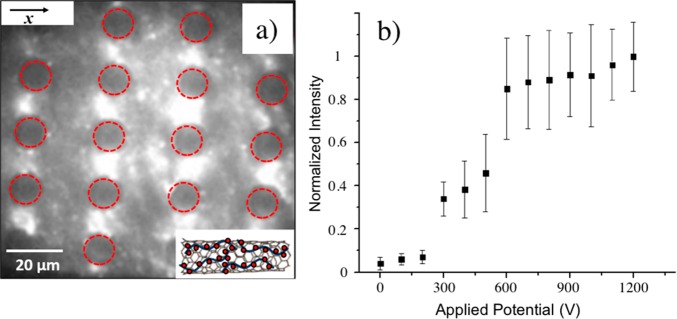
Single-walled carbon nanotubes (SWNTs) offer unique electrical and optical properties. Common synthesis processes yield SWNTs with large length polydispersity (several tens of nanometers up to centimeters) and heterogeneous electrical and optical properties. Applications often require suitable selection and purification. Dielectrophoresis is one manipulation method for separating SWNTs based on dielectric properties and geometry. Here, we present a study of surfactant and single-stranded DNA-wrapped SWNTs suspended in aqueous solutions manipulated by insulator-based dielectrophoresis (iDEP). This method allows us to manipulate SWNTs with the help of arrays of insulating posts in a microfluidic device around which electric field gradients are created by the application of an electric potential to the extremities of the device. Semiconducting SWNTs were imaged during dielectrophoretic manipulation with fluorescence microscopy making use of their fluorescence emission in the near IR. We demonstrate SWNT trapping at low-frequency alternating current (AC) electric fields with applied potentials not exceeding 1000 V. Interestingly, suspended SWNTs showed both positive and negative dielectrophoresis, which we attribute to their ζ potential and the suspension properties. Such behavior agrees with common theoretical models for nanoparticle dielectrophoresis. We further show that the measured ζ potentials and suspension properties are in excellent agreement with a numerical model predicting the trapping locations in the iDEP device. This study is fundamental for the future application of low-frequency AC iDEP for technological applications of SWNTs.
单壁碳纳米管 (SWNTs) 具有独特的电学和光学性能。常见的合成工艺会产生长度多分散性较大的 SWNTs(几十纳米到几厘米),并且具有不均匀的电学和光学性能。在实际应用中,通常需要对其进行适当的选择和纯化。介电泳是根据介电性质和几何形状分离 SWNTs 的一种操作方法。在这里,我们研究了在水溶液中用表面活性剂和单链 DNA 包裹的 SWNTs,这些 SWNTs 通过基于绝缘体的介电泳(iDEP)进行操作。该方法允许我们在微流控装置中利用绝缘柱阵列来操纵 SWNTs,通过在装置的两端施加电势,可以在微流控装置周围产生电场梯度。在介电泳操作过程中,我们利用近红外荧光发射对半导体 SWNTs 进行荧光显微镜成像。我们证明了在低于 1000 V 的外加电势的低频交流(AC)电场中可以捕获 SWNTs。有趣的是,悬浮的 SWNTs 表现出正和负的介电泳,我们将其归因于它们的 ζ 电势和悬浮性质。这种行为与纳米颗粒介电泳的常见理论模型一致。我们进一步表明,测量的 ζ 电势和悬浮性质与数值模型预测的 iDEP 装置中的捕获位置非常吻合。这项研究对于低频 AC iDEP 在 SWNTs 的技术应用中的未来应用具有基础性意义。